Overview
The architrave is the trim around the opening. Its shape affects whether a Z-frame lip can lie flat, an inside L-frame will preserve the detail, or an outside frame has a secure fixing band. Identify the profile before using it as a measuring reference.
What is an architrave?
An architrave is the trim surrounding the opening. It covers the junction between wall and window and may have a flat, rounded or decorative face. Its shape determines where a Z-frame lip can sit or an outside frame can be securely fixed.
What kind of architrave do I have?
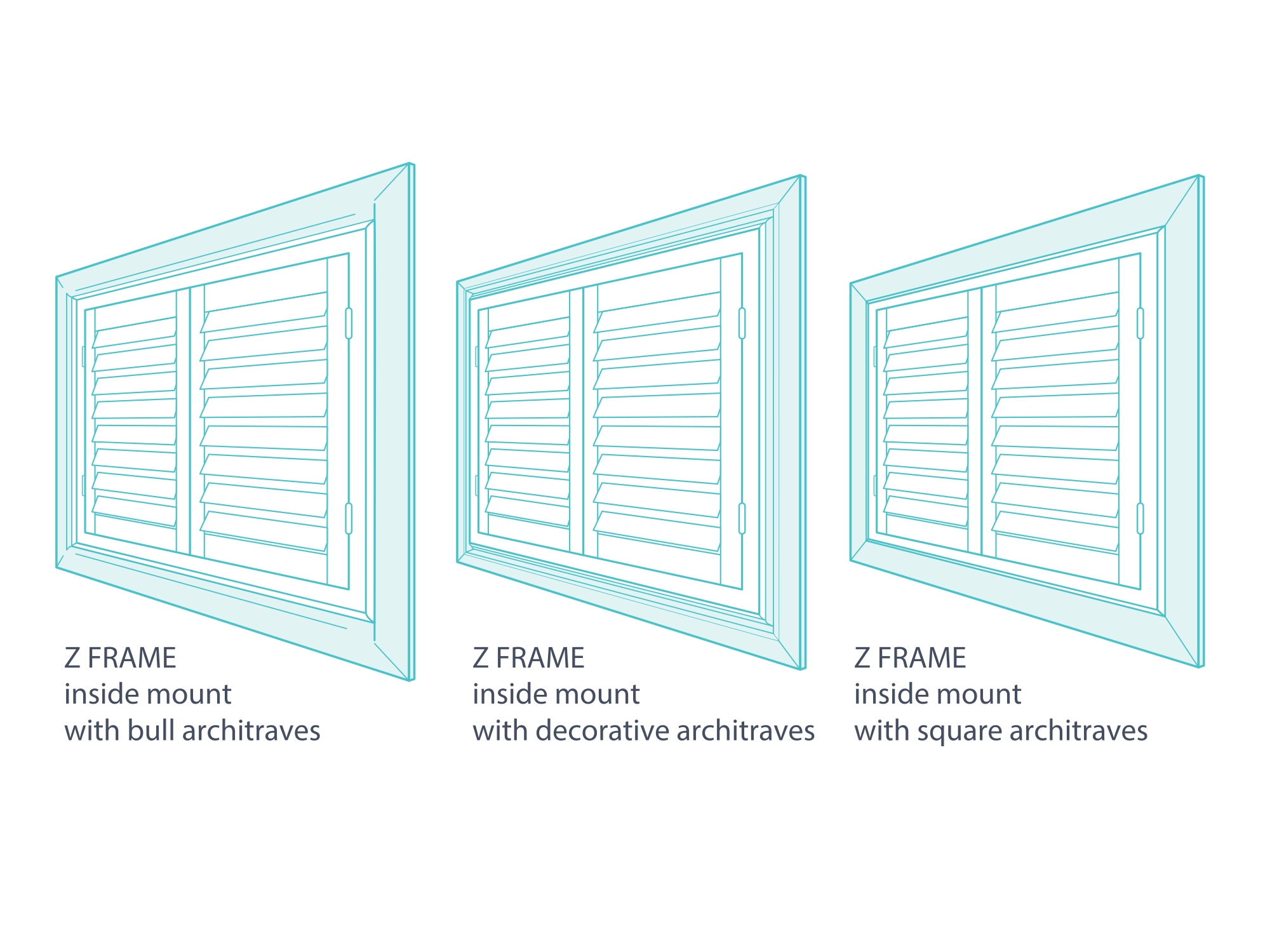
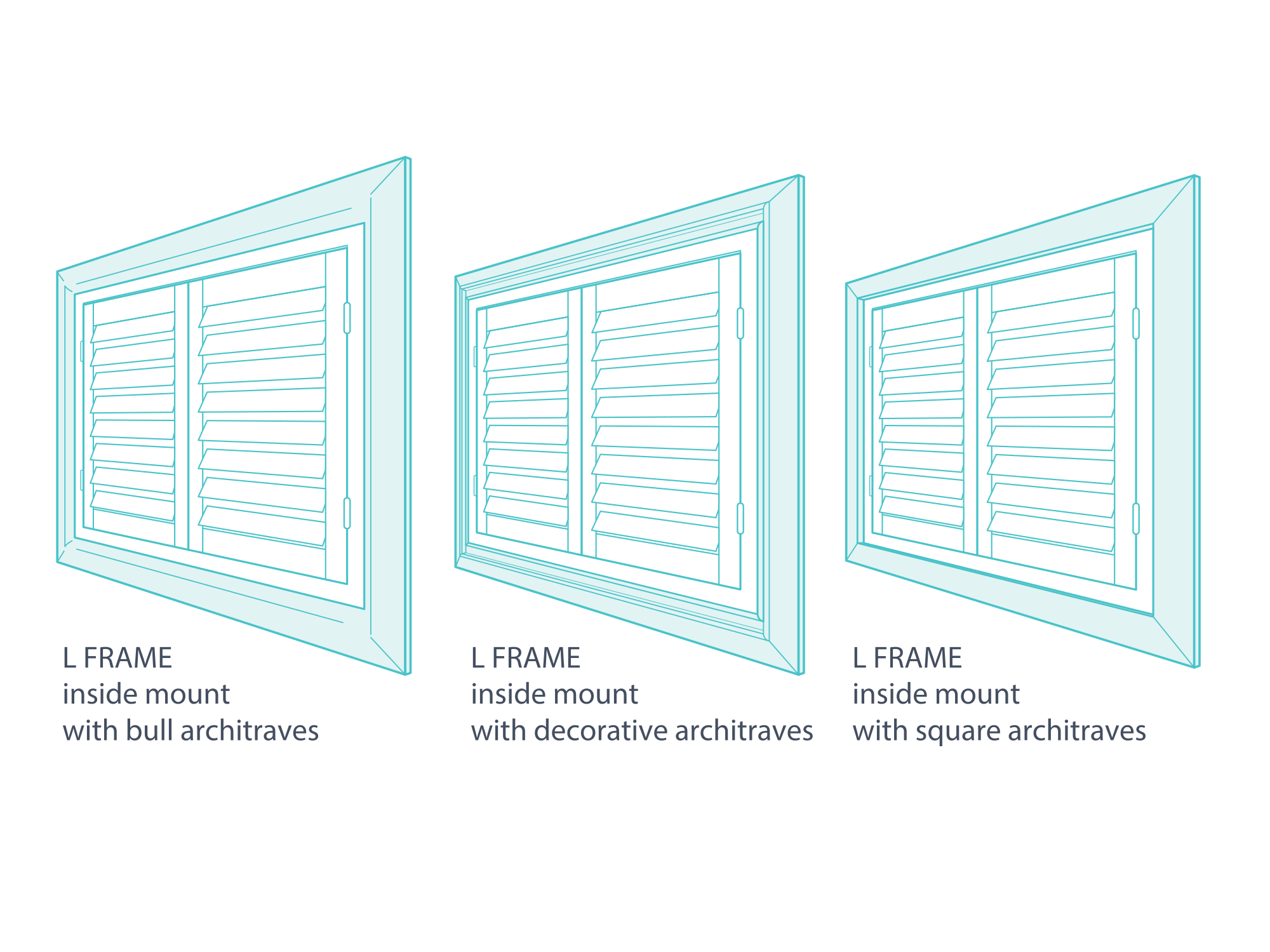
Compare the profile with the three examples: bullnose has a rounded edge, decorative trim has grooves or raised shapes, and square trim has a straight, flat face. Check the actual fixing area as well as the profile name.
Bullnose architrave
Bullnose trim has a rounded outer edge and a relatively flat front face. Check that the chosen frame sits on that flat portion. The curved edge itself is not a level fixing surface.
Decorative architrave
Grooves, steps and raised mouldings identify a decorative architrave. An inside L-frame can leave this detail exposed. For an outside frame, locate a continuous flat band before taking measurements; the widest trim dimension may not describe a usable fixing surface.
Square architrave
Square architraves have straight edges and a simple flat face. They often suit either an overlapping Z-frame or a face-mounted L-frame, subject to recess clearance and a sound fixing surface.
Z-frame with architraves
The Z-frame lip overlaps the opening edge. Square and bullnose trim usually provide a straightforward landing surface; decorative trim needs a closer check so the lip neither covers an unwanted detail nor sits across a hollow.
Inside L-frame with architraves
An inside L-frame remains behind the face of the architrave. It can therefore preserve almost any trim profile, provided the recess has sufficient depth and the opening is suitable for an exposed perimeter gap.
Outside L-frame with architraves
A face-mounted L-frame needs a flat band on the architrave for secure attachment. Check its width continuously around the opening. Decorative trim can work where it has a suitable level section, but do not fix across raised and recessed portions.
Why is an architrave necessary?
The trim finishes the wall-to-window joint; it is not the main window structure. For shutter fitting, its usefulness depends on the shape and strength of the mounting surface. Confirm that fixings reach sound support behind the finish.