Layered curtain system
Soft daylight in front. Privacy and blockout behind.
Layer a sheer curtain with a second privacy or blockout curtain so the room can shift from open and luminous to calm and enclosed.
- Two curtain layers
- Adaptable atmosphere
- Coordinated fabrics
 ★★★★★400+ 5 Star Reviews
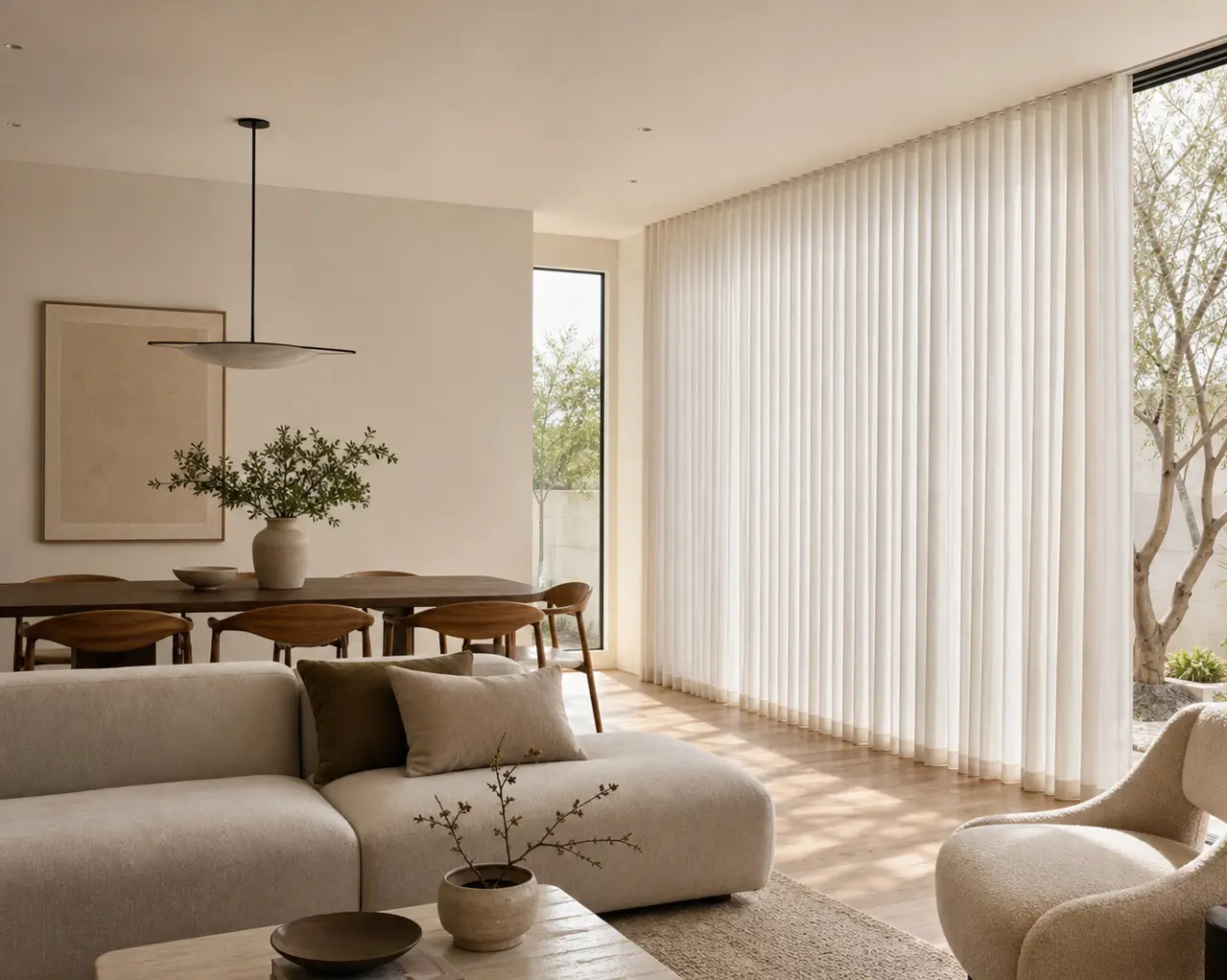
Two curtain layersSeparate daylight and privacy roles
Adaptable atmosphereOpen or close each layer as needed
Coordinated fabricsCompare both materials together
Australia-wide deliveryMade-to-measure orders delivered direct
01 Filtered daytime light
Keep a sheer layer closed to soften glare while the heavier curtain remains open.
02 Private at night
Close the rear curtain when stronger privacy and room darkening are required.
03 Visual depth
Two materials add dimension and let subtle texture sit beside a quieter solid layer.
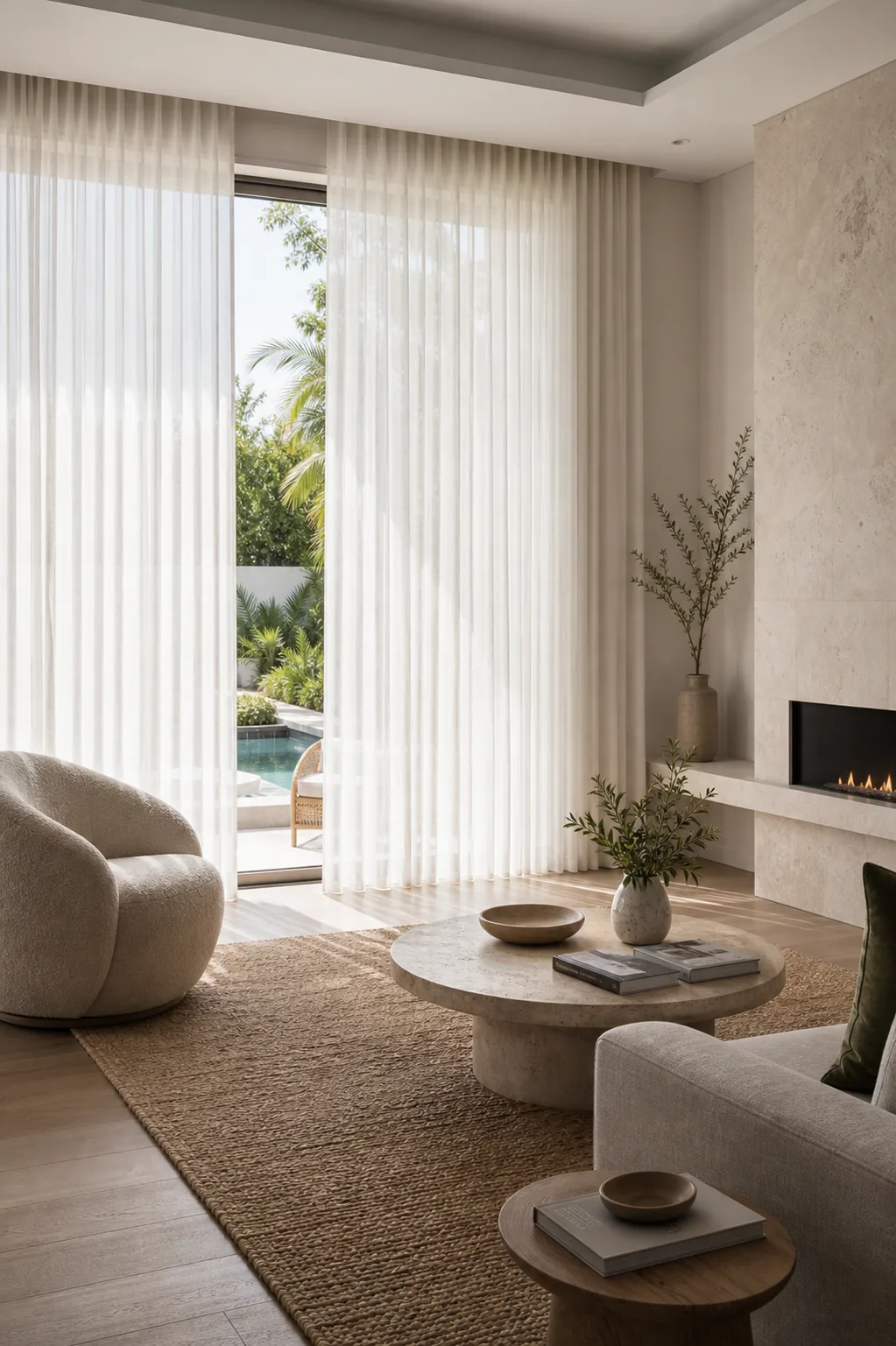
Design both layers together
Treat the track, stack and fabric pair as one system.
A layered curtain needs more depth than a single track and enough clear wall for both fabrics to stack neatly.
- 1Choose the front layerUse the sheer to set the tone, texture and quality of daytime light.
- 2Choose the rear layerMatch the second fabric to privacy, room-darkening and thermal priorities.
- 3Confirm wall and track spaceCheck brackets, track projection, stack-back and nearby doors or furniture.
Compare materials at home →
01 Compare at home
See the material against your walls and in your window light.
Choose samples →
02 Measure your opening
Plan the fit and keep a labelled record for every window.
Measuring guide →
03 Fit with confidence
Prepare the opening and use the instructions for your chosen system.
Installation guide →
Which layer sits at the front?
Plan the arrangement around how you want the room to look and how each curtain will be used. Confirm the selected configuration before measuring; both track positions need adequate clearance.
Can the two layers use different headings?
The supplied configuration supports matching headings or a heading for each curtain. Available combinations depend on the other choices and dimensions.
Should both layers have the same drop?
Review each layer against its own track position and intended floor finish. Do not assume two tracks necessarily use the same finished drop.
How much wall space do double curtains need?
Allow enough projection for both layers to move and enough space for the intended stacks. Use the track-specific measuring guide for the final dimensions.
01 Sheer daylight
Diffuse hard daylight and add softness while maintaining a light, open room.
02 Privacy and room darkening
Choose a lined or blockout solution where night privacy and stronger light control are priorities.
03 A tailored finish
Plan drop, fullness, heading and track placement as part of the room architecture.
Plan the composition
The best curtain starts beyond the edge of the window.
Consider where the fabric stacks, how high the track sits and how the curtain meets the floor before confirming measurements.
- 1Decide the practical jobStart with daylight, privacy, room darkening and insulation priorities.
- 2Choose the visual rhythmFabric texture and heading determine whether the result feels relaxed or structured.
- 3Allow for stack and travelPlan clear space beside the opening and an unobstructed path along the track.
Compare materials at home →
01 Compare at home
See the material against your walls and in your window light.
Choose samples →
02 Measure your opening
Plan the fit and keep a labelled record for every window.
Measuring guide →
03 Fit with confidence
Prepare the opening and use the instructions for your chosen system.
Installation guide →
Supported DIY journey
Measure first. Install with the right guide.
Double curtains require enough depth and stack-back for two moving layers. Confirm the exact track specification before taking final order measurements.
Pair the materials first
Two samples tell a more useful story than one.
View the sheer and privacy fabric together against the window before continuing to the available range.