Overview
Shutters began as a practical way to protect openings and control the conditions inside a building. Their materials and mechanisms have changed over time, but the familiar adjustable blades still serve that purpose in today's homes.
A brief history of shutters
Shutters developed as practical barriers at window openings long before today's adjustable interior products. Over time, fixed and hinged coverings evolved into systems that offered finer control over light and ventilation.
Before glass windows became common
Before glazed windows were widely affordable, solid coverings helped protect openings from weather and unwanted views. Being able to open and close them gave occupants a practical way to manage the room.
How shutters spread through Europe
Timber joinery allowed shutters to become more adaptable, with hinged panels and different arrangements for local buildings and climates. Their design continued to change as windows and construction methods developed.
How plantation shutters reached North America
Shutter designs travelled with European building traditions to North America. In warmer regions, wide adjustable blades became a useful way to manage sun, airflow and privacy around large openings.
Where did the name “plantation shutter” come from?
The term is associated with the broad-louvred shutters used in plantation-era houses, rather than the invention of shutters themselves. Today it generally describes the wide-bladed interior style.
The arrival of shutters in Australia
Shutters also became part of Australian buildings as people adapted familiar window treatments to local conditions. Their ability to shade openings helped keep them relevant as house styles changed.
From practical necessity to interior design
As glass became standard, shutters took on a different role. They remained useful for privacy and shading while their frame, colour and proportions became deliberate interior design choices.
How plantation shutters evolved
Modern systems add more precise hinges, adjustable blades and custom frame profiles to the basic hinged-panel idea. They can be made around the dimensions and operation of an individual opening.
From timber to modern PVC
Timber remains one option, while modern polymer materials offer other finishes and care characteristics. The best choice depends on the room and the specification of the actual range.
What about timber shutters?
Consider timber when you want visible grain or a stained finish. Check its maintenance needs and suitability for the room rather than assuming every timber shutter handles moisture in the same way.
How are plantation shutters used today?
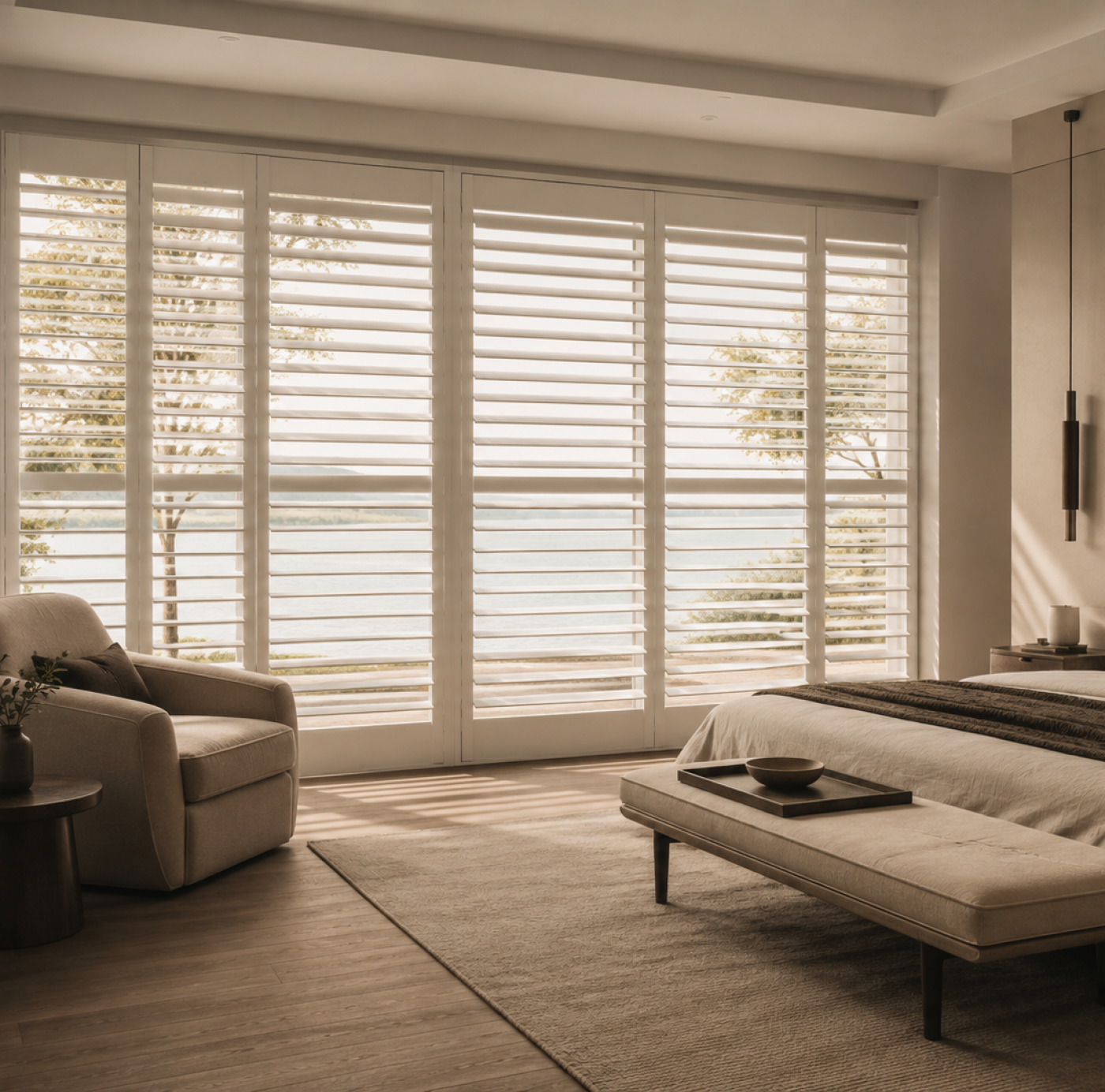
Today's shutters combine adjustable privacy with a substantial framed appearance. The blades manage everyday light, while opening the panels gives access to the glass and window hardware.
Light and privacy control
Small changes in blade angle can alter both glare and the view into a room. Try different positions through the day and check privacy again when the indoor lights are on.
Temperature and sun control
A closed shutter adds a layer between the room and the glass. Use it to shade strong sun or cover cold glazing, while remembering that results depend on the window, fit and wider building.
Easy maintenance
Dust regularly with a soft cloth and treat marks using the care instructions for the material. Avoid abrasive cleaning and do not soak hinges or other metal components.
Why have plantation shutters lasted so long?
The combination of light control, privacy and a durable window finish has kept shutters useful through many changes in architecture. Modern materials and hardware refine the same practical purpose.