Overview
Choose around the room's light, privacy and access needs. Shutters provide a substantial framed finish; blinds offer different fabric effects and compact operating systems. Comparing one window at a time is often more useful than expecting the same covering to suit the entire home.
Plantation shutters
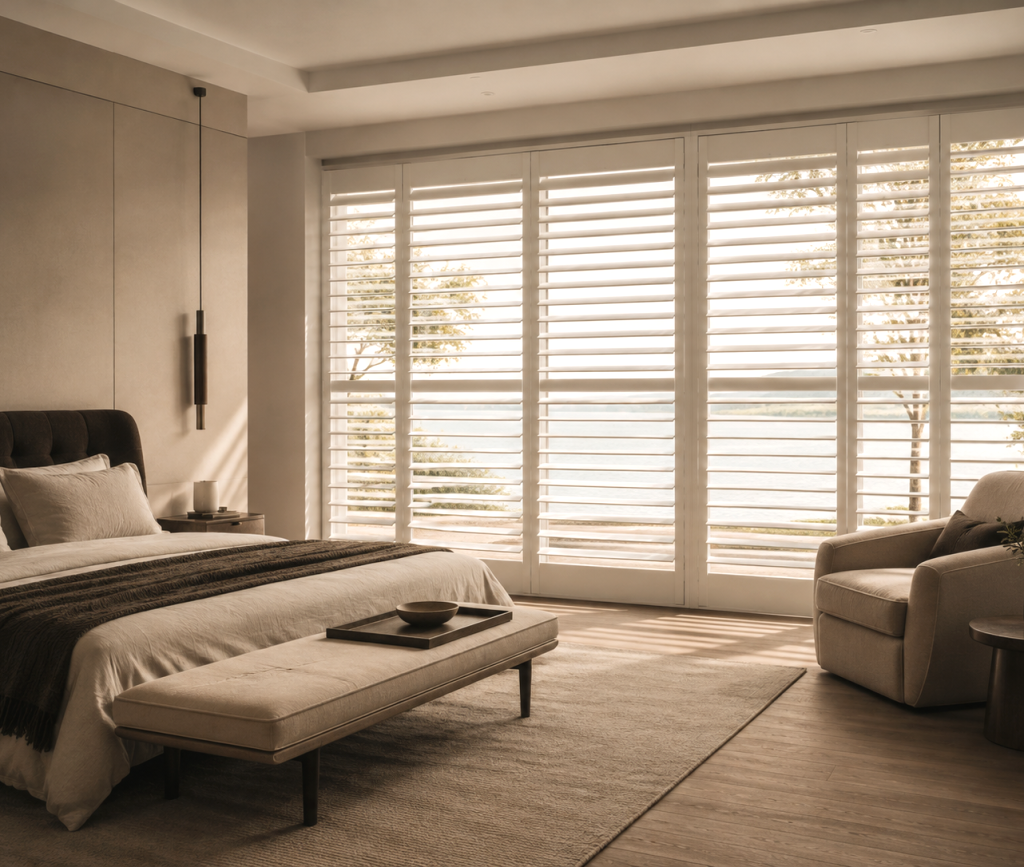
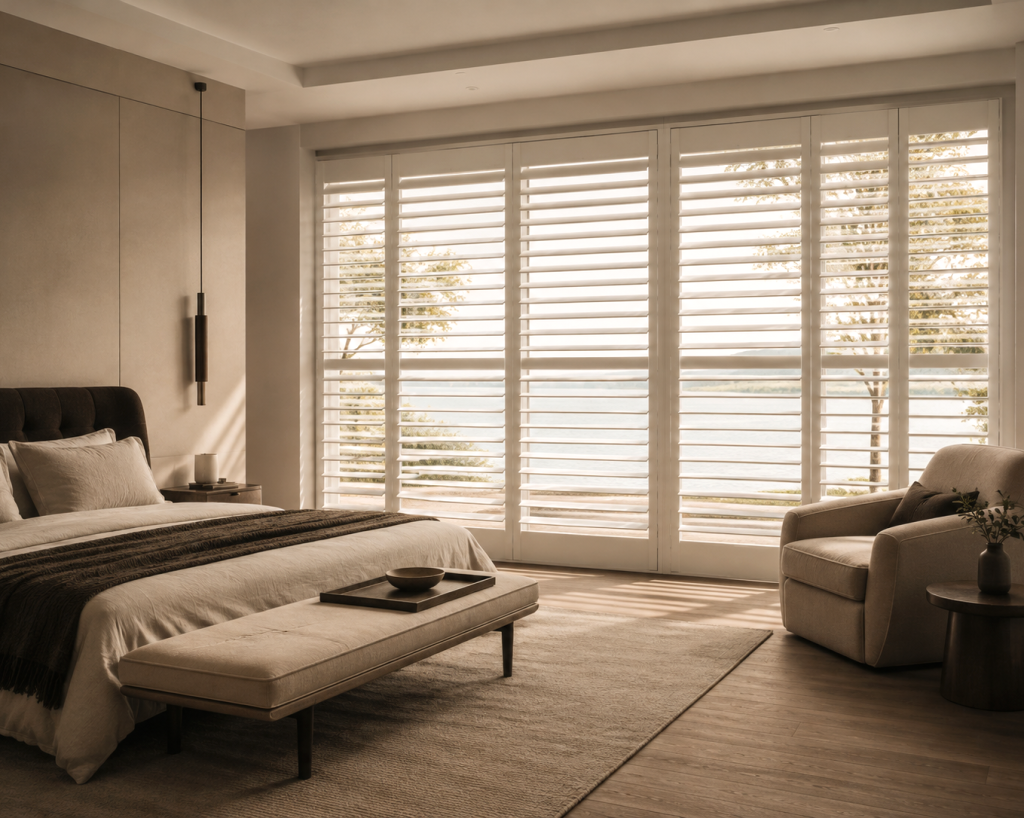
Shutters use hinged panels and adjustable blades within a fixed surround. Their proportions can follow the window's architecture, making them suitable when you want a substantial, integrated appearance.
Longevity
Fit, material and care all influence service life. Keep the panels operating freely, correct rubbing promptly and choose a range that suits the humidity and exposure of the room.
Cost and long-term value
Compare the initial delivered cost with the appearance, care and longevity you want. A higher purchase price can still suit your priorities, but it is not automatically the better option for every opening.
Cleaning and maintenance
Shutters offer accessible hard surfaces for routine dusting. Blinds need fabric- or material-specific cleaning. Follow the supplied instructions for either product and avoid harsh cleaners.
Light control
Tilt the blades gradually to redirect daylight and reduce glare. Closed shutters still have small operating gaps, so consider a dedicated blockout layer if the room needs stronger darkening.
Privacy
Angle the louvres to reduce direct views into the room while admitting light. Check the result from outside as well as inside, especially at night when the room is brighter than the street.
Style
The frame and panel divisions become part of the window's appearance. Coordinate them with existing mullions and trim, and check that the chosen colour works across the whole room.
Blinds
Blinds offer many fabric, colour and operating choices with a lighter visual presence. Consider them when you want a compact system, a particular textile or flexible layering across an opening.
Upfront cost
Blinds often provide a lower entry price, particularly across several windows. Compare the final sizes, fabrics and controls rather than assuming a basic starting price covers your chosen setup.
Privacy and light control with blinds
A blind's privacy depends on its fabric and position. Screen fabrics can preserve a daytime outlook but behave differently after dark; blockout layers offer stronger privacy when lowered.
Home decor and fabric choice
Fabric gives you another way to connect a window with furnishings and wall colours. Compare physical samples in the room and choose the light-filtering performance as carefully as the colour.
Versatility
Check the available width, control placement and mounting space for the opening. Large windows may suit multiple blinds or a linked system instead of one oversized unit.
Maintenance
Smooth fabrics and slatted products have different cleaning needs. Dust regularly, deal with marks according to the fabric instructions and keep operating components free from obstructions.
Which is better for bathrooms and kitchens?
For wet rooms, compare materials specifically suited to moisture and cleaning. Check the distance from taps, sinks and heat sources, and allow the window to open for ventilation.
Which is better for bedrooms?
Choose around your main priority: darkening, privacy, appearance or easy access. Shutters control light through their blades; a blockout blind with suitable edge coverage is often the stronger darkening solution.
Which is better for large windows and sliding doors?
Think about how people move through the opening and where coverings will sit when open. Wide windows and sliding doors may be easier to manage with separate blind sections or curtains. Confirm shutter suitability before ordering.
The verdict
Choose room by room. Shutters suit a framed architectural finish, while blinds offer varied fabrics and compact controls. Samples, mounting space and your light requirements should guide the decision.