
How to make a pelmet (or order one made to measure)
Build a box pelmet from MDF and fabric, size it to clear the track or roll, or order a Bonded Pelmet or roller blind fascia instead.
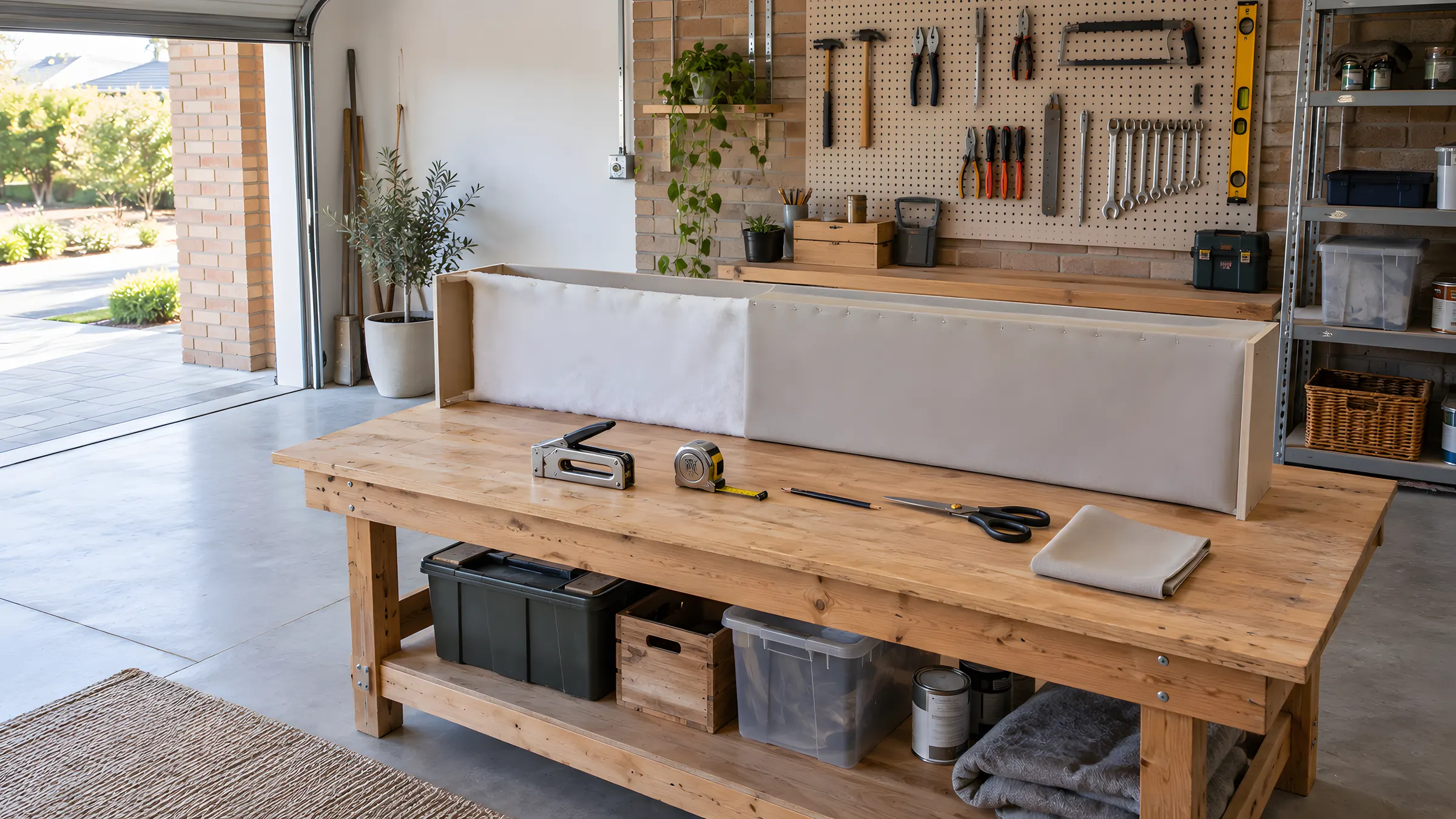
To make a pelmet, build a three-sided box from MDF or plywood: one front board and two end returns. Pad it, cover it with fabric and fix it above the window so it hides the curtain track or the roller blind roll. The two numbers that matter are the width, which should cover the hardware with a margin, and the projection, which must be deep enough to clear it. If you would rather not build one, we sell Bonded Pelmets, box pelmets for curtains and roller blind fascias.
In short
- A box pelmet is a front board and two returns, padded, covered in fabric and fixed to a batten or brackets above the window.
- Size it from the hardware: wide enough to cover the track or blind, deep enough to clear the roll, track and headings.
- For a roller blind, a made-to-measure fascia is ordered with the blind and matches its brackets and side covers.
- Bonded Pelmets come in projections of 80, 100, 120, 150 or 200 mm and are measured with our pelmet measuring guide, not a home-build method.
How a box pelmet is built
A box pelmet is a simple shape. A long front board hides the hardware, and two short returns at the ends hold it away from the wall. The whole box is fixed to a mounting batten or small brackets above the window. A top board is optional. It stiffens the box and gives you a flat surface to fix from.
A DIY pelmet is a manageable project if you have basic tools. If you are not sure what a pelmet does, or how it differs from a valance, cornice or cassette, read what is a pelmet first.
Work out the size
Size a home-built box from the hardware, not just the window. If you are ordering one of our pelmets, use the pelmet measuring guide instead, because it sets out the width, projection and fit for each of our products.
- Width. The front board covers the track or blind with a margin at each end.
- Projection. This is how far the box stands out from the wall. It has to clear the roll or track and the curtain headings. Our Bonded Pelmets come in projections of 80, 100, 120, 150 or 200 mm, which gives you a sense of the usual range.
- Height. The front board needs to hide the track and heading, or the roll and brackets, without dropping into the glass. Hold a strip of card in place and look at it from where you sit.
| Hardware | What the pelmet must clear | Watch for |
|---|---|---|
| Single curtain track | Track, gliders and the heading | S Fold has the deepest heading profile of our curtains, so check it first |
| Double curtains | Two tracks, one behind the other | Double curtains project 220 to 250 mm, more than a 200 mm Bonded Pelmet projection |
| Face-fit roller blind | Roll, brackets and the chain | Leave a way to reach the chain, or a battery motor's charger |
| Built-in pelmet cavity | The curtain projection | Double curtains need 250 mm of depth |
What you need
- MDF or plywood for the front board and returns
- A timber batten for the mounting
- Wood glue, screws or pins, and a drill
- Wadding or foam, fabric and a staple gun
- A saw, sandpaper, a spirit level and a tape measure
- A dust mask and eye protection
How to make a pelmet box
- Mark the sizes. Draw the front board and two returns on paper first, using the width, height and projection you have worked out.
- Cut the pieces. Cut the front board and the two returns from MDF or plywood, and sand the edges. Wear a dust mask and eye protection.
- Join the box. Glue and fix each return to the end of the front board, checking the corners are square. Clamp it while the glue sets.
- Add a top board if you want one. Fit it before the glue sets, so the box stays square.
- Pad the front. Glue or staple wadding to the front and ends, and trim it to the edges.
- Cover with fabric. Pull the fabric taut over the padding, staple it on the inside, fold the corners neatly and trim the excess. A plain or small-pattern fabric hides joins best.
- Fix the batten. Screw a batten to the wall or ceiling above the window, into a stud or a solid fixing, and check it is level. Check for pipes and cables before you drill.
- Fit the box. Fix it to the batten or brackets, then check that the curtains or blind move freely behind it.
A pelmet is a finishing detail. It hides the hardware and gives the window a straight top edge. It does not darken the room, and a cassette roller blind is the product to look at if light gaps are the concern.
Padded pelmet designs
Once the box is built, the cover decides the style.
- Straight and padded. A flat front covered in one fabric, clean and tailored. The simplest design to get right.
- Shaped lower edge. An arched, scalloped or stepped bottom edge cut from the front board before padding. It takes more care to cover neatly.
- Piped or trimmed. A thin piping or braid along the lower edge defines the shape.
- Painted. Skip the padding and paint the board to match the wall or trim, for a cleaner, plainer finish.
- Matched or contrasting. Cover the pelmet in the same fabric as the curtains for a calm look, or in a plain contrast. Hold both fabrics against the wall before you commit.
A DIY roller blind pelmet
A box over a roller blind works the same way, with a few extra checks.
- The box needs enough projection to clear the roll at its fullest, when the blind is raised.
- Leave access to the chain. If the blind is motorised, leave a way to reach the charger for a battery motor.
- Check how your blind is fitted before you build, using the roller blind installation guide.
A made-to-measure option avoids the guesswork. A roller blind fascia is a decorative cover for the hardware. It is ordered with the blind, comes with matching brackets and side covers, and is a face-fit system. It is not a cassette and does not remove every light gap. A fabric-wrapped fascia cannot be made in Screen or Shade fabric, and a double roller fascia wraps in the blockout layer's fabric. Choose it when you build your roller blind.
Ordering a pelmet instead
Making a pelmet is a satisfying job, but the cut, pad and fix steps take time. These are the made-to-measure routes:
- Bonded Pelmets. Fabric-covered pelmets that hide the roll or track and frame the window. They come in projections of 80 to 200 mm and are measured with the pelmet measuring guide. See Bonded Pelmets.
- Box pelmets for curtains. We sell these too. Contact us with your track type and window size and we will help you choose.
- Roller blind fascia. Ordered with the blind, as described above.
Tip: Cut a full-size template from cardboard and tape it above the window. Stand back and check the width, height and projection before you cut any board.
Whichever route you take, plan the pelmet at the same time as the curtain track. Our curtain installation guide shows how the track is fitted, and curtain tracks explained covers the choices that affect projection.
Questions
How do you make a pelmet?
Cut a front board and two end returns from MDF or plywood, join them into a three-sided box, pad and cover it with fabric, then fix it above the window on a mounting batten or brackets.
How big should a pelmet be?
Wide enough to cover the track or blind with a margin, and deep enough to clear the roll or track and curtain headings. For one of our Bonded Pelmets, use the pelmet measuring guide, which sets the width and projection (80 to 200 mm).
How do you make a pelmet for a roller blind?
Build a box that sits over a face-fit blind with enough projection to clear the roll and brackets. Leave access to the chain or battery charger. A made-to-measure fascia is ordered with the blind and does the same job.
Can I buy a pelmet instead of making one?
Yes. We sell Bonded Pelmets, box pelmets for curtains and roller blind fascias. Contact us with your track type and window size if you are unsure which suits.
Order a Bonded Pelmet
Fabric-covered pelmets that hide the roll or track and frame the window, sized to your opening.
Keep reading
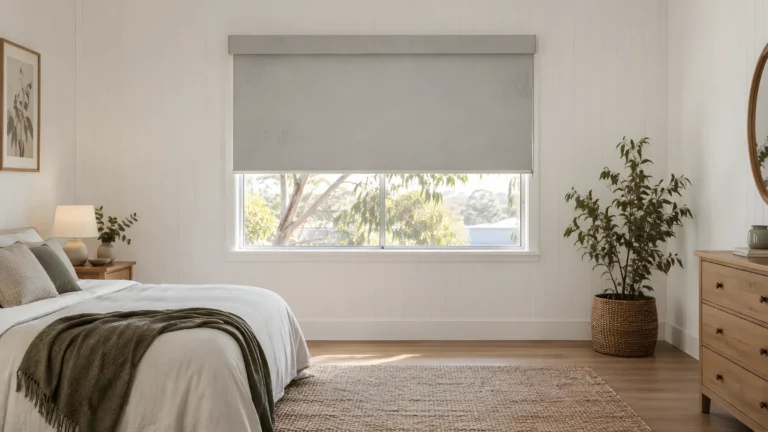 BlindsWhat is a pelmet? Fascias, box and bonded pelmets explainedA pelmet hides the hardware above a window. Here is how a roller blind fascia, a box pelmet and a bonded pelmet differ from each other and from a cassette.
 CurtainsCurtain tracks explained: wall, ceiling, curved and motorisedHow curtain tracks work and how to choose one: Designer, Half Moon, curved and motorised, ceiling or wall fit, fixed or free flow, brackets and wands.
 CurtainsCurtain rods vs curtain tracks: which is better?Curtain rod or curtain track? Compare look, glide, weight, double layers, bay windows and motorising, and see which suits your window.