
Curtain headings explained: S Fold, pencil, pinch and inverted
How S Fold, pencil pleat, pinch pleat and inverted pleat headings look, hang and stack, with a comparison table to help you choose the right one.
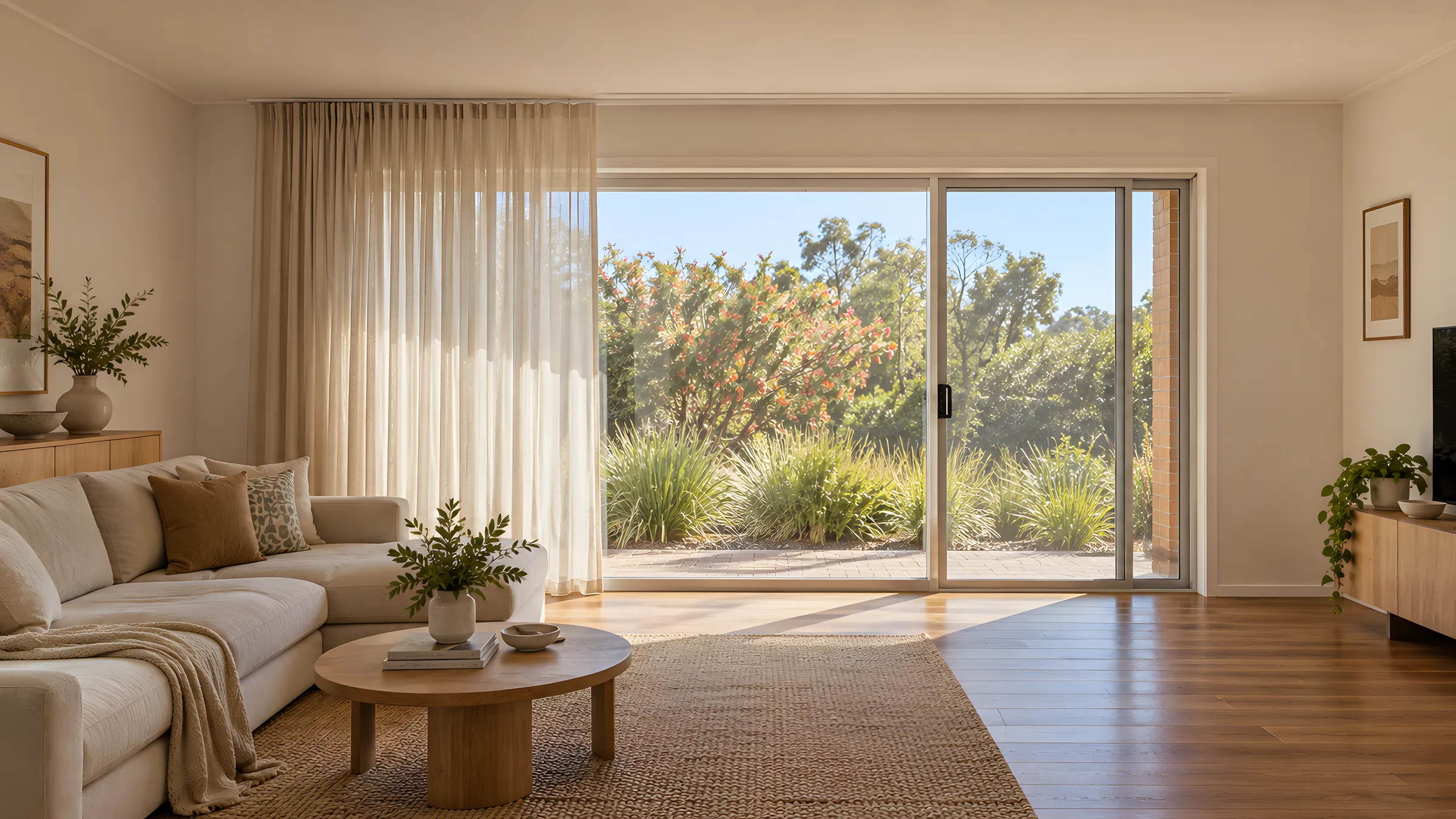
Curtain headings are the stitched tops of a curtain, and they decide how the fabric folds, how far the curtain sits from the wall and how much room it needs when open. We make five: S Fold, pencil pleat, double pinch pleat, triple pinch pleat and inverted pleat. S Fold is the most popular and a sound starting point, pinch pleat gives a more tailored finish, and pencil and inverted pleats work well as the rear layer behind another curtain.
In short
- S Fold is our most popular heading: regular, even waves and the deepest profile of the five, used with a ceiling (top) fit.
- Double and triple pinch pleat give a traditional, tailored look with clearly defined pleats.
- Pencil pleat and inverted pleat have fine folds similar to an S Fold and are often used behind an S Fold front layer.
- Curved, box and bay tracks take S Fold, pencil pleat or pinch pleat only.
- Choose the fabric first, then the heading, then check projection and stack-back space before you order.
Curtain headings at a glance
You pick the heading in the curtain configurator alongside the fabric, track, fullness and opening. This table shows what each one does before you build your order.
| Heading | How it looks | Where it works well | Worth knowing |
|---|---|---|---|
| S Fold | Continuous, regular, rounded waves | Modern rooms; the front layer of a double curtain | Deepest heading profile; used with a ceiling (top) fit |
| Pencil pleat | Fine, closely gathered folds across the top | The rear layer of a double curtain | Flat-stitched; folds similar in shape to an S Fold |
| Double pinch pleat | Fabric pinched into groups, two fingers per pinch | A classic, tailored look | Our most traditional flat-stitched heading |
| Triple pinch pleat | Pinched groups, three fingers per pinch | The same tailored look with a slightly fuller pinch | Traditional, flat-stitched |
| Inverted pleat | Flat front with the fullness folded in behind | The rear layer behind an S Fold front | Not offered on curved, box or bay tracks |
What are S Fold curtains?
S Fold curtains hang in a run of regular, even waves along the track, so the folds look consistent across the full width of the opening. It is the most popular heading in our configurator. It also has the deepest heading profile in the range, which adds volume and gives a look that is structured but soft. Some retailers call this style ripplefold or wave curtains.
The waves come from the heading and the track working together, so S Fold is used with a ceiling (top) fit. You can order it in sheer fabrics such as Cassis and Bali or in blockout fabrics such as Epic and Galaxy, with either a Designer or a Motorised track.
Because S Fold is the deepest heading, the curtain projects further from the wall than a flatter heading would. Allow for that if a window handle, sill or radiator sits close to the track. Our curtains installation guide covers fitting.
What is pencil pleat?
Pencil pleat is a flat-stitched heading with fine, closely gathered folds across the top. The folds are similar in shape to an S Fold, and it works well as the rear layer of a double curtain, often behind an S Fold front. It has its own effect on projection and on how the fabric stacks, so compare it with S Fold in the configurator rather than assuming the two match.
What is pinch pleat?
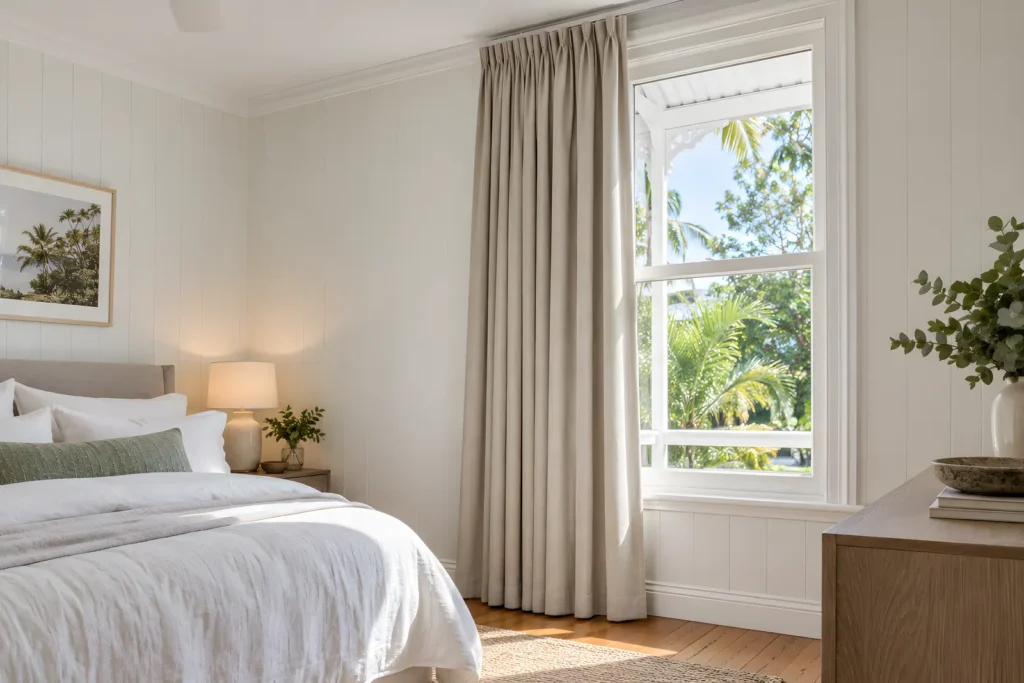
Pinch pleat is our most traditional flat-stitched heading. The fabric is pinched into groups at the top of the curtain, and each pinch has two or three fabric fingers: two for double pinch pleat and three for triple pinch pleat. The triple version has a slightly fuller pinch.
Both give a tailored, structured finish with clearly defined pleats rather than a continuous wave. That makes pinch pleat a natural fit for rooms with a more classic feel, or where you want the pleats to stay crisp when the curtain is closed.
What is inverted pleat?
Inverted pleat has a flat front, with the fullness folded in behind it. The folds are similar to an S Fold, and it suits use as a rear curtain, often behind an S Fold front layer. It is the one heading you cannot choose for a curved, box or bay track.
S Fold vs pinch pleat: how to choose
These two are compared most often.
| Question | S Fold | Pinch pleat (double or triple) |
|---|---|---|
| What does it look like? | A run of regular, even waves | Defined pleats in groups of two or three fingers |
| What is the feel? | Structured yet soft, clean and contemporary | Classic, tailored and more structured |
| How deep is it? | The deepest heading profile we make | A flat-stitched heading |
| Curved, box and bay tracks | Available | Available |
Four things usually settle it:
- Style of the room. S Fold suits a clean, contemporary line. Pinch pleat suits a more traditional or tailored look.
- Fit. S Fold is used with a ceiling (top) fit. If a wall (face) fit is your only option, confirm the heading choices in the configurator before you measure.
- Depth from the wall. S Fold projects the furthest. If you have a window handle, a deep sill or another blind behind the curtain, the flatter headings give you more room.
- Layering. If you want a second curtain behind the first, S Fold in front with pencil pleat or inverted pleat behind is the usual pairing.
Tip: Choose the fabric first, based on the light and privacy you need, then the heading. A heading looks quite different in a light sheer and in a heavier blockout, so compare fabric and heading together.
Which heading suits which fabric?
Both our sheers (Cassis, Cassis Volume and Bali) and our blockouts (Galaxy and Epic) are available with S Fold, and the other headings are offered across both fabric types too. Lighter sheer cloth tends to look softer and airier in any heading, while the heavier coated blockouts hold their folds and look more structured.
If you want the wave of an S Fold with night privacy, you have two routes: double curtains with a sheer at the front and a blockout behind, or a lined curtain. The next section covers how the headings combine. Our post on how to layer sheer and blockout curtains goes into the detail.
Headings for double curtains
On a double curtain the sheer hangs on a front track and the blockout on a rear track, and each layer has its own heading. The usual pairing is an S Fold front with pencil pleat or inverted pleat behind it.
That pairing also keeps the depth down. Double curtains typically project 220 mm to 250 mm from the wall, including the track and the fabric, and an S Fold front with a pencil or inverted pleat rear gives the slimmer end of that range at about 220 mm. Putting the deepest heading on both layers is possible, but it is not the slimmest option.
Headings for curved, box and bay windows
Curved tracks take S Fold, pencil pleat or pinch pleat only, so inverted pleat is off the list for corner, box and bay windows. If you have one of these windows, see our pages on curved curtains and box and bay curtains before you choose. We ask for a photo and a plan sketch of the window so the track can be made to suit.
Headings, fullness and stack-back
Fullness is how much fabric is used compared with the finished width of the curtain. We offer about 2.0, 2.2, 2.25, 2.4, 2.5 and 2.5 to 2.75 times the finished width. More fullness gives deeper, denser folds. About 2.0 sits flatter and looks simpler and less bulky, and 2.4 is a good middle-ground choice for many headings.
You do not multiply your track width yourself. Our curtain measuring guide asks for the track width, you choose the fullness, and the fabric width is worked out for you.
Fullness and heading also affect how much space the curtain takes when open. As a guide, for wall-to-wall windows a one-way curtain stack-back takes about 30 per cent of the track width, and a centre-opening pair about 15 per cent on either side. The heading changes how that stack looks and how far it projects, so leave clear wall beside the window rather than planning it to the millimetre.
Common mistakes when choosing a heading
- Ignoring projection near handles. A deep heading can foul a window handle or sill. Extension brackets move the track further from the wall or ceiling to clear an obstruction.
- Judging from photos of different fabrics. A heading photographed in a heavy fabric will not look the same in a light sheer. Order free samples and hold them up in your own light.
For a wider view of your options, our guide to the types of curtains covers fabrics, linings, tracks and openings alongside the headings. If you are weighing up sewing your own, DIY curtains: make your own or order made to measure compares the two routes.
Questions
What is the most popular curtain heading?
S Fold is the most popular heading in our curtain configurator. It gives regular, even waves along the track and has the deepest heading profile of the five we make.
What is the difference between double and triple pinch pleat?
Double pinch pleat has two fabric fingers in each pinch and triple pinch pleat has three. The triple version gives a slightly fuller pinch.
Which heading works best behind an S Fold curtain?
Pencil pleat and inverted pleat are often used as the rear layer behind an S Fold front on a double curtain. That pairing also gives the slimmer projection.
Which curtain headings are available for bay and corner windows?
Curved, box and bay tracks take S Fold, pencil pleat or pinch pleat. Inverted pleat is not offered on curved tracks.
Build your curtains
Choose your fabric, heading, track and fullness, and see the price before you order.
Keep reading
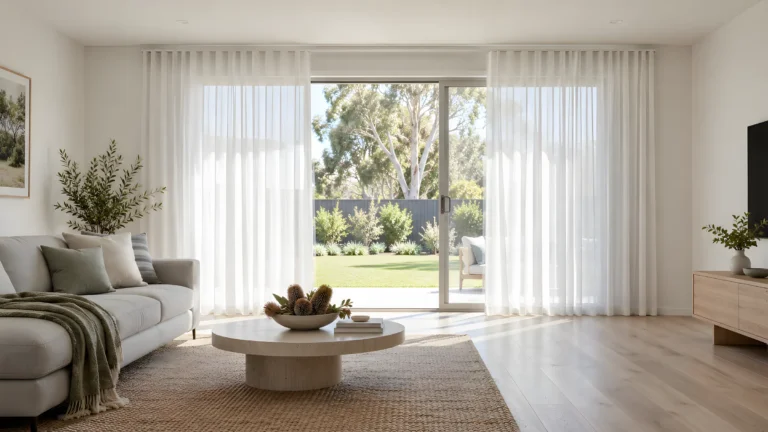 CurtainsTypes of curtains: fabrics, headings and linings explainedEvery type of curtain we make, from sheer and blockout fabrics to lined and double layers, headings and tracks, with a room-by-room guide to choosing.
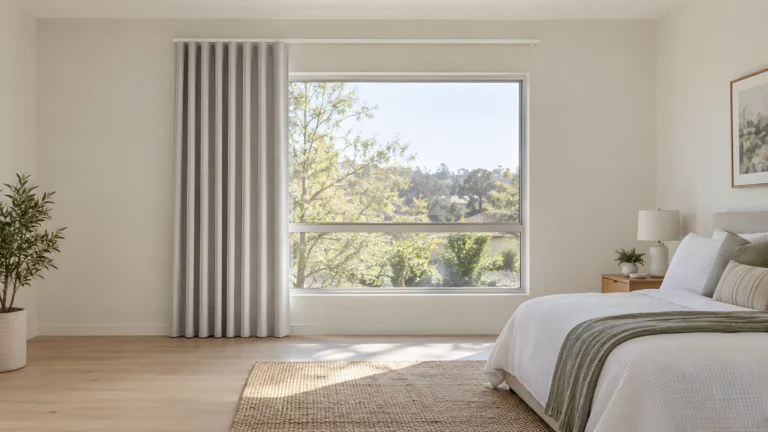 Measuring & fittingCurtain size guide: length, width and height to chooseHow long, wide and high curtains should be, with the three floor finishes, how wide to make the track and how much wall to leave for the stack.
 CurtainsHow to layer sheer and blockout curtainsHang the sheer at the front and the blockout behind on a double track, or choose a lining. Here is how to pick fabrics, headings, colours and depth.