
How much window depth do you need for recess blinds?
A single roller blind needs 70 mm of clear depth or 45 mm with a standard roll. Here are the depths for every product and which guide measures it.
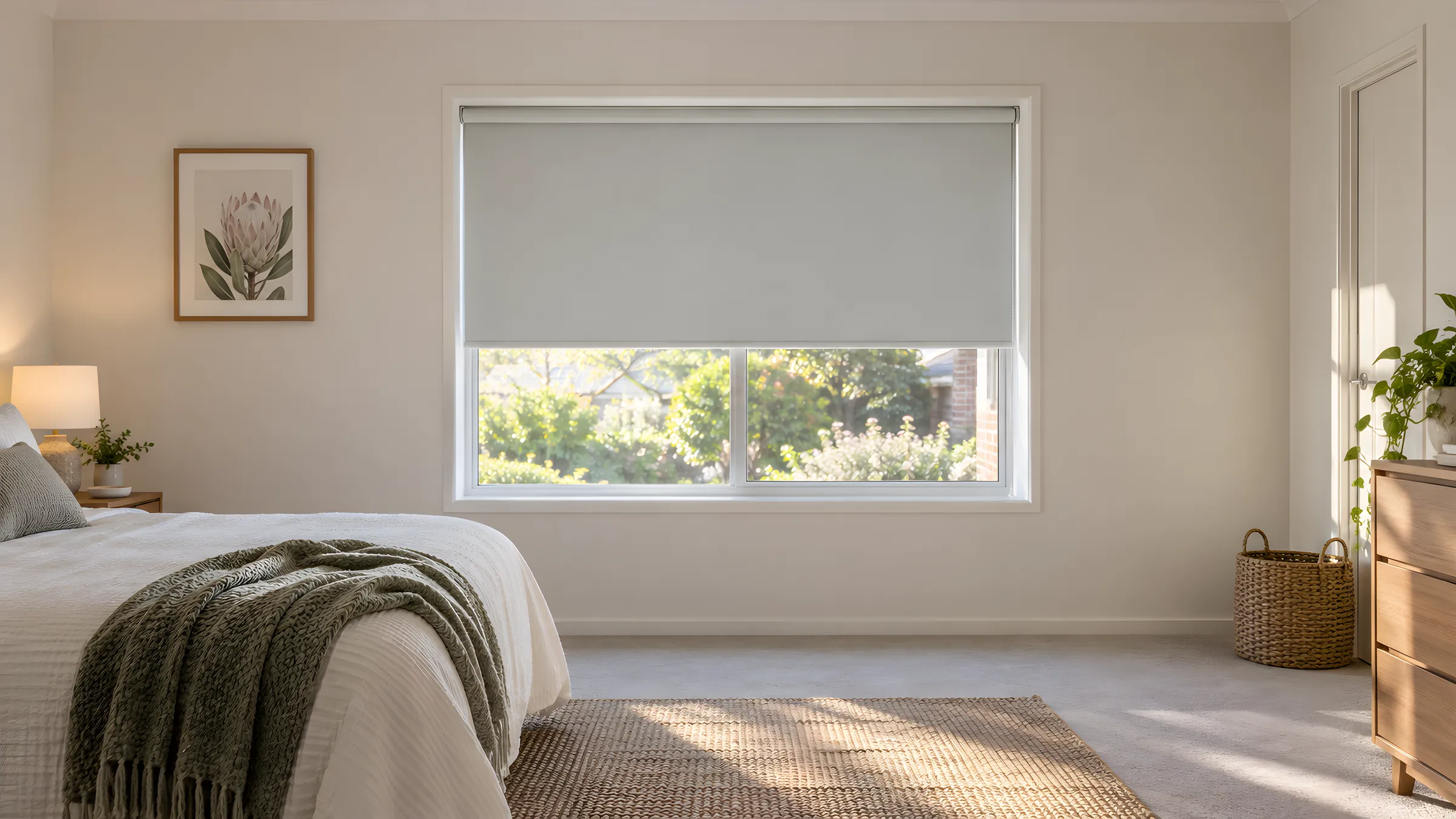
The minimum depth for recess blinds depends on the product. A single roller blind needs 70 mm of clear depth with a front (over) roll or 45 mm with a standard (under) roll, a double roller needs 90 mm or 70 mm, a Full Blockout Cassette needs 50 mm, and plantation shutters need 60 mm (inside Z-frame) or 70 mm (inside L-frame). Clear depth means the distance from the front of the recess to the first thing in the way, which is often a handle rather than the glass.
In short
- Single roller blind: 70 mm clear depth with a front (over) roll, or 45 mm with a standard (under) roll.
- Double roller blind: 90 mm with both blinds front rolled (the recommended recess setup), or 70 mm with both standard rolled.
- Full Blockout Cassette: 50 mm. Plantation shutters: 60 mm for an inside Z-frame and 70 mm for an inside L-frame.
- Depth is measured from the nearest obstruction to the front of the recess, using your product's measuring guide. If you are short on depth, face fit is the usual answer.
Minimum depth for recess blinds and shutters at a glance
Use this table to see whether your window has enough depth.
| Product | Clear depth needed | Notes |
|---|---|---|
| Single roller blind, front (over) roll | 70 mm | Hides the tube and clears handles and winders; sits farther from the glass |
| Single roller blind, standard (under) roll | 45 mm | Drops from the back of the tube, closer to the glass; blocks more light |
| Double roller blind, both front rolled | 90 mm | The recommended recess setup, on slimline dual brackets |
| Double roller blind, both standard rolled | 70 mm | Also on slimline dual brackets |
| Full Blockout Cassette | 50 mm | Matched with a compatible under-roll blockout blind; front roll not possible |
| Plantation shutters, inside Z-frame | 60 mm | Clear depth for the blades to open |
| Plantation shutters, inside L-frame | 70 mm | Clear depth needed for the blades to open |
| Plantation shutters, outside L-frame | About 65 mm projection | Face mounted, so it needs no recess depth |
| Vertical blinds | Enough for the vanes to rotate | Face fit is common |
| Double curtains | 220 to 250 mm projection | A built-in pelmet cavity needs 250 mm of depth |
Curtains and their tracks sit on the ceiling or wall, so the numbers there describe how far they project into the room, not depth in the recess.
What clear depth means
Clear depth is the number that counts, not the distance to the glass. It runs from the nearest obstruction to the front of the recess, and a window handle, winder, lock or catch that sticks out shortens the space you can use.
Each product's official measuring guide shows exactly how to check depth for that product, so use the one that matches your blind:
| Product | Measuring guide |
|---|---|
| Single roller blind | Roller blind measuring guide |
| Double roller blind | Double roller blind measuring guide |
| Full Blockout Cassette | Cassette roller blind measuring guide |
| Plantation shutters | Plantation shutters measuring guide |
| Other products | All measuring guides |
Tip: Compare your clear depth with the table above, and if you are only just over the requirement, ask whether a standard (under) roll or face fit would be less fiddly.
Recess depth for roller blinds and roll direction
Roll direction is the main reason a single roller blind has two depth figures. With a standard (under) roll, the fabric drops from the back of the tube, close to the glass, so it needs 45 mm. With a front (over) roll, the fabric drops from the front of the tube, which hides the tube and clears handles and winders, but it sits farther from the glass and needs 70 mm.
If your depth falls between 45 mm and 70 mm, a standard roll is the one that fits. Our standard roll vs reverse roll guide explains what each roll does to light gaps and clearance. If your depth is under 45 mm, a recess-fitted roller blind is unlikely to work and face fit is the better route.
Double roller blinds and cassettes need more
Double roller blinds
A double roller puts two independently operated fabrics on one set of slimline dual brackets, usually a daylight layer and a blockout layer. That takes more depth than a single blind: 90 mm with both blinds front rolled, which is the recommended recess setup, or 70 mm with both standard rolled.
If the recess is too shallow, one alternative is two single blinds: a recess-fitted one and a face-fitted under-roll one. Our page on double roller blinds explains the choices, and the double roller blind measuring guide covers the depth check.
Full Blockout Cassette
The cassette combines a headbox, side channels and a bottom channel. It needs 50 mm of clear depth. It is ordered together with a compatible under-roll blockout blind, matched by dimensions and window name, and it cannot be retrofitted. The cassette measuring guide covers the recess check.
Shutter frame depth
Shutter frames depend on depth and on how even the opening is:
- Inside Z-frame: the blades need 60 mm of clear depth. A front lip overlaps the edge of the recess.
- Inside L-frame: needs 70 mm of clear depth for the blades.
- Outside L-frame: face mounted, with about 65 mm of projection. It is the choice when the recess is too shallow or when hardware blocks an inside fit.
Uneven openings narrow the choice further. More than 6 mm of variation rules out an inside L-frame, and more than 12 mm rules out a Z-frame. Ordering runs through a quote and Expert Review, a paid check in which the team looks at your photos and measurements and checks fit, clearances and panel layout. See the shutter guide for detail.
Do you have enough window depth? What to do if it is too shallow
You have several options when the depth is short:
| Situation | Options to consider |
|---|---|
| Between 45 mm and 70 mm | Choose a standard (under) roll instead of a front roll |
| Under 45 mm for a roller blind | Switch to face fit, which needs little or no depth from the window |
| Handle or winder in the way | Use a front roll if there is room, or use face fit, which clears obstructions |
| Too shallow for a double roller | Consider two single blinds: recess plus a face-fit under-roll |
| Too shallow for an inside shutter | Use an outside L-frame, which is face mounted |
Our guide to recess fit or face fit covers the wider decision, including light gaps and looks, and our guide to measuring windows for blinds points you to the right official guide for each product.
Questions
How much depth do I need for a recess-fit roller blind?
A single roller blind needs 70 mm of clear depth with a front (over) roll or 45 mm with a standard (under) roll. Clear depth is measured from the nearest obstruction to the front of the recess.
Can I fit a recess blind if a window handle is in the way?
Measure the depth to the handle, not the glass, and compare it with the figures for your blind. If it is too shallow, a face fit or a front roll may solve it, since face fit clears obstructions and a front roll clears handles and winders.
How much depth do plantation shutters need?
Blades need 60 mm of clear depth with an inside Z-frame and 70 mm with an inside L-frame. An outside L-frame is face mounted and projects about 65 mm.
What if my recess is too shallow for any recess blind?
Use face fit, where the blind mounts on the wall or trim and needs little or no depth from the window. Plantation shutters have an outside L-frame for the same reason.
Do double roller blinds need more depth than single blinds?
Yes. Double rollers on slimline dual brackets need 90 mm with both blinds front rolled, or 70 mm with both standard rolled, compared with 45 to 70 mm for a single blind.
Build your roller blind
Choose your fit and roll direction, enter your measurements and see the price before you order.
Keep reading
 Measuring & fittingRecess fit or face fit? How to decide before you measureRecess fit sits inside the window opening; face fit mounts on the wall or trim around it. Here is how to choose, and what changes when you measure.
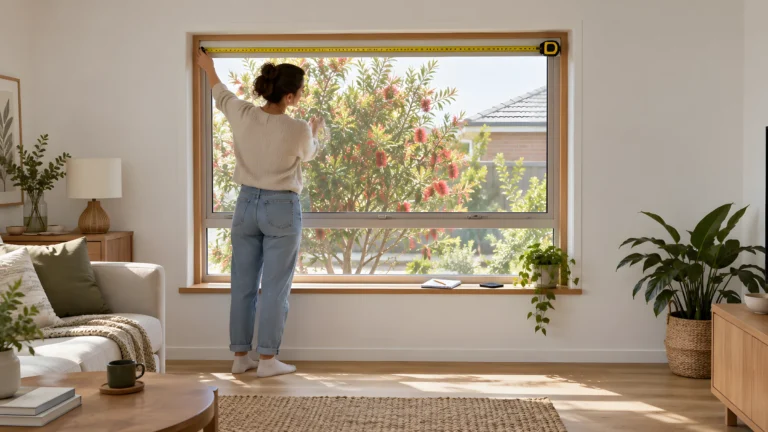 Measuring & fittingHow to measure windows for blinds: 10 mistakes to avoidMost measuring mistakes are avoidable. Here are the ten we see most, and the official measuring and installation guide to use for each product.
 ComparisonsStandard roll or reverse roll: which way should your blind roll?Standard (under) roll blocks more light and needs less depth. Reverse (front or over) roll hides the tube and clears handles. Here is how to choose.