
How to measure windows for blinds: 10 mistakes to avoid
Most measuring mistakes are avoidable. Here are the ten we see most, and the official measuring and installation guide to use for each product.
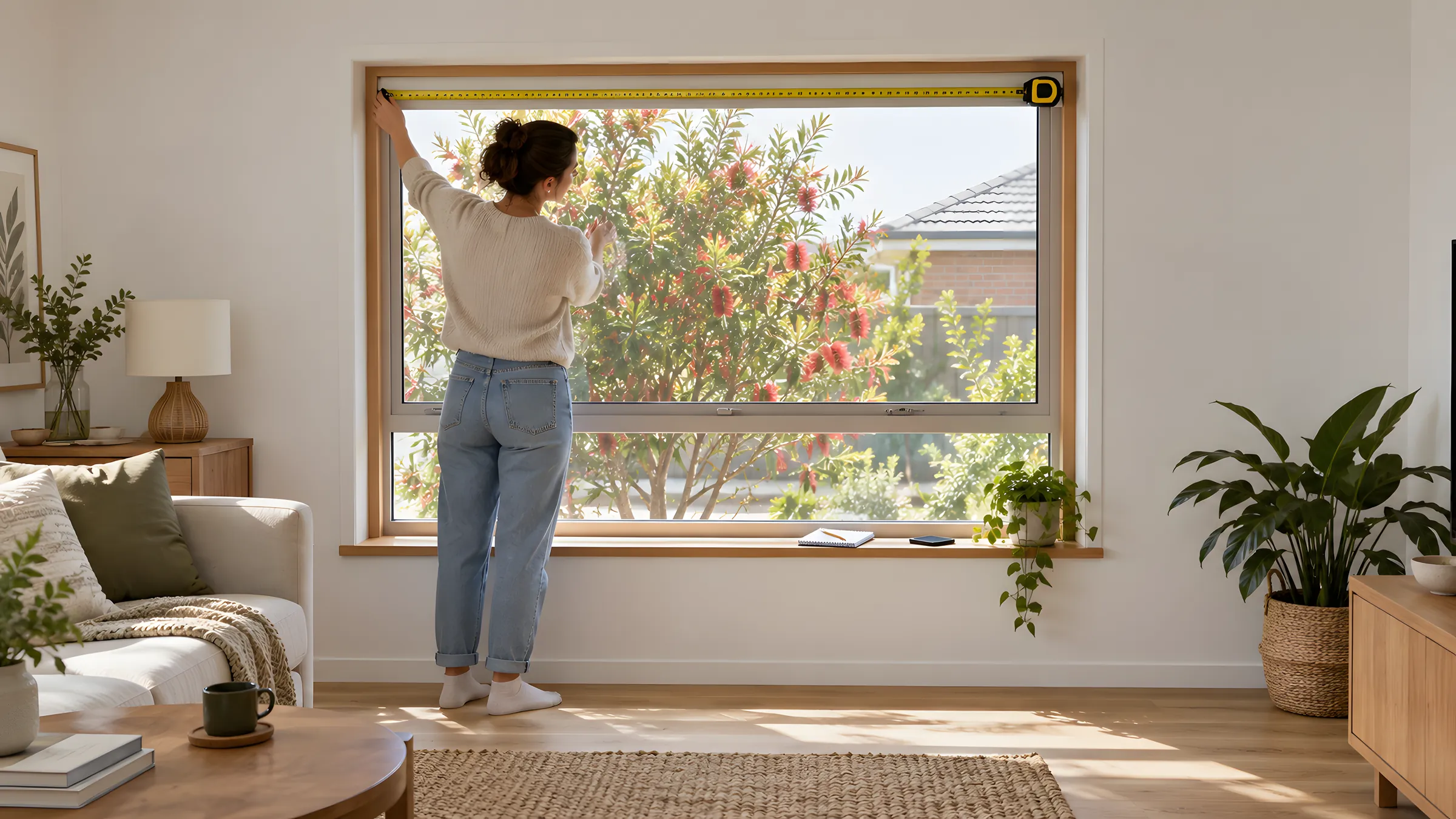
Here is how to measure windows for blinds: use the official measuring guide for the exact product, because each product has its own rules about which measurement to use. Our guides all start the same way: a metal tape, millimetres, the width first and then the drop, every window measured separately. Most mistakes come from small things that are easy to avoid, such as a generic method, the wrong fit or a number taken from the wrong place.
In short
- Choose recess fit or face fit first, then open the guide for your product. The fit changes what you measure.
- Do not make your own deductions on ordinary recess measurements. The factory does that, and special windows have their own guide.
- Check depth and obstructions against the guide for your product, and label every window.
- Every product has its own measuring guide and installation guide. The table below sends you to the right ones.
Before you start: the basics
Made-to-measure blinds are cut to the numbers you give, so accuracy matters more than it does for a ready-made product. Our guides ask for the same basics every time.
- Use a metal tape measure, a pencil and our measurement worksheet.
- Work in exact millimetres. Do not round, use a cloth tape or copy dimensions from house plans.
- Record the width first and the drop second.
- Measure every window separately, even when two windows look identical.
- Label each window by room and position, for example "Lounge left" or "Bed 2".
- Repeat each reading aloud if someone is writing it down, and check every measurement and order detail twice, then a third time.
Decide the fit before you measure. Our guide to recess fit or face fit explains the choice, and some sites call these inside mount and outside mount.
How to measure windows for blinds: 10 mistakes to avoid
Each mistake below comes down to the same fix: check the point in the guide for your product, rather than relying on a general rule.
1. Measuring before you choose the fit
Recess fit sits inside the window opening and face fit sits on the architrave or the wall around it. They are measured differently, so pick one first. If you measure for a recess and then decide on face fit, you will need to start again.
2. Making your own deductions
For ordinary recess measurements, our guides tell you not to make factory deductions yourself. Taking a few millimetres off "to be safe" can leave you with a blind that is smaller than you intended. Where a special window or product does need its own allowance, the guide for that product says so, so check it before you measure.
3. Using the wrong measuring points
Windows are rarely exactly square, so one reading can mislead you. The number that goes into the order depends on the product and the fit, and each guide names the points to measure and which reading to use. Check your product's guide rather than assuming the same rule applies across products.
4. Ignoring recess depth
A blind that fits the width can still fail on depth. Each product needs a different clear depth, and the figure also depends on the roll direction for rollers. Check your guide, and read our guide to window depth for blinds and shutters if the figure is close.
5. Forgetting what sticks out
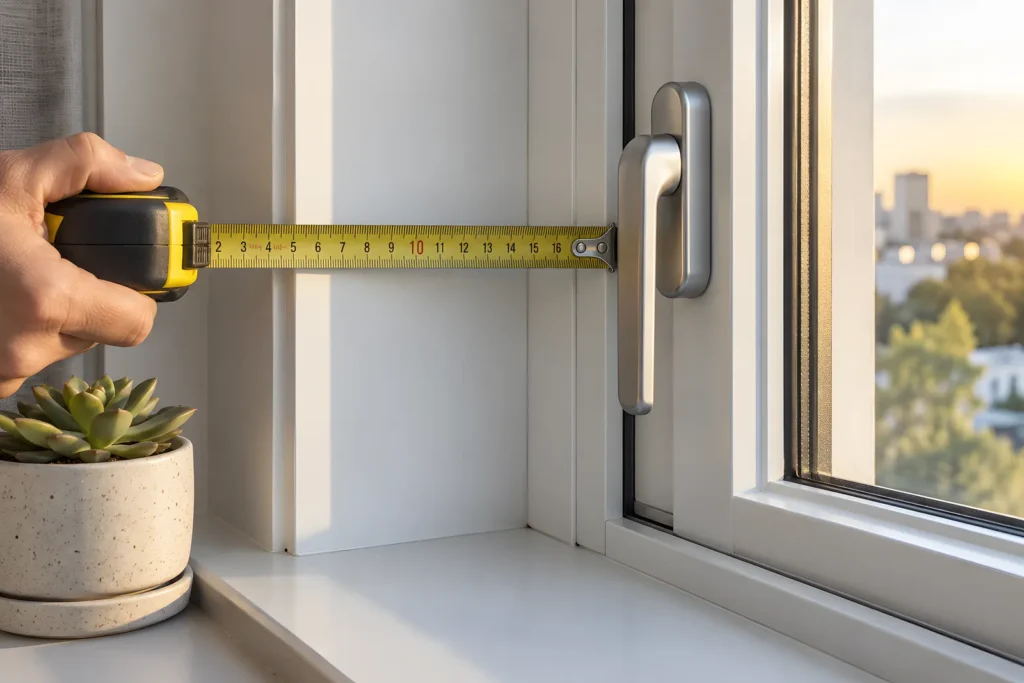
Clear depth ends at the first thing in the way, and that is often a window handle, winder or lock, not the glass. In kitchens, also check taps and handles near the window. Our guides ask you to check winders, knobs, handles, inward-opening windows and anything that sits in the path of the drop. When an obstruction rules out a recess fit, the guides point you to face fit.
6. Copying the size of an old blind
If you are replacing blinds, do not simply copy their size. The old blind may have been made with its own allowances or fitted differently, so its width says little about the window. Photograph the old fittings before they come off, since they show where the blind used to sit, then measure the window using the guide for your new product.
7. Measuring curtains like blinds
Curtains work differently from blinds. You order a track width rather than a fabric width, and the drop, finish and fit options have their own steps. Use the curtain measuring guide for single curtains, the double curtain guide for layered sets and the guides for curved tracks and bay windows when they apply, all listed in the table below.
8. Guessing the face fit overlap
Face fit blinds must overlap the opening or they leave gaps you did not plan for. How much overlap you need depends on whether the window has architraves and on the product. Take the allowance from the guide for your product, not from a general rule.
9. Skipping labels, or mixing up width and drop
It sounds minor, but swapped figures are a classic error. A window that is 1200 wide by 1800 high can turn into an 1800 wide by 1200 high order with one slip. Label the windows, write "W" and "D" next to each figure, and check the order screen against your notes before you confirm.
10. Using a general method for special windows
Bay windows, corner windows, doors, wide openings and shutters each have their own method. A generic blog method will not give the right answer for them. Use the bay window, corner, door or linked blinds guide in the table below as it applies. For plantation shutters, the team checks fit, clearances and panel layout before production through Expert Review, a paid check.
Note: SureFit measurement protection depends on following the product-specific measuring guide and meeting its eligibility requirements. It is separate from the product-defect warranty and has its own conditions on the warranty and SureFit page.
Which guide to use for each product
Open the measuring guide for your product before you measure, and the installation guide when your order arrives. The full lists are on the measure guides and installation guides pages.
| Product | Measuring guide | Installation guide |
|---|---|---|
| Roller blinds | Roller blinds | Roller blinds |
| Double roller blinds | Double roller blinds | Double roller blinds |
| Full Blockout Cassette | Cassette roller blinds | Roller cassette |
| Linked roller blinds and wide openings | Linked blinds | Linked roller blinds |
| Vertical blinds | Vertical blinds | Vertical blinds |
| Panel glide blinds | Panel glide blinds | Panel glide blinds |
| Timber venetian blinds | Timber venetians | Timber venetians |
| 25 mm and 50 mm aluminium venetians | 25 mm aluminium or 50 mm aluminium | Aluminium venetians |
| Curtains | Curtains | Curtains |
| Double curtains | Double curtains | Double curtains |
| Box and bay window curtains | Box and bay curtains | Box and bay curtains |
| Plantation shutters | Plantation shutters | Plantation shutters |
| Blinds on bay windows | Bay window blinds | The installation guide for your product |
| Blinds on corner windows | Corner blinds | The installation guide for your product |
| Blinds on half-glass and French doors | Door blinds | The installation guide for your product |
For bay windows, blinds use the bay window blinds guide, curtains use the box and bay curtains guide, and shutters have their own method in the bay window shutter guide.
A simple routine to follow
Once you have the right guide open, this routine keeps the process orderly.
- Choose your fit and open the product's measuring guide.
- Clear the sill and move anything that blocks the tape.
- Take the measurements the guide asks for, in millimetres.
- Note handles, winders and locks, and check the depth the guide asks for.
- Write each figure with a label and a W or D.
- Photograph each window, including the trim and anything that projects.
- Ask someone else to check your notes, or look again the next day.
- Enter the figures in the configurator and compare them to your notes before you order.
Tip: Order free samples while you measure. Seeing the fabric against your wall and frame in morning and evening light helps you avoid a colour surprise.
Checklist before you order
- The fit (recess or face) is chosen for every window.
- You have opened the measuring guide for every product in your order.
- Depth and obstructions are checked against the product's requirements.
- Nothing has been deducted, unless your guide asks you to.
- Windows are labelled, and width and drop are not swapped.
- The size falls within the product limits shown in the configurator.
When the order arrives, follow the installation guide for your product, and see our guide to measuring, ordering and fitting DIY blinds yourself for how the whole process fits together.
Questions
How do you measure for made to measure blinds?
Use a metal tape, measure in millimetres, record the width first and then the drop, and measure every window separately. Then follow the measuring guide for your product, because each one names the exact points to measure.
Do I deduct anything from my window measurements?
For ordinary recess measurements, no. The factory makes its own deductions. Special windows, such as corners, bays and curtains on butting tracks, have their own rules, so read the guide for your product.
Should I measure my old blinds to order new ones?
No. Measure the window again using the guide for your product. An old blind may have been made and fitted differently from the way you want the new one to fit.
What is the most common measuring mistake?
Using a generic method instead of the guide for the product. Each of our guides names the exact points to measure and the fit allowances for that product.
Does SureFit cover measuring mistakes?
SureFit is a measurement protection with its own conditions. You need to follow the product-specific measuring guide and meet the eligibility requirements, and it works through a defined remake pathway for covered measuring errors.
Ready to measure?
Pick your product, enter your measurements and see the price before you order.
Keep reading
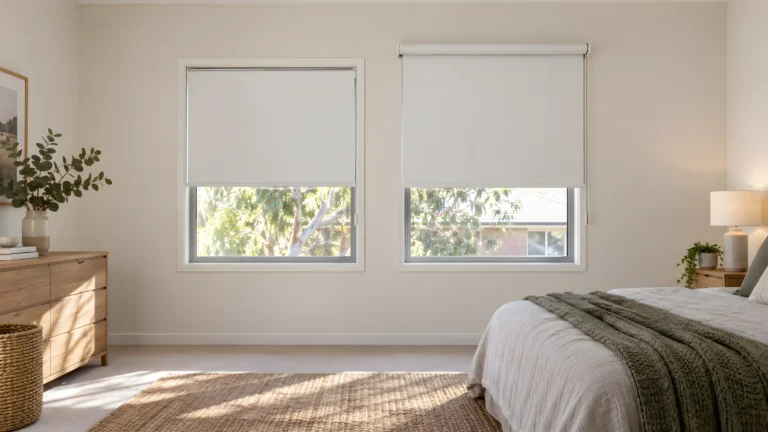 Measuring & fittingRecess fit or face fit? How to decide before you measureRecess fit sits inside the window opening; face fit mounts on the wall or trim around it. Here is how to choose, and what changes when you measure.
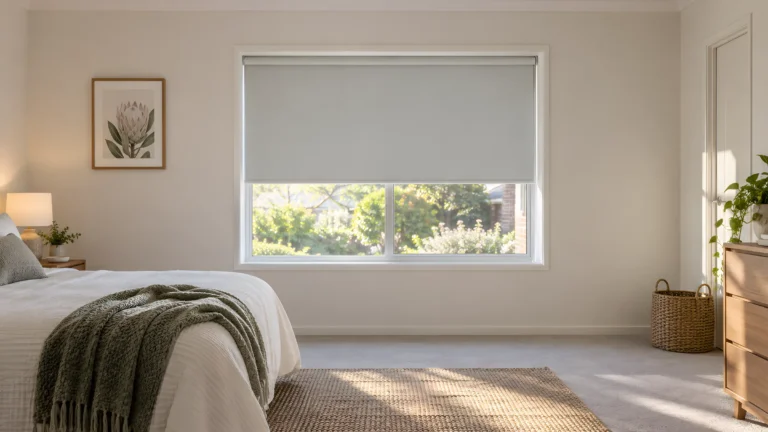 Measuring & fittingHow much window depth do you need for recess blinds?A single roller blind needs 70 mm of clear depth or 45 mm with a standard roll. Here are the depths for every product and which guide measures it.
 Measuring & fittingDIY blinds: measure, order and fit them yourselfDIY blinds means you measure and fit; the factory makes the blind to your size. Here are the five steps and the official guide for each blind type.