
DIY blinds: measure, order and fit them yourself
DIY blinds means you measure and fit; the factory makes the blind to your size. Here are the five steps and the official guide for each blind type.
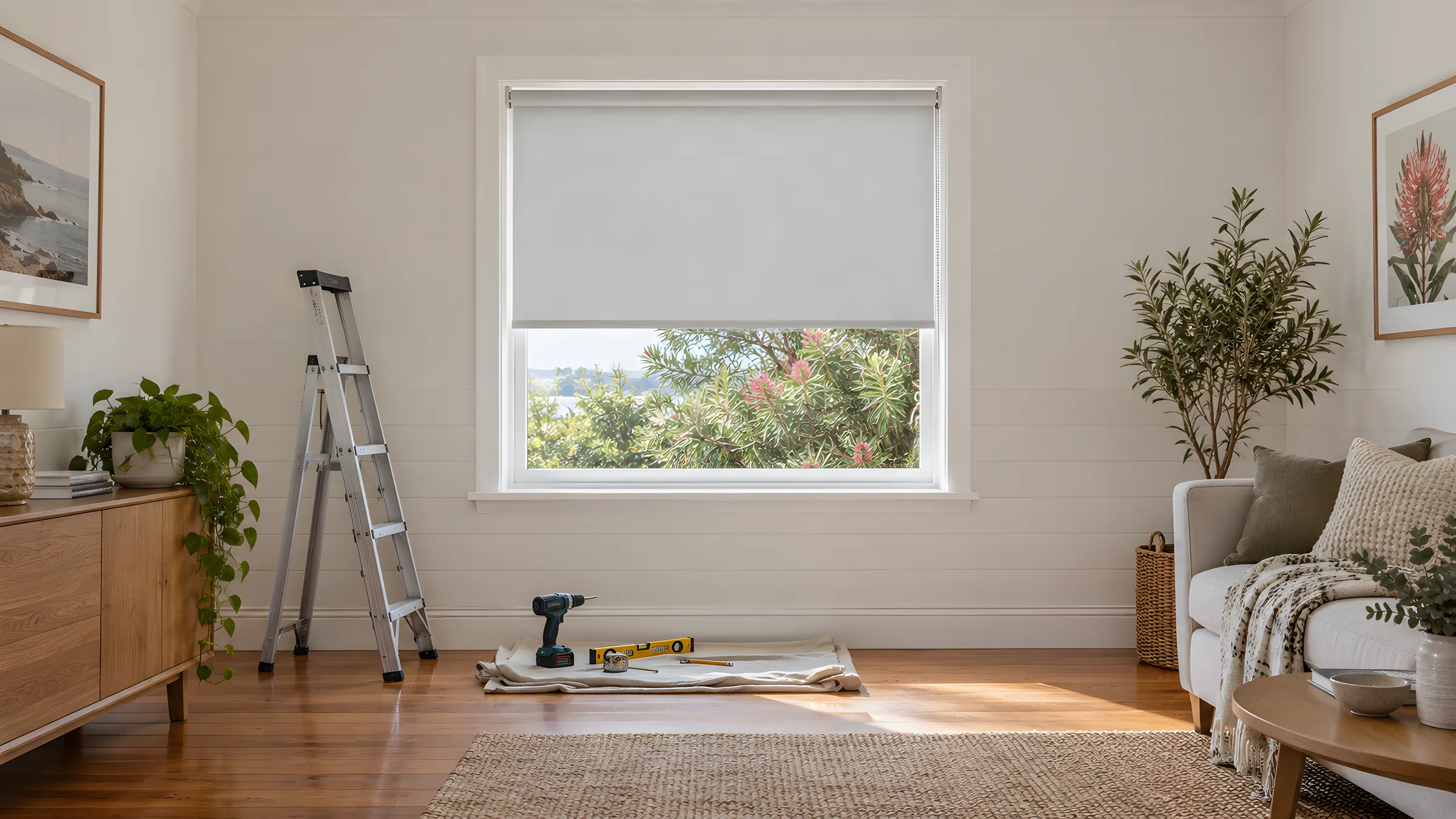
DIY blinds here means measuring and fitting made-to-measure blinds yourself, not building them from scratch. You measure each window, order online, and the factory makes the blind to your size. A single roller blind is usually manageable alone with basic tools, while double, linked, cassette and panel glide blinds reward more care. For the how-to, use our official measuring and installation guides for your product, linked in the table below.
In short
- You do two jobs: measure and fit. The blind is made to your measurements.
- The steps are decide, sample, measure, order and install.
- Use the official measuring guide and installation guide for your product. Do not adapt a method written for another blind.
- A single roller blind is the simplest to fit. Doubles, linked blinds, cassettes and panel glides need more care.
- Battery motors need no mains wiring. Hardwired motors need a licensed electrician.
What DIY blinds really means
DIY blinds can mean making a blind from fabric and a tube. Here it means something simpler: a made-to-measure blind that you measure and fit yourself, without paying anyone to do either. That is our model. You measure and install, and we deliver the product, practical guidance and support.
Because every blind is made to your measurements, the quality of the result depends on two things you control: accurate numbers and a level, secure fit. Neither needs special skills. They need patience, a good tape measure and a few checks, and our guides set out exactly what to do for each product.
The five steps from decision to fitted blind
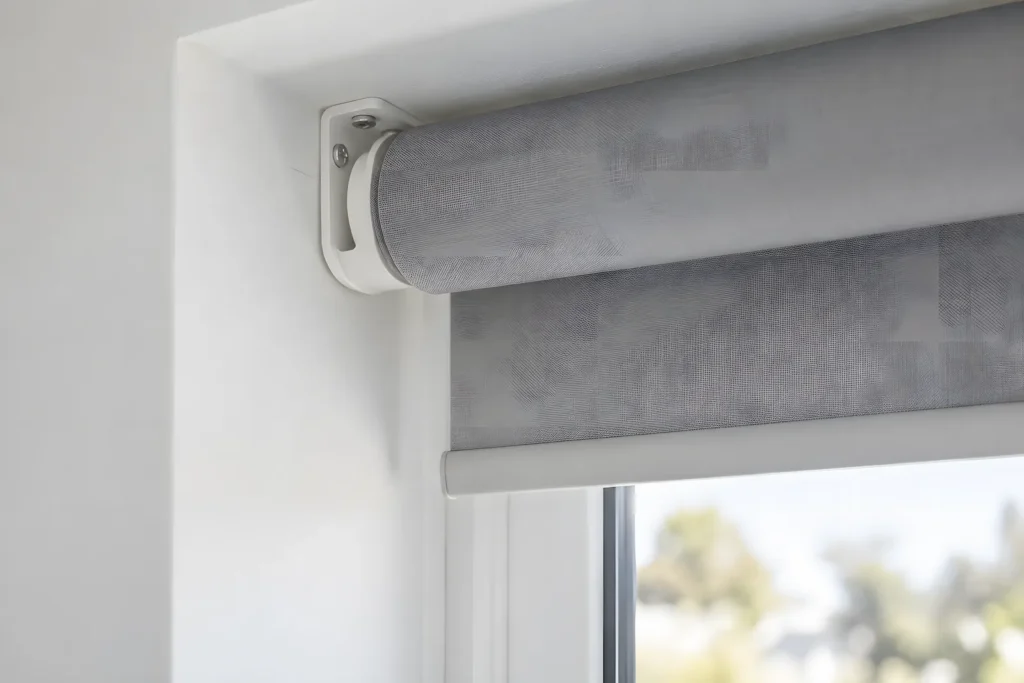
- Decide. Choose the fabric type (blockout, light filter or SunScreen), the fit (recess or face) and the control (chain, cordless or motorised). A recess fit sits inside the opening and looks neat. A face fit goes on the wall or trim, covers more of the opening and cuts light gaps. Some sites call these inside and outside mount.
- Sample. Order free samples and look at them in your own light, morning and evening, against your walls, floor and window frames. Screens are only a guide to colour.
- Measure. Open the measuring guide for your product and follow it for every window. Measuring differs between products, so a method for one blind can give the wrong size for another. Our article on how to measure windows for blinds explains the decisions that come before you measure.
- Order. Each product has its own configurator. Enter your measurements, choose fabric and controls, and see the price before you order.
- Install. Open the installation guide for your product and follow it from start to finish, including any safety fittings supplied.
Which guide to use for each blind
This table is a rough guide to where the effort goes, with the official guides for each product. Everything here is a DIY job, but some blinds ask for more care or a second pair of hands.
| Blind | Plan for | Measuring guide | Installation guide |
|---|---|---|---|
| Single roller (DIY roller blinds) | The easiest job. A stepladder | Roller blind measuring | Roller blinds installation |
| Double roller | The most planning among rollers, because both layers need depth and clearance | Double roller measuring | Double roller installation |
| Linked roller | A second person for wide spans | Linked blinds measuring | Linked roller installation |
| Cassette roller | Ordered with a matching blind, so it cannot be retrofitted | Cassette roller measuring | Roller cassette installation |
| Timber venetian | A second person for wide timber blinds | Timber venetian measuring | Timber venetian installation |
| Aluminium venetian | Lighter, but careful handling | 25 mm aluminium measuring or 50 mm aluminium measuring | Aluminium venetian installation |
| Vertical | Space for the vanes to stack and rotate | Vertical blinds measuring | Vertical blinds installation |
| Panel glide | A second person, and room for the stack | Panel glide measuring | Panel glide installation |
| Motorised roller | Battery: no mains wiring. Hardwired or C-Bus: a licensed electrician | As the blind you choose | Motorised roller fitting |
| Plantation shutters | A larger job again | Plantation shutters measuring | Plantation shutters installation |
For the full lists, see all our measuring guides and installation guides. Bay and corner windows have their own measuring guides too, including the bay window blinds measuring guide.
Tools and kit
Most fitting jobs use the same basic kit. Gather it before you start, and check your product's installation guide for anything specific.
- Metal tape measure, pencil and a notepad or phone for your figures
- Masking tape and a marker to label each blind and window
- A stable stepladder, and a second person for wide or heavy blinds
- Cordless drill and a spirit level
- Fixings that suit your wall or frame, along with the brackets and screws supplied
- A drop sheet and a small vacuum for the dust
Timber frames, plasterboard, aluminium frames and brick all take different fixings, so the installation guide for your product is where to check the details.
Mistakes that cost the most
- Making your own deductions. The measuring guide for your product says what to enter. The factory makes the allowances, and a second set of deductions makes the blind too small.
- Using a generic method. A bay window, a corner or a shutter has its own guide. A general walkthrough can lead to the wrong size.
- Assuming matching windows are the same size. Measure every window and label each one, as the guides ask.
- Ignoring depth and obstructions. Check handles, winders and flyscreens, and read the depth requirement for your product in its measuring guide before you choose recess fit.
- Skipping samples. A colour that looks right on screen can look different against your walls.
- Leaving out the safety fittings. A chain blind comes with a child-safety device that stops the chain forming a loop over 220 mm. Fit it as the installation guide shows, and keep chains out of reach of children.
Tip: Read your measuring guide all the way through before you start, then measure again on a different day or ask someone to read the tape back to you. A mistake of a few millimetres is easy to make at the end of a long list of windows.
DIY blockout blinds, verticals and other choices
Your choice of blind changes the job less than you might expect, but a few points are worth knowing.
- DIY blockout blinds. Blockout roller blinds stop light passing through the fabric. A face fit or standard roll cuts the edge light further.
- DIY vertical blinds. Decide the stack direction, left, right or split, when you order. The vertical blinds guides cover the rest.
- DIY panel blinds. Panel glide blinds need space beside the opening for the stack, so check handles and doors against it.
- DIY venetian blinds. Timber venetians are heavier, so a second person helps. Aluminium venetians are lighter but bend if handled carelessly.
When to ask for help
You do not need to work it all out alone.
- Odd windows. If a window is an unusual shape or has an obstruction, ask us before you order, and send a photo.
- Measuring errors. SureFit measurement protection provides a defined remake pathway if a covered measuring error occurs. It has its own conditions, so follow the product guide and read the eligibility requirements.
- Mains wiring. Hardwired and C-Bus motors need a licensed electrician. A battery motor does not need mains wiring.
Questions
Can I fit made-to-measure blinds myself?
Yes. You measure each window, order online, and fit the blind with the supplied brackets using basic tools. A second person helps with wide blinds, and hardwired motors need a licensed electrician.
What tools do I need to install blinds?
A metal tape, pencil, stepladder, drill, spirit level, and fixings suited to your wall or frame. Use the screws and instructions supplied for the brackets, and check the installation guide for your product.
Which blinds are easiest to fit yourself?
A single roller blind is the simplest. Double rollers, linked blinds, cassettes and panel glide blinds need more care in measuring and fitting.
Do I need to make deductions when I measure?
No. For rollers, venetians and most other blinds, enter your measurements as the guide describes. The factory makes the allowances.
What if I measure wrongly?
SureFit measurement protection covers a defined remake pathway if a covered measuring error occurs, as long as you followed the product guide and meet the eligibility requirements.
Measure, order and fit your own blinds
Enter your measurements, choose your fabric and controls, and see the price before you order.
Keep reading
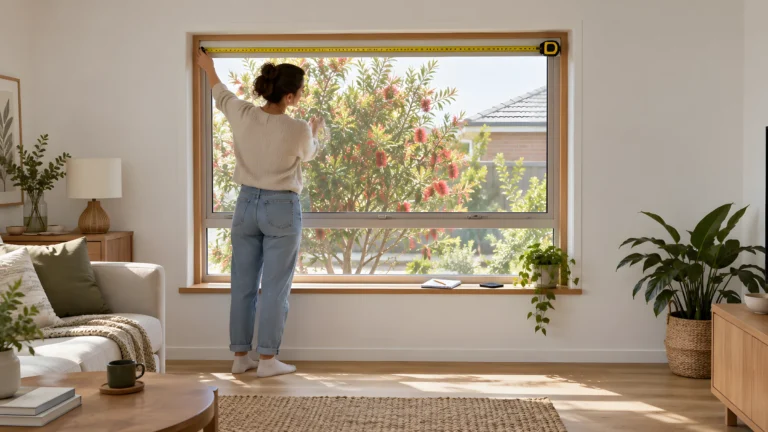 Measuring & fittingHow to measure windows for blinds: 10 mistakes to avoidMost measuring mistakes are avoidable. Here are the ten we see most, and the official measuring and installation guide to use for each product.
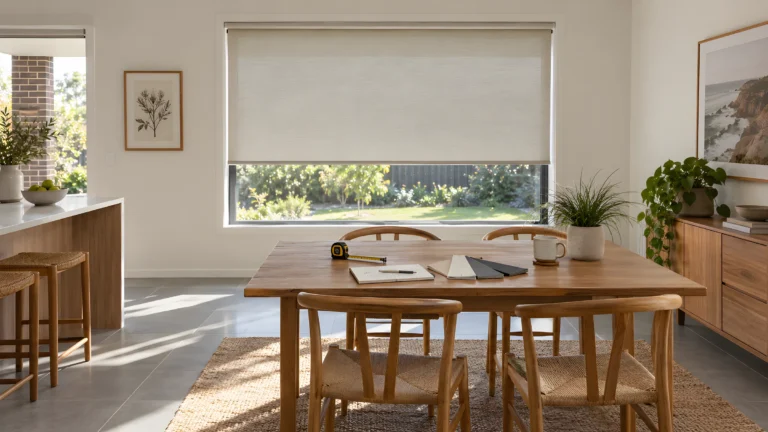 Measuring & fittingHow to buy blinds online: a step-by-step guideBuying made-to-measure blinds online takes five steps: decide, sample, measure, order and install. Here is what to do at each step and what to check.
 Measuring & fittingRecess fit or face fit? How to decide before you measureRecess fit sits inside the window opening; face fit mounts on the wall or trim around it. Here is how to choose, and what changes when you measure.