
How to clean venetian blinds: aluminium, timber and fauxwood
A step-by-step guide to cleaning venetian blinds, with the right method for aluminium, timber and fauxwood slats and what to avoid, including vinegar.
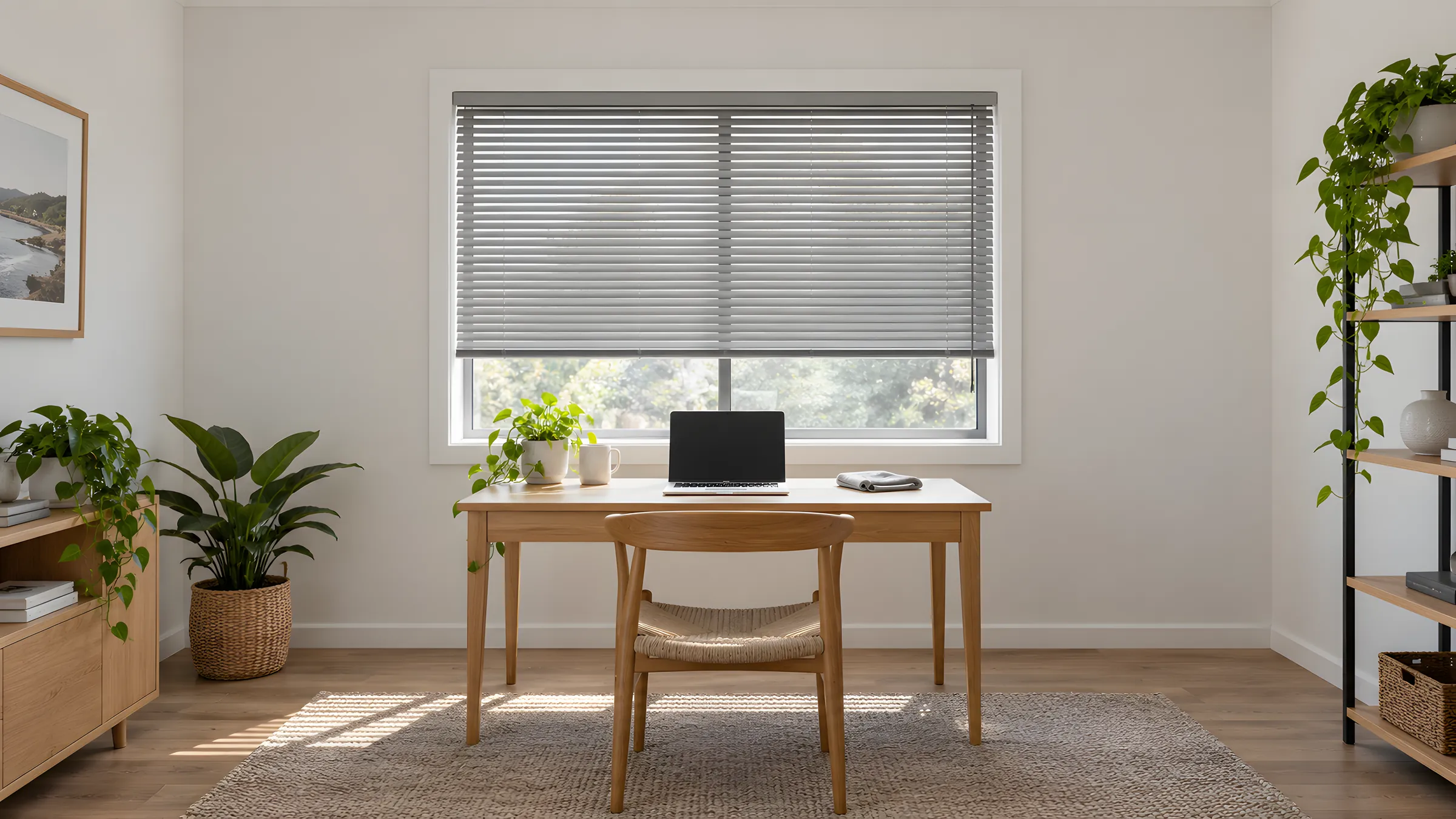
To clean venetian blinds, tilt the slats closed, dust them with a dry microfibre cloth, then wipe each slat with a cloth that is only slightly damp and dry it straight away. The method changes with the material: aluminium and fauxwood can take a damp wipe, while timber needs the driest touch and should never be soaked.
In short
- Dust first, then wipe: a dry microfibre cloth for dust, a barely damp cloth for marks, and a dry cloth to finish.
- Tilt the slats one way, clean, then tilt them the other way and clean the reverse.
- Aluminium bends easily, timber dislikes water, and fauxwood is the most forgiving of damp wiping.
- Avoid abrasive pads, solvent cleaners and soaking, in line with the care advice for our shutters and roller blind fabrics.
- Vinegar is optional and should never go on timber. Mild soapy water does the same job with less risk.
Care basics from our shutter and roller blind instructions
Venetian slats are hard surfaces with a headrail and a lift and tilt mechanism, so the care points we give for plantation shutters and roller blind fabrics carry over:
- Dust regularly with a soft cloth.
- Treat marks according to the material (aluminium, fauxwood or timber), and test a hidden spot first.
- Avoid abrasive cleaning and solvent cleaners.
- Do not soak the headrail, cord or other metal components.
The material-specific methods below sit under these points. The closest hard-surface advice is in how to clean plantation shutters, and the fabric-blind version is in how to clean roller blinds.
The quick answer by slat material
Venetian blinds, sometimes called horizontal blinds, have slats that tilt for light and lift for the view. Our range covers timber venetian blinds, aluminium venetian blinds and fauxwood venetians, and each material has its own limits.
| Slat material | Dust with | Wipe marks with | Avoid |
|---|---|---|---|
| Aluminium | Dry microfibre cloth or soft duster | Damp cloth with warm water and a drop of mild washing-up liquid, then dry | Abrasive pads, and pressing hard on the slat, which bends it |
| Timber | Dry microfibre cloth, or a vacuum brush on low suction | Barely damp cloth, dried immediately | Soaking, wet cloths, steam and harsh chemicals |
| Fauxwood | Dry microfibre cloth | Damp cloth with mild soapy water if needed, then dry | Abrasive pads and solvent cleaners |
Fauxwood venetians and aluminium venetians are waterproof, which is why they suit kitchens and bathrooms. Dry them after wiping so water does not leave spots.
What you need, and the tilt technique
Gather a few soft items before you start:
- A dry microfibre cloth or soft duster
- A vacuum with a soft brush attachment
- A second cloth, damp and well wrung out
- A bowl of warm water with a drop of mild washing-up liquid (aluminium and fauxwood only)
- A clean, dry cloth for finishing
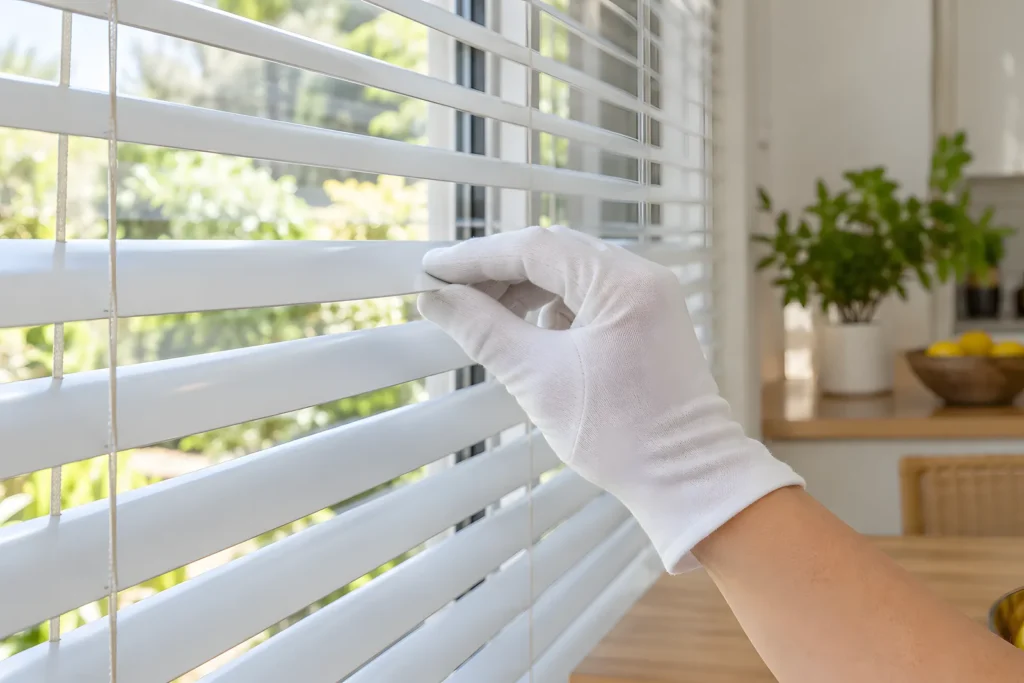
- A thin cotton glove, optional but very effective
Tilting the slats closed presents a near-flat surface you can wipe in a single line, and tilting them the other way exposes the opposite faces. You are not scrubbing, just guiding the cloth along each slat.
How to clean venetian blinds step by step
- Lower the blind fully and tilt the slats closed. Lowering spreads the slats out so every one is within reach. Tilt them so the top faces angle slightly upwards towards you.
- Dust from the top down. Run the dry cloth along the slats from one side to the other, or use the vacuum brush on low suction. Do the top of the headrail too.
- Tilt the slats the other way and repeat. This cleans the reverse faces, which collect just as much dust.
- Test a hidden spot. Try your damp cloth on the end of a bottom slat, let it dry, and check for any change in finish.
- Wipe each slat along its length. Support the slat from behind with your free hand so it does not bend. Work top to bottom so drips fall on slats you have yet to clean.
- Dry as you go. Follow the damp cloth with a dry one, then tilt the slats open to let air reach them.
Tip: Slip a thin cotton glove on your hand, dampen it very slightly, then pinch each slat between your finger and thumb and slide along it. You clean both faces at once and the slat is supported the whole way.
Cleaning each material
How to clean aluminium venetian blinds
Aluminium slats are thin and can kink if you press against them, so let your free hand support each slat as you wipe. Warm water with a drop of washing-up liquid on a well-wrung cloth lifts most marks and fingerprints. Rinse the cloth in clean water often and dry each slat afterwards. Skip abrasive pads and powders, which scratch the finish, especially on dark colours such as Ebony.
How to clean wooden blinds (timber venetians)
Timber is the most sensitive to moisture, so keep it dry. Dust with a microfibre cloth or a vacuum brush on low suction, then wipe marks with a barely damp cloth and dry the slat immediately. Never soak the slats, never let water sit on the timber, and skip steam cleaners. Furniture polish or oils are best left alone unless the care information for your blind recommends them, since they can leave a film that attracts dust. Test a hidden spot first, and if you are unsure, contact us before trying anything stronger. If you are choosing for a bathroom or laundry, fauxwood is the sturdier option.
How to clean fauxwood venetians
Fauxwood gives the timber look in a faux wood slat and copes with damp wiping better than real timber, which is why it suits kitchens and bathrooms. Use a damp cloth with a little mild soapy water, rinse the cloth, wipe again and dry. Avoid abrasive pads and solvent cleaners.
Can you clean venetian blinds with vinegar?
Vinegar is a popular home remedy, but you rarely need it. Warm water with a drop of washing-up liquid removes dust film and grease from aluminium and fauxwood without the smell.
If you want to try diluted white vinegar on aluminium or fauxwood for a stubborn cloudy film, dilute it well with water, test one slat first, wipe it off promptly and dry the slat. Do not use vinegar on timber, as acidic cleaners can dull or damage a finish. Never leave any liquid sitting on the slats or running into the headrail.
Fixing streaks, film and other common problems
Most problems come from too much liquid, too much detergent or skipping the drying step.
| Problem | Likely cause | What to do |
|---|---|---|
| Streaks after wiping | Too much washing-up liquid, or the slats air-dried | Wipe again with a cloth wrung out in clean water, then dry each slat |
| Cloudy or sticky film | Cooking grease or hand oils that have built up | Warm water with a drop of washing-up liquid, a few slats at a time, then rinse and dry |
| Dust that smears | Dry dust wiped with a wet cloth | Dust dry first, then damp wipe |
| Dull or rough patches on timber | Moisture or a cleaner that has affected the finish | Stop cleaning that area and contact us with a photo |
| A kinked aluminium slat | Pressure while cleaning or handling | Do not try to bend it flat with force; contact us |
Mistakes that damage venetian blinds
- Cleaning with the blind raised. The slats bunch together, so you miss most of the surface and press on them.
- Pressing on aluminium slats. They bend easily, and a kink cannot be fully smoothed out.
- Soaking timber. Water swells and can mark the finish, and it is hard to reverse.
- Using a strong cleaner because it is quick. Solvents, bleach and abrasive powders can strip or dull a finish. Start gentle and test a hidden spot.
- Leaving the slats closed and damp. Tilt them open so air reaches both faces while they dry.
Grease, cords and when to take the blind down
Kitchen grease. A greasy film builds up quickly near the cooktop. Use warm water with a drop of washing-up liquid, work a few slats at a time, and change your cloth as it picks up grease. Both fauxwood and aluminium venetians suit kitchens, and our kitchen blinds page compares them with roller blinds and shutters. For damp rooms, see the bathroom blinds options.
Cords and control. Dust any cords and the control with a dry cloth, and wipe with a barely damp cloth if they are grubby. Do not pull on cords or soak them. Keep any cords, chains or wands tidy and out of reach of children and pets. If a cord or the tilt control is damaged rather than dirty, see venetian blind repairs.
Taking the blind down. You rarely need to remove a venetian blind to clean it. If there is heavy build-up, or you are painting, follow our guide on how to take down venetian blinds and clean the slats flat on a towel. Do not submerge the headrail, and lay aluminium slats flat so they are not bent under their own weight.
For the other blind types, our overview of how to clean blinds covers each one. If you are still deciding between slat materials, see timber, fauxwood or aluminium venetians, or look at the full venetian blinds range.
Questions
How often should venetian blinds be cleaned?
A quick dust every couple of weeks stops build-up, with a damp wipe every few months or when marks and grease appear. Kitchens and busy rooms need it more often.
Can I wash venetian blinds in the bath?
No. Soaking can damage timber, and submerging the headrail and cords can harm the mechanism. Wipe the slats while the blind is hanging, or flat on a towel if you have taken it down.
How do I clean wooden blinds without damaging them?
Dust with a dry microfibre cloth and use only a barely damp cloth for marks, drying the slats straight away. Never soak timber slats or leave water sitting on them.
Are horizontal blinds the same as venetian blinds?
Yes. Horizontal blinds is another name for venetian blinds, which have slats that tilt for light and lift for the view.
Choose your venetian blinds
Compare timber, fauxwood and aluminium venetians and order free samples first.
Keep reading
 Measuring & fittingHow to take down and rehang venetian blindsHow to take down venetian blinds safely, clean or paint behind them, then rehang them with the installation guide for your blind.
 Care & cleaningHow to clean blinds: every type, step by stepFabric blinds, slatted blinds and shutters each need a different method. Here is how to clean blinds of every type, without damaging them.
 BlindsWooden blinds: timber, fauxwood or aluminium venetiansReal timber, fauxwood or aluminium? Compare slat sizes, wet-room suitability and care so you can choose the right venetian blind for each room.