
How to take down and rehang venetian blinds
How to take down venetian blinds safely, clean or paint behind them, then rehang them with the installation guide for your blind.
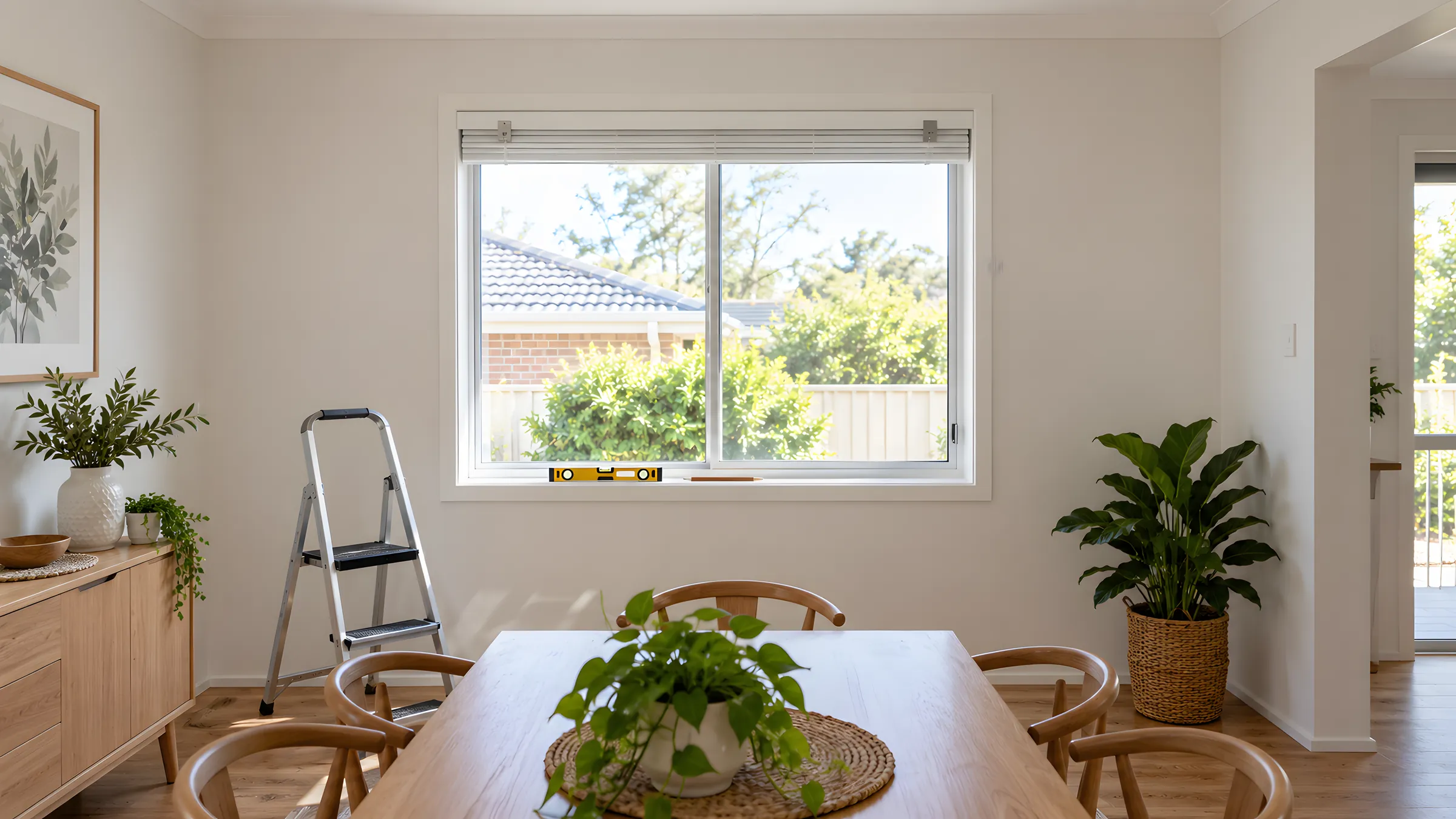
To remove venetian blinds, raise the blind fully, tilt the slats closed, then support the headrail and release it from the brackets by following our installation guide for your blind in reverse. Lower the blind, lay it flat, and leave the brackets on the wall unless you are painting or replacing them. Never force a bracket.
In short
- Raise the blind, close the slats, photograph the brackets, and get a second person for wide or timber blinds.
- Support the headrail the whole time and release it from the brackets by reversing the steps in the installation guide.
- To hang the blind again, follow the installation guide for your blind from the start, then test it.
- Never force a clip, and keep cords tidy and out of children's reach.
What holds a venetian blind up
A venetian blind hangs from a headrail, the box along the top that holds the mechanism. The headrail clips into spring-loaded brackets fixed to the frame, wall or ceiling. Our installation guide shows the front lip of the headrail hooking onto each bracket, with the rear of the rail then lifted until its back lip clips into position. Before you remove anything, look at what you have, because a few extra parts change the order of the job.
- Brackets: The guide covers timber, PVC and aluminium venetians with the spring-loaded bracket, so the same approach applies across the range.
- Fascia: Timber and PVC venetians may have a fascia that hangs on the top lip of the headrail. Take it off first.
- Control: Lift and tilt are controlled by a wand, a cord or a chain, depending on the blind. Note where the control is and how any cord is secured on its cleat.
- Weight: Timber venetians are the heaviest. Aluminium venetians are light, but the slats bend easily.
See our venetian blinds page for the range.
Before you take a venetian blind down
- Set up safely. Use a stable step ladder, clear the sill and lay a towel or sheet on the floor. Keep one hand on the blind at all times.
- Get a second person for a wide blind or any timber blind.
- Photograph the setup. Take pictures of each bracket, the control side, any fascia and how the cords are secured.
- Raise the blind fully and tilt the slats closed. A fully raised blind is compact and light, and closed slats stay together rather than swinging.
- Open the right guide: the timber venetian blinds installation guide or the aluminium venetian blinds installation guide.
How to remove venetian blinds
These are the general safety steps. The bracket release itself comes from the installation guide, in reverse.
- Remove any fascia first, reversing how it was fitted.
- Support the headrail. Hold it from below with both hands, or have a helper take the other end.
- Release the headrail from each bracket one at a time, reversing the clipping steps in the guide. Keep the last bracket's end supported until you are ready to lower the whole blind.
- Lower the blind and lay it flat. Tie loose cords loosely with a soft fabric tie so they cannot tangle.
- Leave the brackets on the wall unless you are painting behind them or replacing them.
Do not force a clip. If a bracket will not release, look at it again with a torch and check for paint around it. Forcing it can snap the bracket. If the blind is under warranty, contact us before you try anything more.
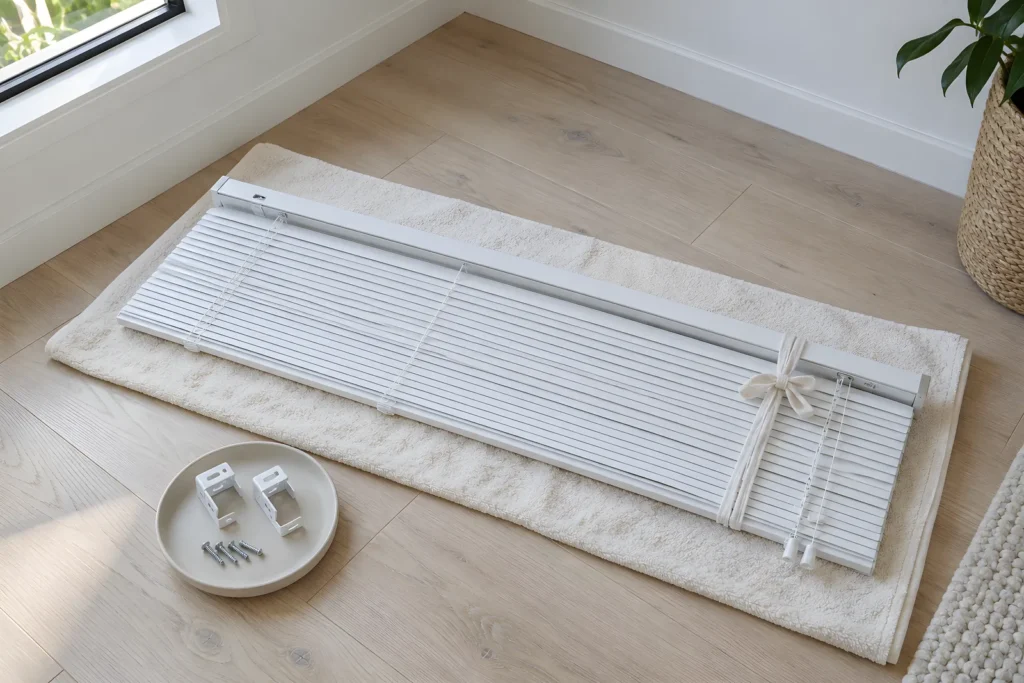
Taking venetian blinds down for cleaning
Most venetians can be cleaned while they hang, using the methods in our guide to how to clean venetian blinds. Take yours down for cleaning only if there is heavy grease or build-up, or you want to reach the window behind it.
Lay the blind flat on a clean towel, wipe the slats as the guide describes, and dry them fully before rehanging. Do not submerge the headrail or cords. Timber must never be soaked, and aluminium slats should lie flat so they are not bent under their own weight.
How to put venetian blinds back up
Rehang the blind by following the installation guide for your blind from the start. The guide covers the bracket positions, the fixings for your wall or frame, the clipping of the headrail, securing the cords and fitting the fascia, and finishes with a check that the blind operates without a bracket obstructing the mechanism.
If you are fitting a new venetian rather than rehanging one, measure with the right guide first: timber venetians, 25 mm aluminium venetians or 50 mm aluminium venetians. The installation guides cover the other blind types.
Common problems when rehanging
| Problem | Likely cause | What to do |
|---|---|---|
| Headrail will not stay in the bracket | It is not fully engaged | Re-seat it and check every bracket against the installation guide |
| Blind hangs crooked | A bracket has moved, or the headrail is not engaged in one | Check each bracket against the guide and contact us if it persists |
| Slats will not close evenly | The headrail is twisted or a bracket is obstructing the mechanism | Check the headrail sits square and that no bracket touches the mechanism |
| Control is on the wrong side, or the blind is back to front | It was rehung the wrong way round | Take it down and compare with your photos |
| Cords tangle | They were not tidied | Tie them loosely and keep them out of reach |
Keep any cords, chains and wands out of reach of children and pets, and wind spare cord around the cleat as the guide describes. For children's rooms, cordless or motorised blinds avoid loose cords altogether, and our cordless roller blinds are worth a look. If you are choosing between slat materials, see timber, fauxwood or aluminium venetians.
Taking blinds down to paint, move house or replace them
- Painting the frame or wall: Take the blind down and remove the brackets too, marking each position in pencil first. Keep the screws in a labelled bag. Let the paint dry fully before you refit, and keep it out of the bracket clips, because paint can glue a clip shut.
- Moving house: Raise the blind, close the slats and lay it flat in a box or wrapped in a sheet. Pack the brackets and screws with it, and never stack heavy items on top of aluminium or timber slats.
- Replacing the blind: Measure the window again with the measuring guide for the new blind, rather than copying the old one, and decide whether a recess or face fit suits before you order.
- Filling old holes: If a new blind does not use the same bracket positions, fill the old holes so the surface is neat.
Questions
How do you take down venetian blinds?
Raise the blind fully and tilt the slats closed, then support the headrail and release it from each bracket by following the installation guide for your blind in reverse. Lower the blind and lay it flat.
Do I need to remove venetian blinds to clean them?
Not usually. Most venetian blinds can be cleaned while hanging. Take them down only for heavy build-up or when you are painting.
How many brackets does a venetian blind need?
It depends on the width of the blind. Our venetian blinds installation guides give the bracket positions and spacing, so follow the guide for your blind.
Why is my venetian blind hanging crooked after I rehung it?
The headrail may not be fully engaged in every bracket, or a bracket may have moved. Check each bracket against the installation guide, and contact us if the blind still hangs crooked.
Looking at venetian blinds?
Compare timber, fauxwood and aluminium venetians and order free samples.
Keep reading
 Care & cleaningHow to clean venetian blinds: aluminium, timber and fauxwoodA step-by-step guide to cleaning venetian blinds, with the right method for aluminium, timber and fauxwood slats and what to avoid, including vinegar.
 BlindsWooden blinds: timber, fauxwood or aluminium venetiansReal timber, fauxwood or aluminium? Compare slat sizes, wet-room suitability and care so you can choose the right venetian blind for each room.
 BlindsVenetian blind repairs: cords, tilt and common faultsA blind that will not stay up, tilt or stay quiet usually has a cord, lock or bracket fault. Here is how to find it and when to replace.