
Are vertical blinds outdated? A guide to modern vertical blinds
Vertical blinds are not outdated, but dated fabric and colour made them look that way. Here is how vane width, stacking and fabric decide the result.
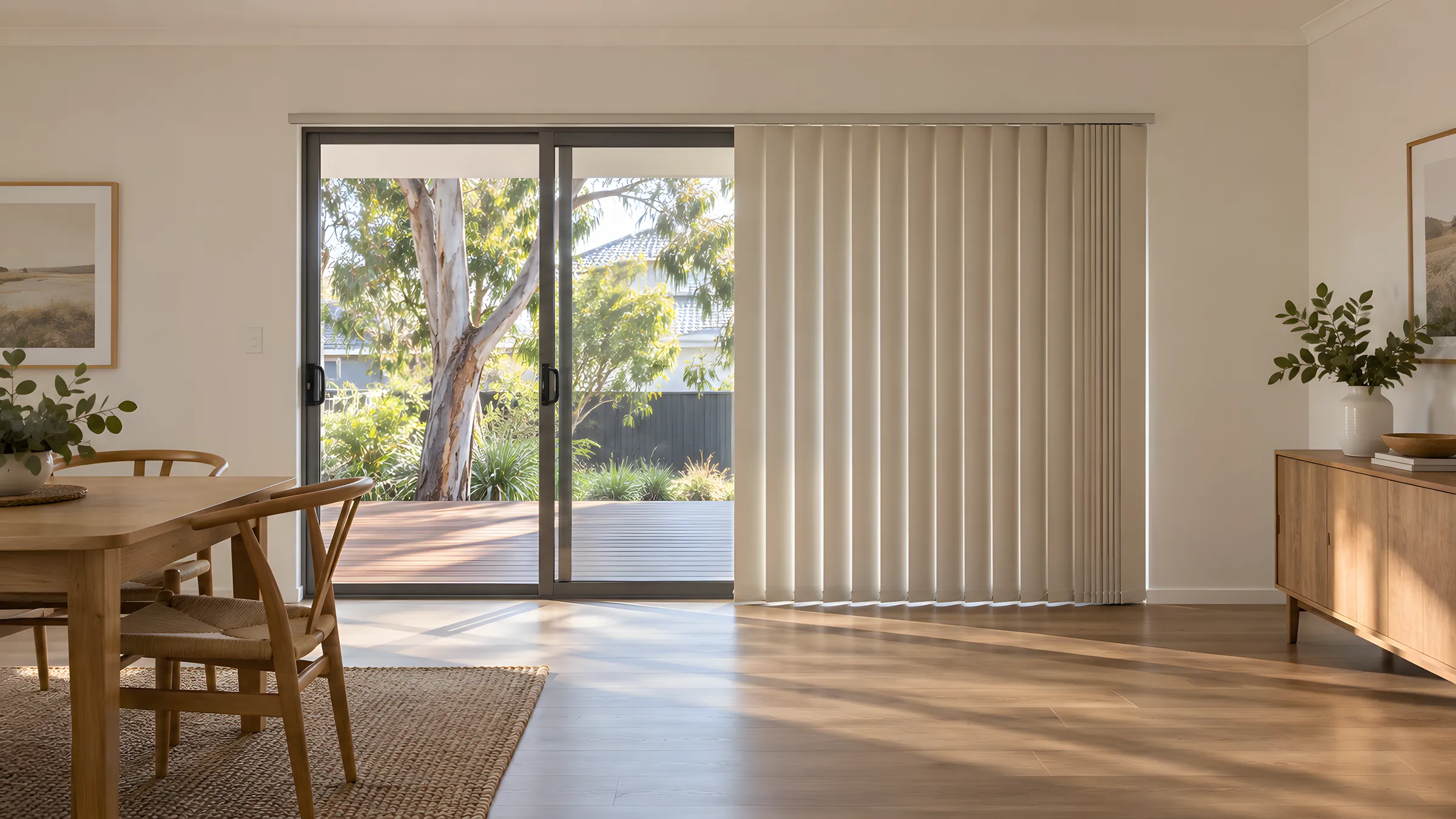
Vertical blinds are not outdated, but glossy, plastic-looking vanes in tired colours made them look that way. Modern vertical blinds use matte or textured fabric in current colours, and they remain one of the most practical ways to cover a sliding door or a wide window, because the vanes turn to steer light and privacy and stack clear of the opening.
In short
- The dated look comes from the fabric and colour, not the shape. Shade is matte and Lakeside is textured.
- Only Lakeside (twelve colours) and Shade (ten colours) are available on vertical blinds.
- Vane width is 89 mm or 127 mm. Vanes stack left, right or split.
- Face fit is common, and a recess needs room for the vanes to rotate.
- Vertical blinds suit sliding doors and French doors, and are not used in kitchens.
Are vertical blinds outdated?
The reputation is earned by a particular kind of vertical blind: narrow, glossy plastic-look vanes in beige or mid-grey. Take those away and what remains is a very sensible product. The vanes are tall, so they suit tall and wide openings, and turning them gives you a range from full daylight to full privacy without raising or lowering anything.
What has changed is the fabric. Shade is matte, which removes the plastic sheen. Lakeside has a texture inspired by exposed bedrock, which adds depth in the same way a woven curtain does. Choose a soft neutral in either range and the result reads as tailored rather than tired.
There are downsides worth knowing:
- The stacked vanes need wall space beside the opening.
- Vanes swing if the door is open and a breeze comes through.
- They are not used in kitchens.
Modern vertical blinds: fabric and colour
Two fabrics are available on vertical blinds, and both are in our blockout ranges.
| Shade | Lakeside | |
|---|---|---|
| Finish | Matte | Texture inspired by exposed bedrock |
| Colours | Ten: Ice, Birch, Chalk, Tea, Biscuiti, Mist, Alloy, Odyssey, Storm, Lava | Twelve: Frost, Shell, Sandstone, Dew, Haze, Cliff, Moonscape, Glade, Petrol, Ocean, Rock, Magma |
| Backing | Same colour both sides | Colour-coordinated backing |
| Care | Dust with a soft cloth; wipe with a damp sponge and dry | Same, and some batch colour variation is normal |
The rest of the roller blind fabrics are not offered on vertical blinds. That limits the range compared with a roller blind, but it also keeps the choice simple.
For a light, calm look, start with Shade Ice or Chalk, or Lakeside Frost or Shell. For warmth, look at Shade Biscuiti or Lakeside Sandstone. Order free samples and hang them from a door frame so you see how the fabric falls, not just how it looks flat on a table.
Blockout fabric stops light passing through the cloth. Closed vanes give good privacy, though small gaps of light can appear at the edges, as with any blind.
Vane width: 89 mm or 127 mm
Vane width changes how the blind looks more than most people expect.
| 89 mm vanes | 127 mm vanes | |
|---|---|---|
| Look | Finer, more vertical lines | Bolder and calmer, with fewer lines |
| Suits | Narrower openings and smaller windows | Wide sliding doors and large windows |
| When closed | More joins between vanes | Fewer joins between vanes |
| In a recess | Needs less room to rotate | A wider vane needs more clearance |
As a rule of thumb, choose 127 mm for a wide sliding door and 89 mm where the opening is narrow or the room is small. If you are not sure, hold up sample fabric against the door and look at how many lines the eye picks up.
Stacking: left, right or split
Vertical blinds gather at the side of the opening. You can choose to stack left, right, or split so they open from the centre.
| Stack | Choose it when |
|---|---|
| Left or right | One side of the door has more wall space, or the door handle and traffic are on the other side |
| Split | The opening is wide and you want it symmetrical, or both sides have equal space |
Think about how you will actually use the door. Stack the blind on the side that keeps the vanes off the handle, and check that furniture, a curtain or a switch does not sit where the stack will gather.
Vertical blinds for sliding doors and French doors
Vertical blinds are one of four common answers for a sliding door, and they have a strong case.
| Option | Strength | Watch for |
|---|---|---|
| Vertical blinds | Vanes rotate to control light and privacy; stack to the side clear of the door | Need stacking space; limited to Lakeside and Shade |
| Panel glide blinds | Broad, flat panels in any roller blind fabric | Face fit only; needs stack space beside the opening |
| Linked roller blinds | Clean, flat look; blockout, SunScreen or light filter | Joins to plan; each blind lifts in one piece |
| Curtains | Soft and generous | Need room to stack back |
Vertical blinds are also a listed choice for French doors, where the vanes can stack to one side of the doors. Face fit above the door is common, with the blind wide enough to clear the frame.
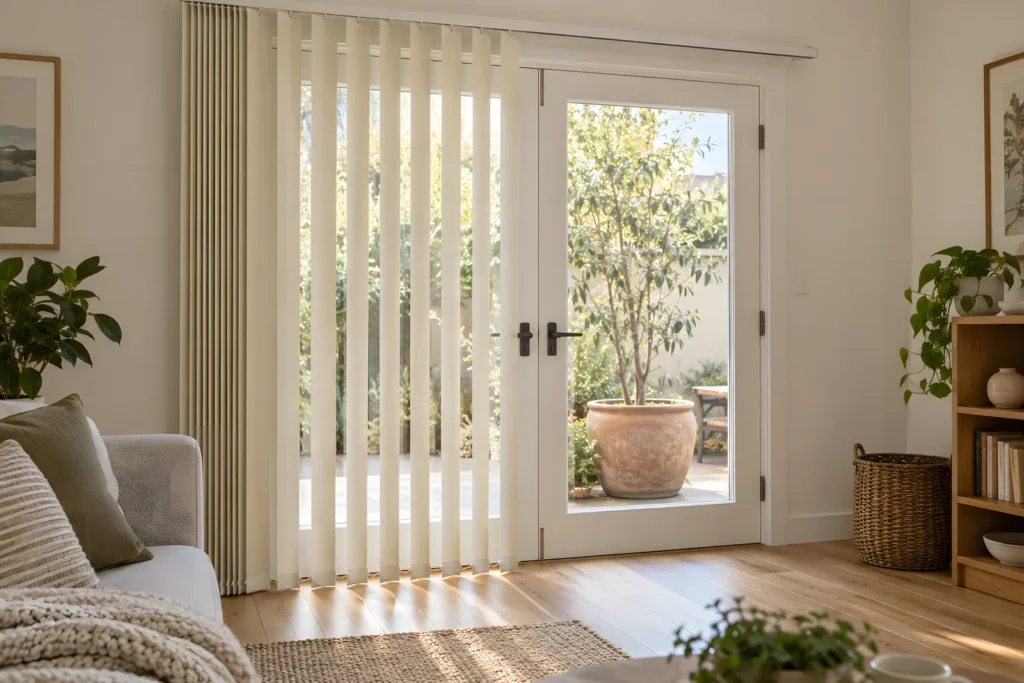
Our page on blinds for sliding doors compares the options in more detail, and the sliding and French doors guide covers the door types.
Vertical vs roller blinds, and vertical vs horizontal blinds
They are different tools. A vertical blind suits a wide or tall opening where you want to adjust light by rotating vanes. A roller blind suits a window where you want the fabric fully raised or fully lowered, with more fabric ranges, colours and control options.
For the horizontal comparison, venetian blinds tilt slats to steer light in the same way, but they lift as a stack and suit a window better than a full-height door. Vertical is the natural orientation for a door; horizontal is the natural orientation for a window.
Tip: If the window is on a sliding door, look at the vertical option first. If it is a standard window in a bedroom or living room, a roller blind or venetian is usually the easier fit.
How to make vertical blinds look modern
Four decisions make most of the difference:
- Match the tone to the room. A vane close to the wall or frame colour recedes and lets the door and the view do the work. Ice, Chalk, Frost and Shell all sit in that quiet, light range.
- Go wider on wide openings. A 127 mm vane on a big sliding door gives fewer, calmer lines than a narrow vane repeated many times.
- Use the backing to your advantage. Shade is the same colour on both sides and Lakeside has a colour-coordinated backing, so from the deck or the street the blind does not show a white back.
- Keep them straight. Vertical blinds look their best when every vane hangs at the same angle, so set them together rather than leaving a few turned differently.
Colour is easiest to judge with fabric in your hand. Sample colours side by side in the morning and again in the evening, next to the door frame and the floor, before you decide.
A quick checklist before you order
- Check the wall space either side of the opening, so you know whether the stack fits.
- Decide the stack: left, right or split.
- Pick vane width: 127 mm for wide doors, 89 mm for narrower openings.
- Choose Shade or Lakeside, and check samples in your own light.
- Choose face fit or recess, and check the depth and any handles if you are considering a recess.
- Measure with the guide and label each blind.
Measuring and care
Face fit is common for vertical blinds because it covers the frame and gives the vanes room to hang. A recess needs room for the vanes to rotate, so check the depth and any handles before you commit. Our vertical blinds measuring guide explains how to measure, and the vertical blinds installation guide covers fitting.
Cleaning is straightforward. Dust the vanes with a soft cloth, wipe with a damp sponge and dry, and avoid abrasive or solvent cleaners. Our guide to cleaning vertical blinds covers cleaning on and off the track. If a vane, carrier or chain is damaged, vertical blind parts and repairs explains what each part does and when to repair or replace.
Questions
Are vertical blinds out of fashion?
Not when they are done well. Dated fabric and colour gave them their reputation, and matte or textured fabrics in modern colours look very different.
What vane widths do vertical blinds come in?
Vertical blinds come with 89 mm or 127 mm vanes. Both rotate to control light and privacy.
Which fabrics are available on vertical blinds?
Only Lakeside and Shade are available on vertical blinds. Lakeside comes in twelve colours and Shade in ten.
Can vertical blinds stack to one side or open from the middle?
Yes. Vertical blinds can stack to the left, stack to the right or split to open from the centre.
Do vertical blinds suit a kitchen?
No. Vertical blinds are not used in kitchens. Choose a PVC plantation shutter, a fauxwood or aluminium venetian, or a roller blind that will not be drenched.
Build your vertical blinds
Choose Lakeside or Shade, pick your vane width and stack direction, and see the price before you order.
Keep reading
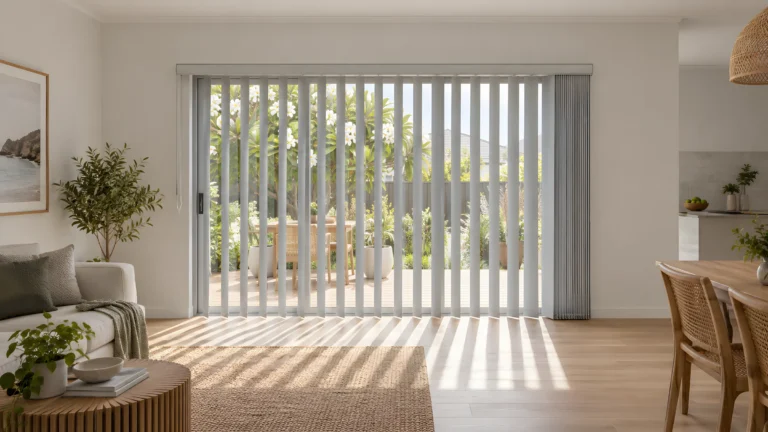 Care & cleaningHow to clean vertical blinds (on or off the track)Clean vertical blinds in place with a soft cloth and damp sponge, or take the vanes off for heavy build-up. Step-by-step, with mould tips.
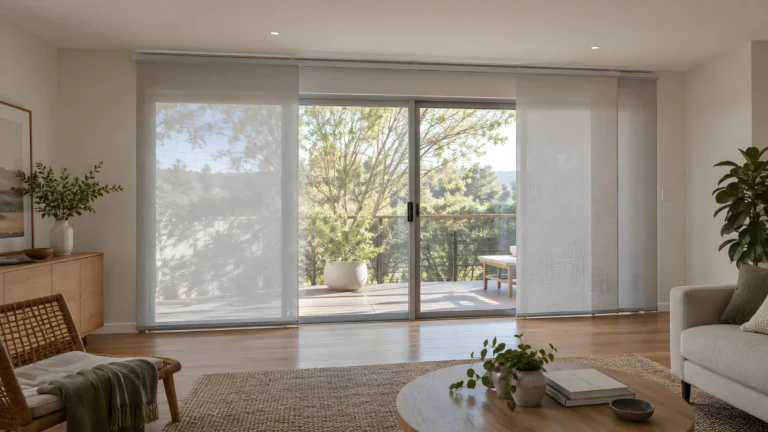 BlindsPanel glide blinds explained: panels, tracks and stackingBroad fabric panels on a track suit sliding doors and big windows. Here is how panel width, centre opening and stack space work, and which fabric to pick.
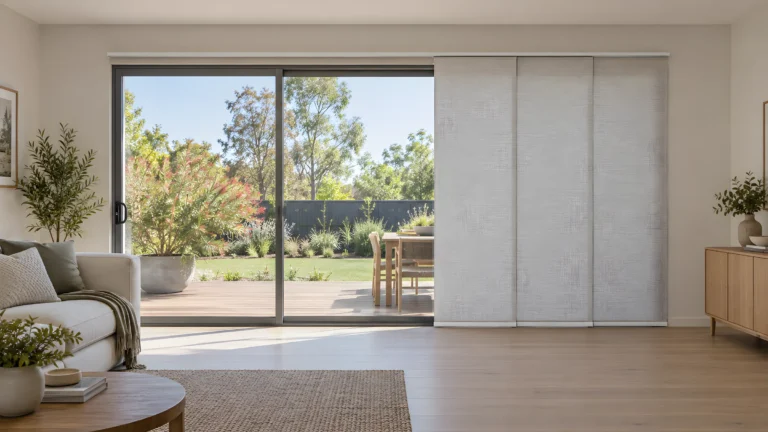 Room ideasThe best blinds for sliding doors and French doorsPanel glide, vertical, linked roller blinds or curtains? Compare the best blinds for sliding doors and French doors, with the clearances that decide what works.