
How to clean vertical blinds (on or off the track)
Clean vertical blinds in place with a soft cloth and damp sponge, or take the vanes off for heavy build-up. Step-by-step, with mould tips.

The quickest way to clean vertical blinds is to leave them on the track: close the vanes, dust each one from top to bottom, wipe any marks with a barely damp sponge while you support the vane from behind, then dry it. Lakeside is dusted first and tested before any damp wipe. Take the vanes off only when there is heavy build-up or you want to clean the whole window area properly.
In short
- Dust with a soft cloth or a vacuum brush first, rotating the vanes so you clean both faces.
- Support each vane with your free hand while you wipe so it does not twist or crease.
- Our vertical blinds use Lakeside and Shade fabric. Shade is dusted and wiped with a damp sponge, Lakeside is dusted, and neither is soaked or machine washed.
- Keep the track dry, and contact us if a vane will not release or the blind stops travelling smoothly.
Our care instructions for vertical blind fabrics
Vertical blinds are made in Lakeside and Shade, two of our roller blind fabrics, so they follow the same care instructions shown in the fabric details on our product pages. The steps below build on them.
| Fabric | Care instructions |
|---|---|
| Shade | Dust with a soft cloth. Wipe with a damp sponge and dry with a clean cloth |
| Lakeside | Remove surface dust with a soft cloth |
| Both fabrics | Avoid abrasive products and solvent cleaners. Do not roll the fabric while it is damp |
The full roller fabric advice, including Screen, is in how to clean roller blinds.
Which cleaning method should you use?
Vertical blinds hang as a row of separate fabric vanes, in either 89 mm or 127 mm widths, so each vane has two faces to clean and a long edge that catches dust. The right method depends on how dirty they are.
| Method | Best for | What you do |
|---|---|---|
| Dust in place | Regular upkeep | Close the vanes and dust with a dry cloth or vacuum brush |
| Damp wipe in place | Fingerprints and light marks | Wipe each vane with a barely damp sponge, supported from behind, then dry. On Lakeside, test first |
| Vanes off the track | Heavy build-up, renovation or painting | Take the vanes off, clean them flat on a towel, rehang in order |
Start with the lightest method and only move down the table if you need to. Most households never need to take the vanes off.
How to clean vertical blinds without removing them
Cleaning in place is quick and it keeps the blind's alignment. You will need a soft dry cloth or duster, a vacuum with a soft brush attachment, a clean sponge, a bowl of plain water, a dry cloth for drying and a stable step stool.
- Close the blind and turn the vanes flat. Draw the blind across the window or door and rotate the vanes until they overlap and form a flat surface. This gives you one continuous face to clean.
- Dust top to bottom. Use the dry cloth, a soft duster or the vacuum brush on low suction. Work from one end of the blind to the other, one vane at a time, so you do not miss any. Do not forget the top edge, where dust settles.
- Rotate the vanes the other way and repeat. This cleans the reverse faces and the edges.
- Test a hidden spot. Dampen a sponge, wring it out well and try a small patch near the bottom of one vane. Check it once dry for any change in sheen or colour.
- Wipe marks with a barely damp sponge. On Lakeside, do this only if the hidden-spot test looked fine. Support the bottom of the vane with your free hand, then wipe gently downwards in one direction. Do not rub sideways, which twists and creases the vane.
- Dry and air. Wipe the vane with a clean dry cloth. Turn the vanes edge-on to the window and leave them open until they are fully dry, so damp faces are not pressed together.
Tip: Work along the blind in one direction, left to right or right to left. You will always know where you stopped, and a wet vane never touches one you have already dried.
Lakeside is the fabric where our instructions cover dusting, so dust it thoroughly first and wipe a stubborn mark only after a barely damp cloth has passed a hidden-spot test. Shade takes the damp sponge as described, with a light touch because of its matte finish.
How to remove vertical blinds for cleaning
Take the vanes off the track when the blind is grimy enough that in-place cleaning will not shift it, when you are painting around the window, or when you want to clean the sill and glass behind it. You only need to remove the vanes, not the headrail, so leave the headrail and brackets where they are.
- Photograph the blind. Take a picture of the whole blind, the control side and the way the vanes sit on the track. Note which way it stacks (left, right or split).
- Draw the blind fully closed so every vane is easy to reach, then rotate the vanes edge-on to give yourself room.
- Release the vanes by following our vertical blinds installation guide in reverse. Try one vane gently first, and do not force it. Hold each vane by its top and support the bottom so it does not swing into the next.
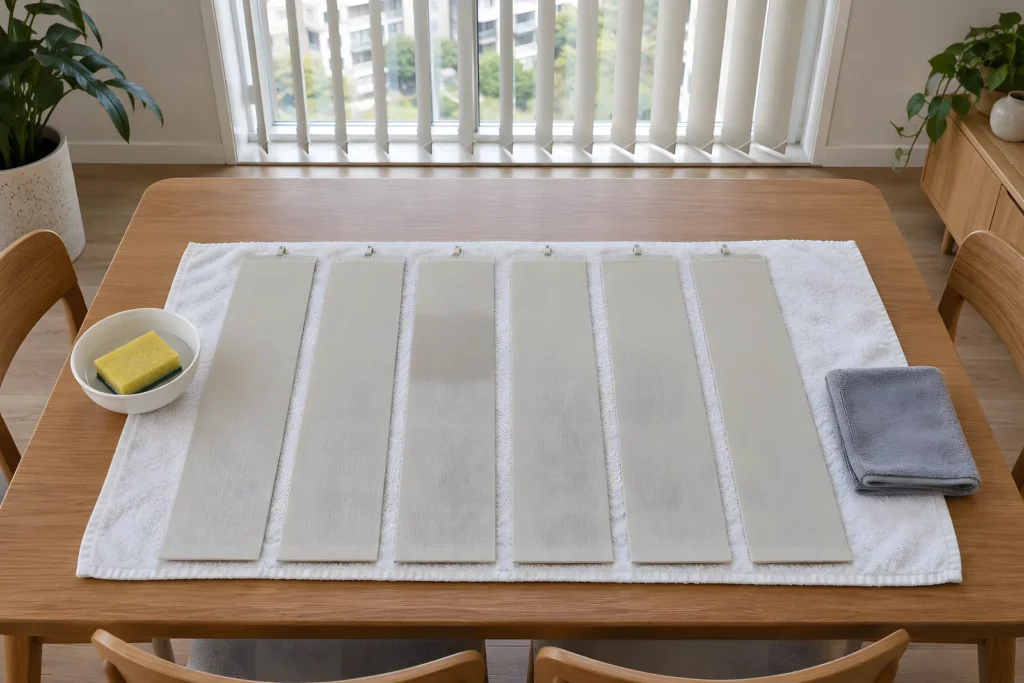
- Lay each vane flat on a clean towel, in the order you removed it, left to right.
- Clean each vane flat. Dust it, wipe with a barely damp sponge, then dry it with a clean cloth. Leave the vane flat until it is fully dry.
- Rehang in the same order, following the installation guide, with each vane facing the same way as before. Rotate the blind through its full range and draw it across to check that it moves smoothly.
Do not force a vane. If a vane resists, stop and check the installation guide again. Forcing it can crack the hanger or tear the fabric. If the blind is under warranty, contact us before you try any further.
How to wash vertical blinds
Our vertical blinds use Lakeside and Shade fabric, which are polyester with an acrylic coating. Shade is dusted and wiped with a damp sponge, and Lakeside is dusted. Neither is soaked, machine washed or tumble dried. Do not use abrasive or solvent cleaners, bleach or stiff brushes.
If you have vertical blinds in another material, such as PVC or aluminium vanes from another supplier, the care label may allow washing in a different way. Follow that label rather than the advice here.
Do not roll or fold damp vanes. Lay them flat and let them dry completely before they go back on the track.
Vertical blinds mould
Mould on vertical blinds usually starts at the bottom edges of the vanes, where they sit close to cold, damp glass or a sliding door track, and where condensation collects. It is more likely after wet weather, in poorly ventilated rooms, and if vanes are closed while still damp.
- Wipe light spots with a barely damp sponge (testing Lakeside first), dry the vane thoroughly, and improve airflow in the room.
- Keep vanes turned open on mornings when windows have condensation, so air can reach both faces.
- Do not soak the vanes or spray bleach onto the fabric.
- For heavier or recurring mould, follow our guide to removing mould from blinds and curtains. If mould is widespread in a room, get professional advice.
Cleaning the track, carriers and control
Dust in the headrail can make the blind stiff to draw and rotate. Every few months, run the vacuum brush along the top of the headrail and wipe the outside of the headrail and any visible carriers with a dry cloth. Keep water away from the track.
Avoid oily or spray lubricants, which attract dust and can mark the fabric. If the vanes stick, do not rotate or draw them against resistance. Contact us and we will suggest what to check. If a carrier or vane is damaged rather than dirty, see vertical blind parts and repairs.
Keeping vertical blinds clean for longer
Most of the dirt on a vertical blind comes from hands, pets and airflow.
- Use the control to draw and rotate the blind rather than grabbing the leading vane.
- Rotate the vanes open when you clean the window or run a fan, so dust does not build on the top edges.
- Dust every couple of weeks near busy sliding doors, roads or pets.
- Ventilate rooms where windows fog up.
If a sliding door sees heavy use and you would like fewer separate vanes to clean, panel glide blinds are made from broad, flat fabric panels that wipe down in a few passes. Our blinds for sliding doors page compares the options, and the installation guides help if you are refitting a blind after painting. For an overview of the whole range, see our vertical blinds and our general guide to how to clean blinds.
Questions
Can you clean vertical blinds without taking them down?
Yes. Close the vanes, dust each one from top to bottom, then wipe marks with a barely damp sponge while you support the vane with your other hand, testing Lakeside on a hidden spot first. Dry it straight away.
How do you wash vertical blinds?
Shade vanes are dusted and wiped with a damp sponge, and Lakeside vanes are dusted, with any damp wipe tested on a hidden spot first. Neither is soaked or machine washed. If you have vertical blinds in another material, check their care label.
Can I vacuum vertical blinds?
Yes, with a soft brush attachment on low suction. Hold the bottom of each vane lightly so it does not flap or bend.
How often should vertical blinds be cleaned?
A quick dust every couple of weeks keeps build-up down, with a damp wipe when marks appear. Blinds near open doors, roads or pets may need dusting more often.
What if a vane will not come off the track?
Stop and do not force it. Take a photo of how it attaches and contact us, especially if the blind is still under warranty.
Build your vertical blind
Choose your vane width, fabric and stack direction, and see the price before you order.
Keep reading
 Care & cleaningHow to clean blinds: every type, step by stepFabric blinds, slatted blinds and shutters each need a different method. Here is how to clean blinds of every type, without damaging them.
 BlindsAre vertical blinds outdated? A guide to modern vertical blindsVertical blinds are not outdated, but dated fabric and colour made them look that way. Here is how vane width, stacking and fabric decide the result.
 BlindsVertical blind parts and repairs: slats, carriers and chainsName the headrail, carriers, vanes and chain, find out why a vane will not turn or has fallen off, and decide whether to repair or replace.