
Recess fit or face fit? How to decide before you measure
Recess fit sits inside the window opening; face fit mounts on the wall or trim around it. Here is how to choose, and what changes when you measure.

Recess fit vs face fit comes down to two questions: how much clear depth does your window have, and how much of the wall around it should the blind cover? Recess fit puts the blind inside the window opening for a neat, built-in look. Face fit mounts it on the wall or trim around the opening, which suits shallow windows and cuts light gaps at the sides. Some websites call these inside mount and outside mount, and the two pairs of terms mean the same thing.
In short
- Recess fit sits inside the opening and looks tidy, but a roller blind leaves small light gaps at the sides.
- Face fit mounts on the wall or trim, covers more area, reduces light gaps and clears handles, winders and shallow recesses.
- Depth settles most windows: a single roller blind needs 70 mm of clear depth with a front (over) roll or 45 mm with a standard (under) roll.
- Decide the fit before you measure, because it changes what you measure. Then use the official measuring guide for your product.
Recess fit vs face fit at a glance
The table compares the two fits for a roller blind, which is the product most people are choosing for. Other products follow the same logic but have their own depth figures, covered further down.
| Recess fit | Face fit | |
|---|---|---|
| Where it mounts | Inside the window opening | On the wall or trim around the opening |
| Look | Neat and built in; the frame stays visible | Covers the frame and some of the wall |
| Light gaps | Small gaps at each side | Fewer gaps, because the blind is wider than the opening |
| Depth needed | Enough clear depth for the blind and its roll | Little or none from the window |
| Handles, winders, locks | Must clear them, or they catch the fabric | Clears obstructions |
| What you measure | Follow your product's measuring guide | Follow your product's measuring guide |
If you have searched for outside recess blinds, face fit is what you are after: a blind fixed outside the recess, on the wall or the trim.
When recess fit is the better choice
Recess roller blinds suit windows where the opening is deep enough, reasonably tidy and free of anything that projects. The blind disappears into the reveal, the architrave stays on show and the room looks uncluttered.
Recess fit is usually the right call when:
- the recess has enough clear depth for the blind you want (see the depth section below)
- there are no handles, winders, locks or catches sticking into the recess
- you like the look of the frame or trim and want to keep it visible
- you can live with small light gaps at each side of the blind
- you would rather keep the wall and trim around the window clear
The trade-off is light. A recess-fitted roller blind needs a small clearance at each side so it can roll freely, and that shows up as a thin line of light along the edges; the roller blind measuring guide gives the expected gap. Blockout fabric stops light passing through the cloth, but it cannot close those edge gaps.
If you want the recess look with tighter light control, the Full Blockout Cassette adds a headbox and side channels and is fitted in a recess. It needs 50 mm of clear depth and is ordered together with a compatible under-roll blockout blind.
When face fit is the better choice
Face fit mounts the brackets on the wall or trim outside the opening, so the blind is wider and taller than the window. Choose it when the recess cannot take a blind, or when coverage matters more than a built-in look.
Face fit is usually the right call when:
- the recess is shallow, so a blind would sit against the glass or not clear the roll
- a handle, winder or lock projects into the recess
- you want fewer light gaps at the sides, for example in a bedroom
- you want the blind to cover the whole frame and the trim around it
- the recess is uneven, and you would rather cover it than fit inside it
For roller blinds, an under roll is the recommended pairing with face fit. A standard (under) roll drops from the back of the tube, closer to the glass, and blocks more light. A front (over) roll hides the tube and clears handles and winders, but it sits farther from the glass. Our standard roll vs reverse roll guide covers that choice in detail.
A fascia is a decorative cover that conceals the blind's hardware. It is a face-fit system with matching brackets and side covers. It is not a cassette and does not remove every light gap.
Tip: If your depth is only just enough for a front roll, use a standard (under) roll instead. It needs 45 mm rather than 70 mm, and it blocks more light.
Check the depth first
Depth is the number that settles most recess decisions. Clear depth is the distance from the front of the recess to the first thing that gets in the way, and that is often a handle, winder or lock rather than the glass.
These are the minimum depths for a clean recess fit, so check them against the guide before you commit.
| Product | Clear depth needed for a recess fit |
|---|---|
| Single roller blind, front (over) roll | 70 mm |
| Single roller blind, standard (under) roll | 45 mm |
| Double roller blind, both front (over) rolled | 90 mm (the recommended recess setup) |
| Double roller blind, both standard (under) rolled | 70 mm |
| Full Blockout Cassette | 50 mm |
| Plantation shutter, inside Z-frame | 60 mm for the blades |
| Plantation shutter, inside L-frame | 70 mm |
If your recess falls short, face fit is the usual answer. For shutters, that means the outside L-frame, which is face mounted and projects about 65 mm. Our window depth article explains what depth means for each product, and the product's measuring guide shows how to measure it.
Note: Shutter frames also depend on how even the opening is. More than 6 mm of variation rules out an inside L-frame, and more than 12 mm rules out a Z-frame.
How the two fits change what you measure
The fit you choose changes which measurements you take, so settle it first and then open the guide for your product. Our guides cover each case, including recess fit, face fit on architraves and face fit without architraves:
| Product | Measuring guide | Installation guide |
|---|---|---|
| Roller blinds | Roller blind measuring guide | Roller blind installation |
| Double roller blinds | Double roller blind measuring guide | Double roller blind installation |
| Full Blockout Cassette | Cassette roller blind measuring guide | Cassette installation |
| Plantation shutters | Plantation shutters measuring guide | Plantation shutters installation |
| Curtains | Curtain measuring guide | Curtain installation |
| Everything else | All measuring guides | All installation guides |
Never use a general rule in place of the guide for your product. Whichever fit you pick, the guide also tells you what the factory adjusts for you.
Which products suit which fit
Not every product gives you a free choice. This table shows where each one normally sits:
| Product | Usual fit |
|---|---|
| Roller blinds | Recess or face; face fit with an under roll is recommended |
| Double roller blinds | Inside fit or outside fit |
| Full Blockout Cassette | Recess fit |
| Roller blind fascia | Face fit |
| Vertical blinds | Face fit is common; a recess needs room for the slats to rotate |
| Panel glide blinds | Face fit |
| Plantation shutters | Inside Z-frame, inside L-frame or outside L-frame |
| Curtains | Track fixed to the ceiling (top fit) or wall (face fit) |
Curtains do not have a recess option at all. Their track goes on the ceiling or the wall, so the question there is top fit or face fit, not inside or outside.
A five-step way to decide
- Check the clear depth from the front of the recess to the nearest obstruction, as your product's measuring guide describes.
- Find anything that projects. Check handles, winders, locks and catches, and open the window to see how far they move.
- Decide how much light you can accept. A bedroom often needs fewer edge gaps than a hallway.
- Look at the trim. A tidy, deep recess suits recess fit, while a shallow window or an uneven recess suits face fit.
- Choose the fit, then open the product's measuring guide before you take a single measurement.
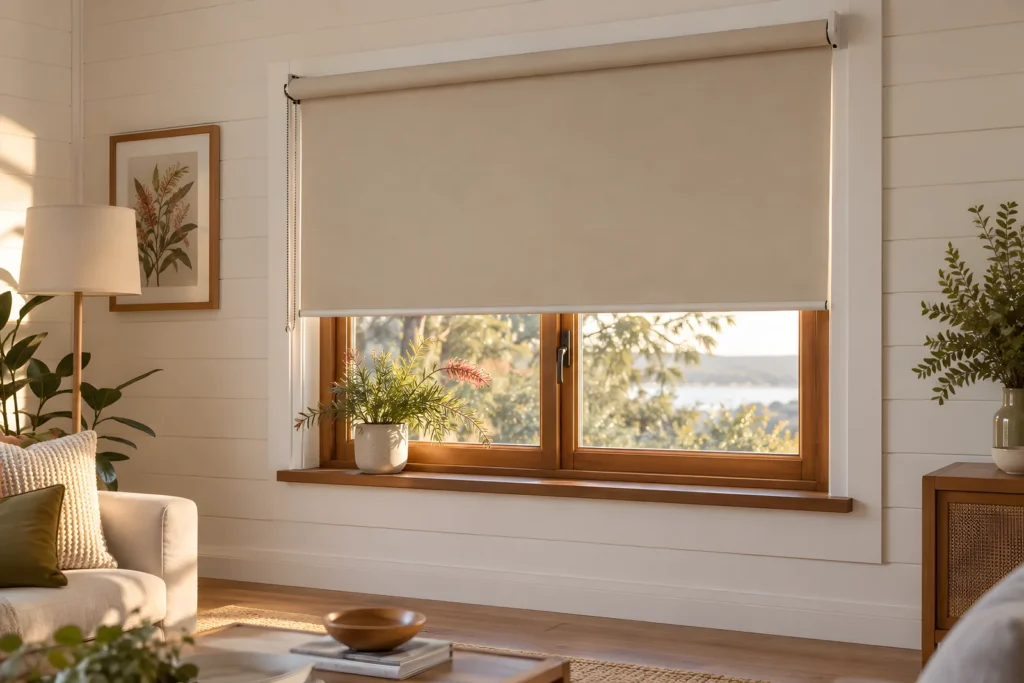
Once you know the fit, the rest of the measuring is more straightforward. Our guide to measuring windows for blinds covers the most common mistakes, and free samples let you check fabric colour in your own light before you order. Start your roller blind in the roller blind builder.
Questions
What is the difference between recess fit and face fit?
Recess fit mounts the blind inside the window opening, while face fit mounts it on the wall or trim around the opening. Recess fit looks neater but leaves small light gaps at the sides, and face fit covers more area and clears obstructions.
Are inside mount and outside mount the same as recess fit and face fit?
Yes. Some websites say inside mount and outside mount, and we say recess fit and face fit, but they describe the same two ways of positioning a blind.
Which fit blocks more light?
Face fit usually leaves fewer light gaps, because the blind is wider than the opening. Blockout fabric stops light passing through the cloth, and face fit or a Full Blockout Cassette reduces the light that shows at the edges.
How much depth does a recess fit roller blind need?
A single roller blind needs 70 mm of clear depth with a front (over) roll or 45 mm with a standard (under) roll. Double rollers, cassettes and shutters have their own depth figures, so check the depth table in this article and the guide for your product.
Can I use face fit if my window has no architraves?
Yes. Our roller blind measuring guide covers a face fit without architraves and sets out what to measure.
Build your roller blind
Choose recess or face fit, enter your measurements and see the price before you order.
Keep reading
 Measuring & fittingHow much window depth do you need for recess blinds?A single roller blind needs 70 mm of clear depth or 45 mm with a standard roll. Here are the depths for every product and which guide measures it.
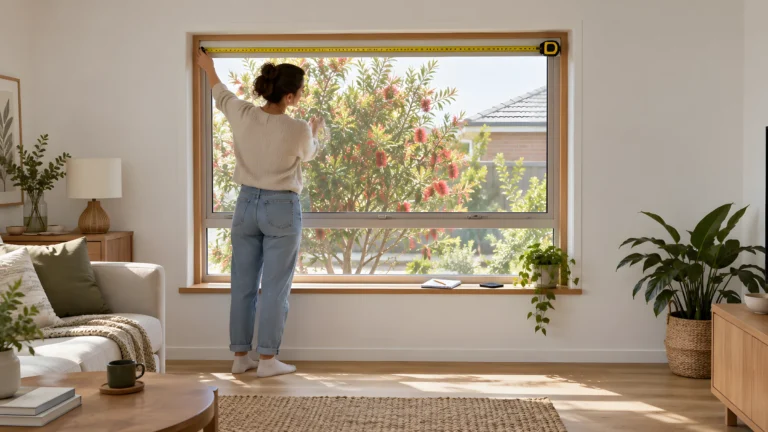 Measuring & fittingHow to measure windows for blinds: 10 mistakes to avoidMost measuring mistakes are avoidable. Here are the ten we see most, and the official measuring and installation guide to use for each product.
 ComparisonsStandard roll or reverse roll: which way should your blind roll?Standard (under) roll blocks more light and needs less depth. Reverse (front or over) roll hides the tube and clears handles. Here is how to choose.