
Venetian blind repairs: cords, tilt and common faults
A blind that will not stay up, tilt or stay quiet usually has a cord, lock or bracket fault. Here is how to find it and when to replace.
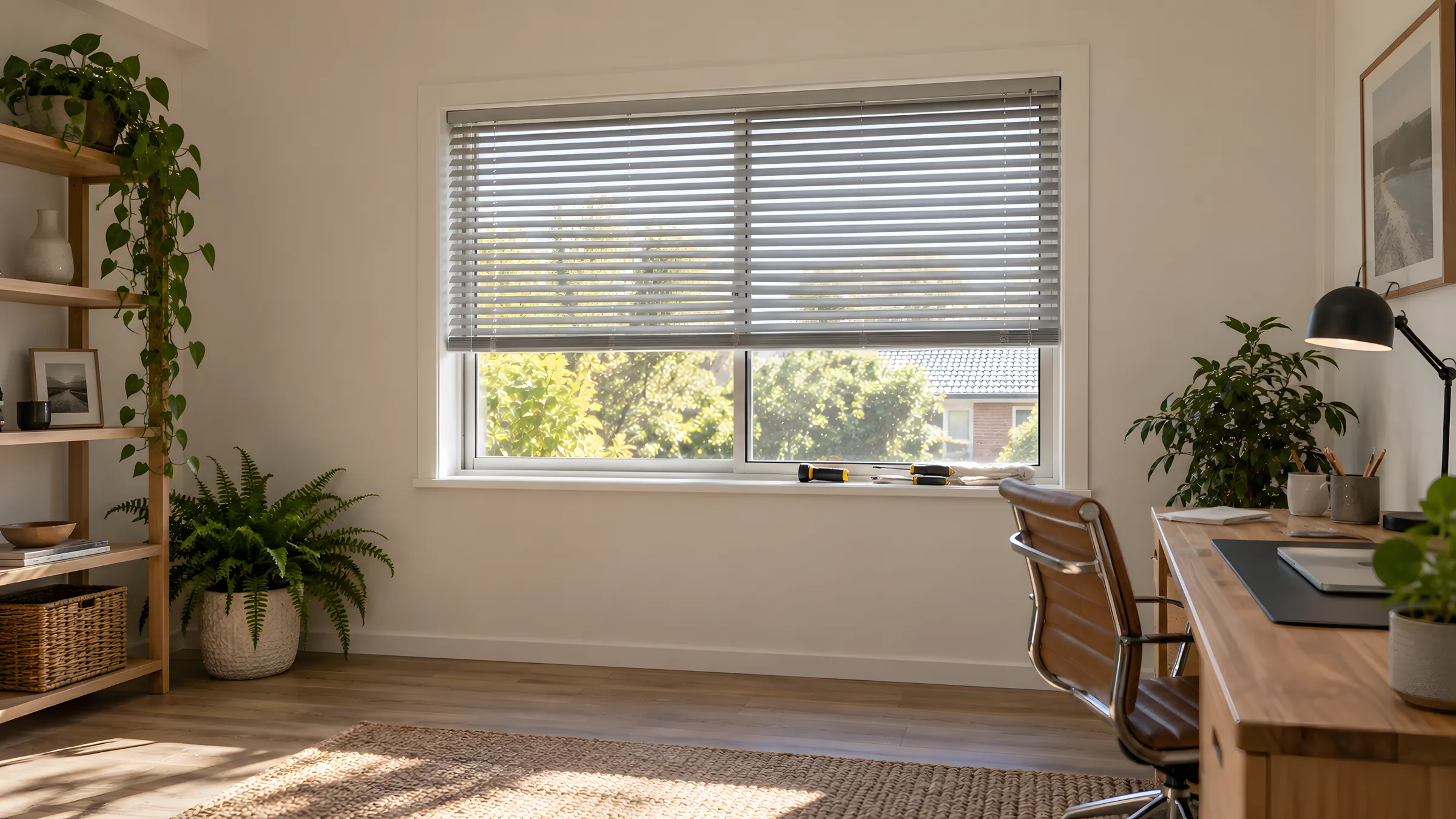
Venetian blind repairs usually come down to four things: the lift cords, the cord lock that holds the blind up, the tilt control, and the ladder cords that carry the slats. Many faults can be tested safely at home, but a snapped cord or a failed lock on an older blind can take more effort to fix than a new blind. Hardware differs between makers, so check any instructions that came with yours.
In short
- The main parts are the headrail, lift cords, cord lock, tilt control, ladder cords or tapes, slats, bottom rail and brackets.
- A blind that will not stay up or hangs crooked is usually a cord or lock fault. Slats that will not tilt point to the tilt control.
- Noise often comes from wind, loose brackets or slats knocking the glass, and most causes are simple to fix.
- Repair a single cord or slat when the rest of the blind is sound. Replace the blind when several parts fail.
- We do not sell spare parts separately. If your blind came from us, contact us with your order details.
The parts of a venetian blind
Venetian blinds tilt for light and lift for the view, and each job has its own mechanism. Names vary, but these are the parts you will meet.
| Part | What it does | Typical fault |
|---|---|---|
| Headrail | The box along the top that holds the mechanism | Bent, or loose in its brackets |
| Lift cords | Raise and lower the blind from the bottom rail | Fray, stretch or snap, or end up uneven |
| Cord lock | Grips the cords so the blind stays up | Slips, sticks or clogs with dust |
| Tilt control | A wand, cord or chain that turns the slats | Stiff, slips or comes loose from the headrail |
| Ladder cords or tapes | Hold the slats evenly and turn them together | Break or let a slat slip out |
| Slats | The horizontal blades, in timber, fauxwood or aluminium | Bent, chipped, cracked or warped |
| Bottom rail | Weights the blind and ends the cords | Tilts, or loses an end cap |
| Brackets and cover strip | Hold the headrail and hide the mechanism | Loose, or a clip snaps |
Our venetian blinds range covers timber venetian blinds, aluminium venetian blinds and fauxwood venetians. The fault finding is the same for all three, though timber slats are the heaviest and aluminium slats are the easiest to bend.
Before you start
A few habits make every repair easier and safer.
- Use a stable stepladder, not a chair, and ask someone to hold the other end of a wide or timber blind.
- Take photos of the cords, the lock and the brackets before you touch anything.
- Raise the blind fully before you test or release it, so nothing swings.
- Never pull cords hard to free a jam. If something will not move, stop and look.
Venetian blind repairs by symptom
How to repair venetian blinds starts with the simplest explanation. Stop if anything needs force.
| Symptom | Likely cause | What to try |
|---|---|---|
| Blind will not stay up | Dirty or worn cord lock, or cords out of step | Dust the lock, check both cords sit evenly, and raise the blind fully before you test it |
| Bottom rail hangs crooked | One cord longer or looser than the other, or a bracket out of level | Check the headrail sits securely in its brackets, then check both cords are seated in the lock. If the brackets have moved, refit them as the installation guide for your venetian says |
| Slats will not tilt | The tilt control has come loose, or the mechanism is stiff or dusty | Check the control is connected at the headrail, and do not force it |
| Some slats stay tilted | A ladder cord has slipped or broken | Look closely at the cords beside the slats. A broken ladder cord usually needs the blind restrung |
| A slat is bent | A knock, or too much force | Aluminium can sometimes be eased back gently by hand. A creased slat will still show |
| A slat is cracked or chipped | Impact, heat or age | Replace the slat, or the blind if it is in several places |
| Cord is frayed or snapped | Wear | Replace the cord (see below) |
| Slats bow or warp | Heat, damp or weight | Timber needs the most care in humid rooms. Fauxwood and aluminium suit kitchens |
| Blind makes noise | Wind, loose brackets or slats against the glass | See the noise section below |
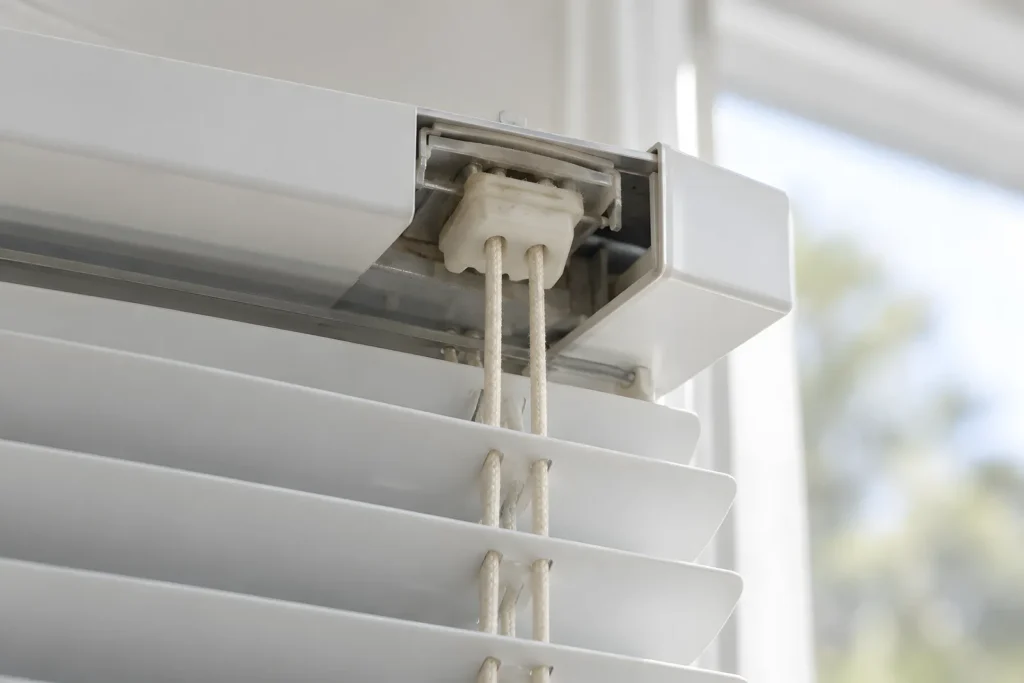
Regular dusting prevents many faults, because dust in the headrail wears the cords and clogs the lock.
What each material needs
The material changes how you handle a repair.
- Timber is the heaviest, so support the whole blind when it is down. Keep it dry, because moisture can mark or warp the slats.
- Fauxwood has the timber look in a faux wood slat and suits kitchens. Support it along its length so the slats do not bow.
- Aluminium is light, but slats dent and crease if you grip them too hard. Handle them by the edges and keep them flat on a clean towel.
How to fix blind string
How to fix blinds string usually means dealing with a frayed or snapped lift cord. Restringing is possible on some blinds, but it is fiddly. The cord has to follow the same route through the headrail, cord lock and every slat to the bottom rail, and the new cord needs to be the right type and length. If you decide to try:
- Take the blind down and lay it flat, fully raised. Our guide to how to take down venetian blinds shows how.
- Photograph the cord route from several angles before you change anything. Note how each end is tied.
- Measure the old cord and allow extra. Cut a little long rather than short.
- Replace one cord at a time, following the same route, so the other cord shows you the path.
- Tie the ends inside the bottom rail the way the original was tied, and trim any tail.
- Rehang the blind and test it, raising and lowering through its full travel.
Keep cords short and tidy, and out of children's reach. If a repair leaves a loop of cord or chain hanging, fix that before you use the blind. Our guide to blind cord safety has more.
For a basic blind, a new blind is often simpler than a full restring.
How to stop noisy blinds
Most blind noise has a simple cause.
- Wind. Close the window, or tilt the slats closed. Small hold-down clips at the bottom rail, where your blind has them, keep it still.
- Loose brackets. Check that the headrail is seated in every bracket and that the screws are tight.
- Slats knocking the glass. Check there is clearance between the slats and the window or its handle. A recess that is too shallow can push slats against the glass.
- Clicking from the mechanism. Dust is a common cause. A tiny amount of dry lubricant on metal moving parts can quiet a squeak, but keep it off cords, slats and timber, and check any instructions first.
- Rattling slats. Thin aluminium slats tend to rattle more than heavier timber or fauxwood.
Venetian blind parts and where to find them
We do not sell spare parts such as cords, locks, brackets or slats separately. If your blind came from us, contact us with your order details. Include a photo of the headrail, the cord lock and the fault, and tell us which window the blind is on and what happens when you use it.
For a blind from another supplier, go back to that supplier, or a local blind repairer, with photos. Parts that look the same often fit differently.
Repair or replace
Repair is sensible when the fault is a single cord, a loose bracket, a dusty lock or one damaged slat on a blind that is otherwise in good order. Venetian blinds replacement makes more sense when:
- several cords or ladder cords are failing
- slats are bent, cracked or warped in more than one place
- the cord lock keeps slipping
- the headrail is bent
- you want a different material, for example fauxwood or aluminium for a kitchen, or fauxwood for a bathroom
If you replace the blind, measure again rather than copying the old size. Our measuring guides for timber venetians and 25 mm aluminium venetians show how, and our comparison of timber, fauxwood and aluminium venetians helps you choose. Free samples let you see slat colours next to your window frame before you order.
Questions
Why won't my venetian blind stay up?
The cord lock may be dirty or worn, or the cords may have slipped out of step. Clean the lock, check both cords sit evenly, and replace the blind if the lock still slips.
How do I fix a venetian blind that hangs crooked?
Raise the blind fully, check the headrail sits securely in its brackets, and check both lift cords are the same length and seated in the lock. A snapped or stretched cord will need replacing.
How do I stop noisy venetian blinds?
Tilt the slats closed in a breeze, secure the bottom rail with hold-down clips, tighten loose brackets, and keep slats clear of the glass. Dust in the mechanism can also cause clicking.
Can I replace a broken slat or cord myself?
It is possible on some blinds, but restringing is fiddly and needs the right cord. For a blind from us, contact us with your order details before you try.
When should I replace a venetian blind instead of repairing it?
Replace it when several parts have failed, slats are bent or cracked in more than one place, or repairs cost more effort than a new blind that is made to your window.
Replace your venetian blinds
Compare timber, fauxwood and aluminium venetians, and order free samples to see the colour in your own light.
Keep reading
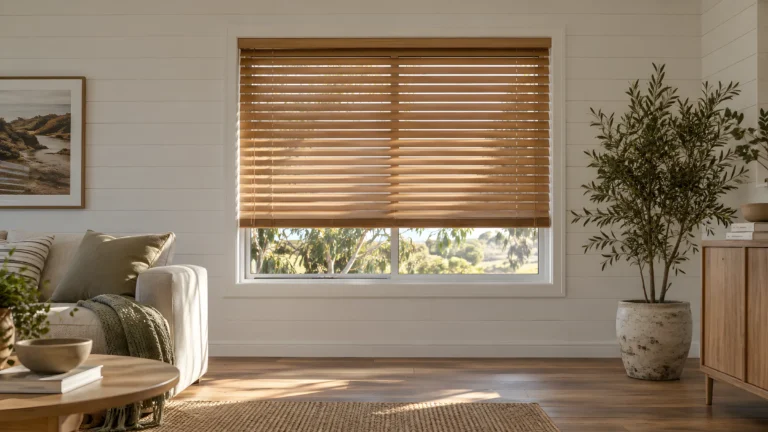 BlindsWooden blinds: timber, fauxwood or aluminium venetiansReal timber, fauxwood or aluminium? Compare slat sizes, wet-room suitability and care so you can choose the right venetian blind for each room.
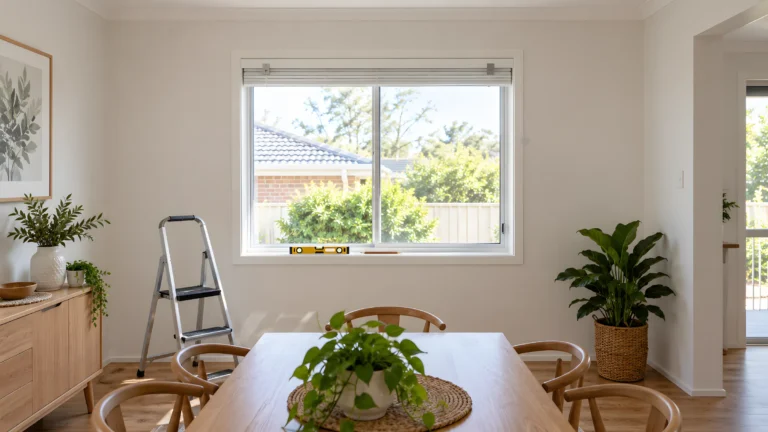 Measuring & fittingHow to take down and rehang venetian blindsHow to take down venetian blinds safely, clean or paint behind them, then rehang them with the installation guide for your blind.
 Care & cleaningHow to clean venetian blinds: aluminium, timber and fauxwoodA step-by-step guide to cleaning venetian blinds, with the right method for aluminium, timber and fauxwood slats and what to avoid, including vinegar.