
Cutting blinds to size yourself: why it's rarely worth it
You can cut a roller blind down, but it takes a saw, a knife and a steady hand, and it is easy to ruin the blind. Here is what is involved.
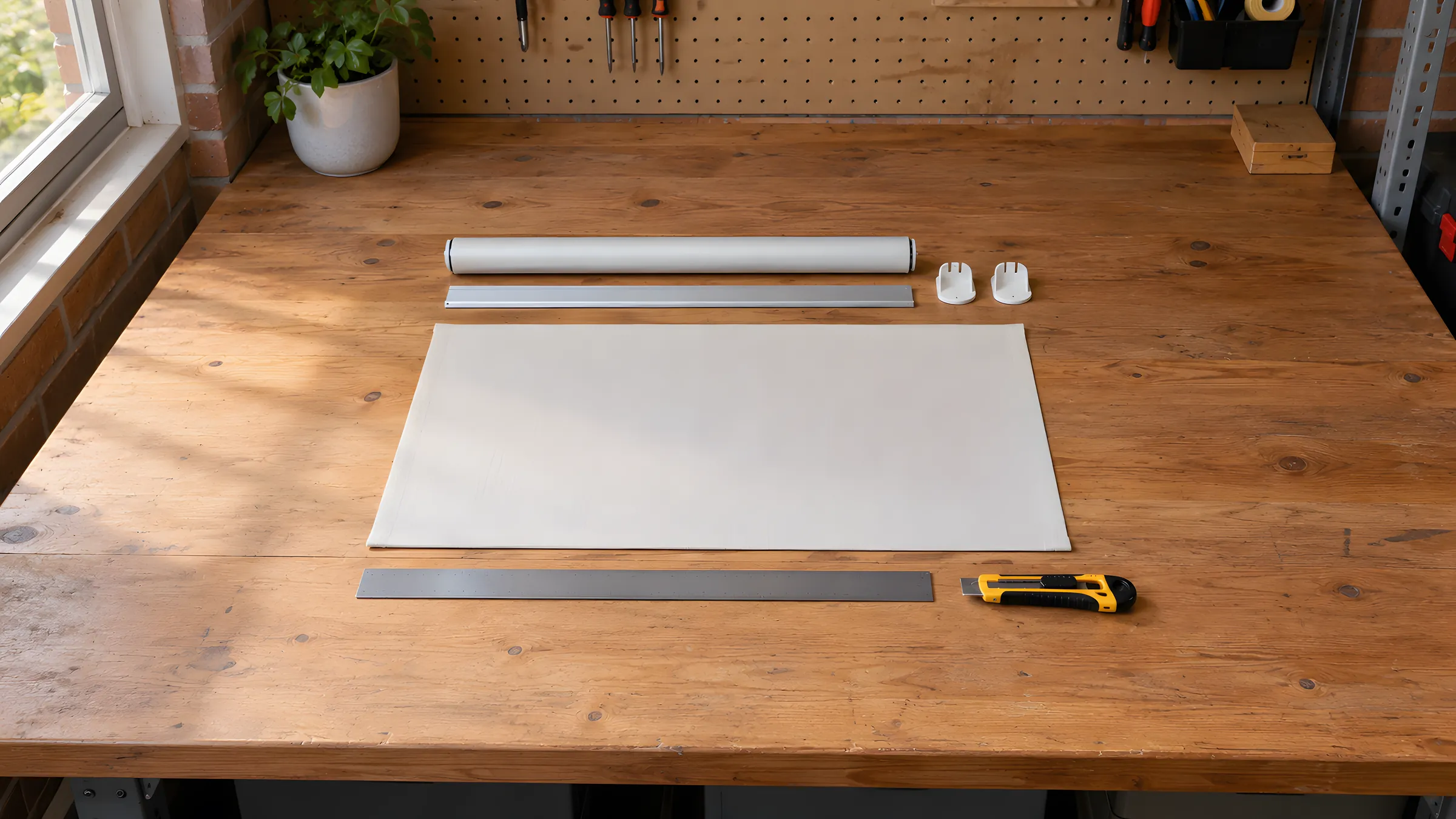
You can cut a blind down to size, but it is harder than it looks and easy to ruin. If you are wondering how to cut roller blinds to size, the honest answer is that it takes a saw, a sharp knife and a steady hand, and one crooked cut leaves you with a blind you cannot use. For most people, ordering the right size from the start is faster, cheaper than a mistake and far less stressful.
In short
- Cutting a roller blind down means removing the fabric from the tube, sawing the tube and base rail, trimming the fabric and putting it all back together square.
- Common problems are fraying or cracked edges, a wavy cut, a blind that rolls crooked, and end fittings that no longer fit.
- Venetian and vertical blinds can be shortened too, but it means taking out slats or vanes and re-threading cords.
- A blind made to your measurements arrives at the right size, so there is nothing to cut.
How to cut roller blinds to size: the honest answer
A roller blind is a tight little system. The fabric is fixed to the tube, the tube turns on end fittings, and the base rail keeps the bottom edge straight and weighted. Change the width and you change every one of those parts at once, and they all have to stay in line with each other.
That is why cutting a blind down is a job people start on a Saturday morning and regret by lunchtime. It can be done, and some people do it well, but it is a long way from trimming a piece of fabric with scissors. The sections below show what the work involves so you can decide whether it is worth the risk.
What cutting a roller blind down involves
This is not a how-to to follow. It is here to show how much effort is involved, and how many places there are to get it wrong. In order, the job looks like this:
- Take the blind down. Lift it out of its brackets and lay it flat on a bench with plenty of room.
- Cut the base rail. Slide the base rail off the bottom of the fabric, cut it to the new width and file the cut end smooth so it does not catch.
- Detach the fabric from the tube. The fabric is fixed to the tube along its top edge, and it has to come away cleanly without tearing or stretching.
- Cut the tube down with a saw. A fine-tooth hacksaw is the usual choice. The cut has to be square to the tube, and the burr left inside the end has to be removed so the fitting seats properly.
- Mark and cut the fabric. Measure the new width and mark it along the whole length of the fabric with a long steel ruler. Cut it with a sharp Stanley knife in one straight pass, holding the ruler firmly the whole way.
- Re-attach the fabric to the tube. The fabric has to go back on exactly square. A small angle at the top becomes a visible lean at the bottom of the drop.
- Refit the base rail and end fittings. Slide the rail back on, push the fittings into the shortened tube and check that everything is tight and aligned.
- Rehang and test. Put the blind back in its brackets, roll it up and down a few times, and watch whether it rolls straight.
If any step goes wrong, you usually cannot go back. A tube cut too short or a fabric edge cut crooked is permanent.
Tip: If you are weighing this up, count the tools. A saw, a deburring file, a long steel ruler, a sharp knife and a flat cutting surface large enough for the whole fabric. That is a lot of kit for one blind.
What can go wrong
Most of the problems come from how little room for error the job allows. Fabric is cut along a long edge, and a small wobble in the line shows up from across the room.
- Keeping everything square is hard. The tube, fabric and base rail all have to be square to each other. If one is out, the blind drifts to one side as it rolls up.
- The fabric frays or the coating cracks. Roller blind fabric is usually coated, and a blunt blade or a drag in the cut can pull threads or crack the coating at the edge. Once it starts, it tends to spread.
- The cut edge looks wavy or not straight. Even a steady hand struggles to cut a long, perfectly straight line, and a slight wave in the edge is visible against a window.
- The blind rolls crooked or telescopes. If the fabric is not square on the tube, it creeps to one side as it winds and the edge builds up in a spiral instead of a neat roll.
- The end fittings no longer fit. A tube cut slightly out of round, or with a rough edge inside, can stop a fitting seating properly, so the blind wobbles or will not stay in its brackets.
- You may ruin the blind. A blind is a single piece of fabric. If it is cut too narrow, it is the wrong size for good, and you have the cost of the blind and your time.
- You may lose the warranty. Altering a blind yourself will usually void any warranty on it, so check the terms of what you bought before you start.
Venetian and vertical blinds are no easier
Shortening a venetian blind means taking the end caps off the bottom rail, removing slats from the bottom, re-threading the lift cords and ladder cords, and refitting the rail. Shortening a vertical blind means removing the vanes from their carriers and trimming or replacing them, then matching the bottom chain. Reducing the width of either means cutting the headrail. The risk is the same: uneven slats, cords of different length, and a blind that no longer hangs level.
If you need to take a venetian blind down before any alteration, our guide to taking down venetian blinds covers that first step.
The better option: order it made to measure
A blind made to your measurements avoids all of this. Our blinds are made to the exact width and drop you enter, cut straight in the factory and supplied with the right fittings for that size, so there is nothing to saw, trim or re-attach at home. Browse our roller blinds, or see the full range of venetian blinds and vertical blinds.
Measuring is the part to get right. Use our official measuring guides so you follow the method that matches your blind, and enter the figures in the configurator, where you see the price before you order. We apply the factory deductions for you on rollers, so you do not need to subtract anything yourself. Our SureFit measure guarantee has its own conditions, so read it before you order.
It also helps to see the fabric before you commit. Free samples let you compare colour and texture in your own light, so you pick a fabric you will be happy with the first time. If you are comparing options, our article on made to measure versus off the shelf explains the trade-offs.
Note: If you already have a made-to-measure blind that is the wrong size, contact us before you cut anything.
When cutting might still make sense
Some people have a cheap spare blind, a workshop, and time to practise. If that is you, test your method on a scrap piece of fabric first, cut slowly against a firm straight edge, and accept that the first attempt may not be good enough for a window you look at every day.
For a window that matters, such as a bedroom, a living room or a street-facing room, the better option is a new blind made for the opening. A cut-down blind will usually look cut down.
Questions
Can you cut roller blinds to size?
Yes, but it is a multi-step job. The base rail and tube are cut with a saw, the fabric is detached, trimmed and re-attached, and any slip can leave the blind crooked or frayed. Ordering the right size is easier.
What can go wrong when you cut down a roller blind?
The fabric can fray or crack at the cut edge, the cut can look wavy, the blind can roll crooked, and the end fittings may no longer fit the shortened tube. You can ruin the blind and any warranty on it.
Can you shorten venetian and vertical blinds?
In theory, yes. Venetians need slats removed and the cords re-threaded, and vertical blinds need vanes removed or trimmed. Both are fiddly and carry the same risk of ending up uneven.
What is the best way to get a blind that fits?
Order a blind made to your measurements. Ours are made to the size you enter, so there is nothing to cut at home.
Order a blind made to your size
Enter your width and drop in the configurator, choose your fabric and see the price before you order.
Keep reading
 ComparisonsMade-to-measure vs off-the-shelf curtains and blindsMade-to-measure is cut to your windows; off-the-shelf comes in fixed sizes and is available straight away. Here is how to decide, and what each asks of you.
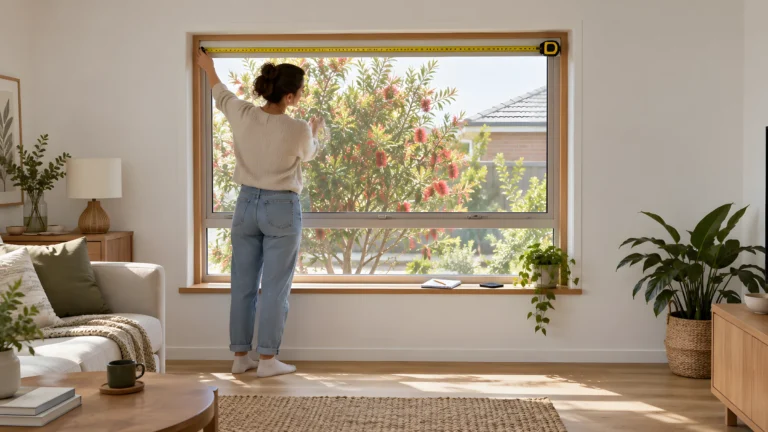 Measuring & fittingHow to measure windows for blinds: 10 mistakes to avoidMost measuring mistakes are avoidable. Here are the ten we see most, and the official measuring and installation guide to use for each product.
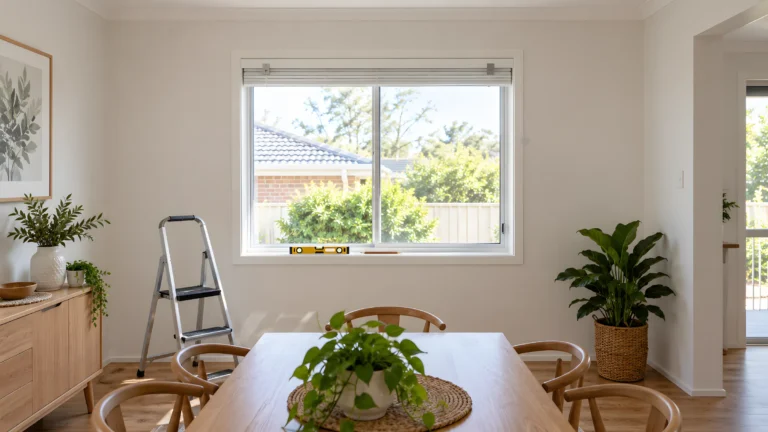 Measuring & fittingHow to take down and rehang venetian blindsHow to take down venetian blinds safely, clean or paint behind them, then rehang them with the installation guide for your blind.