
Blinds or curtains? How to choose for every room
Blinds suit small, practical and wet-area windows. Curtains suit wide windows, doors and soft living spaces. Here is how to decide room by room, and when to use both.
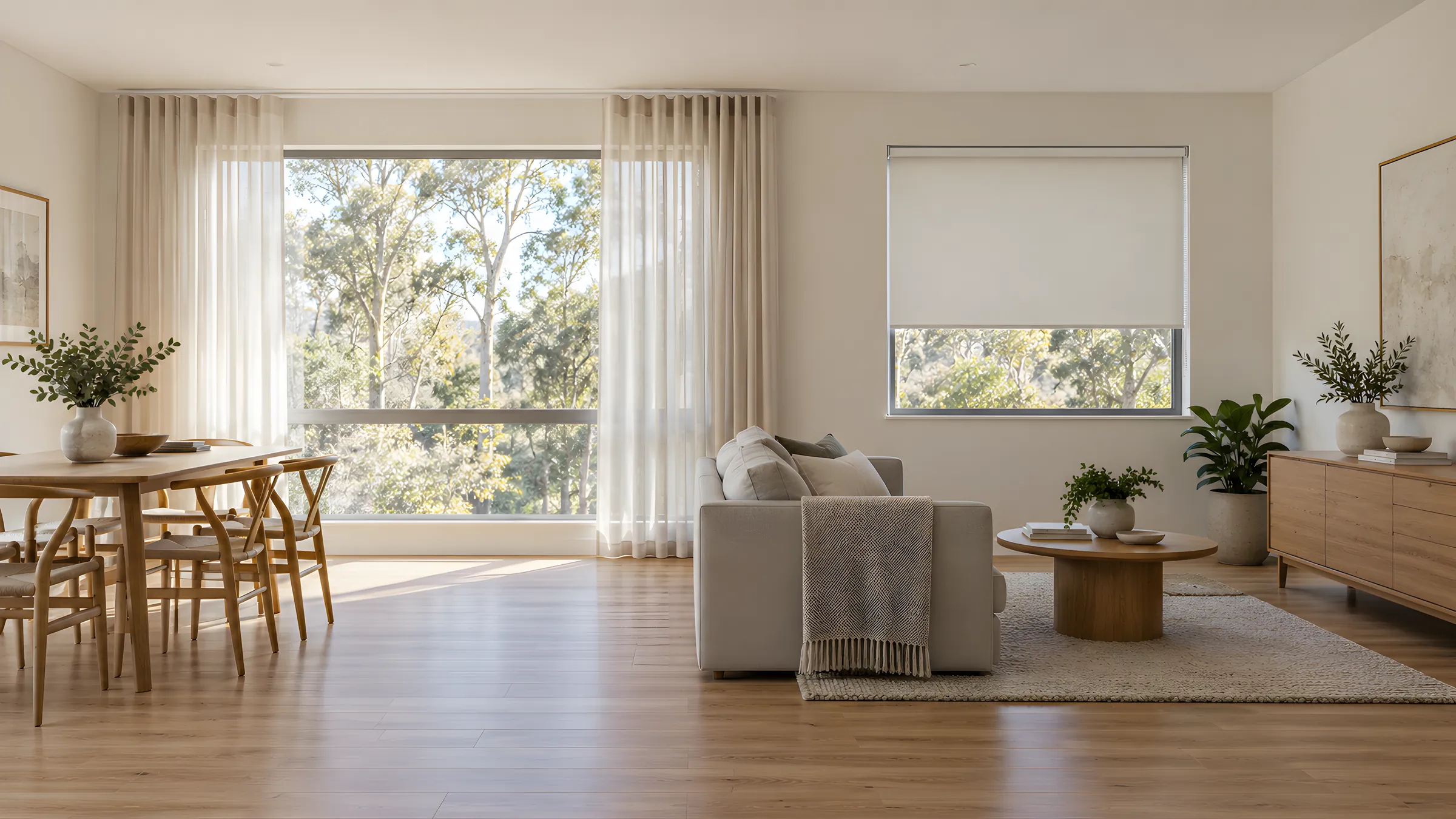
In the blinds vs curtains decision, blinds win on small windows, wet areas and tight spaces, while curtains win on wide windows, sliding doors and rooms that need softness. Most homes use both, room by room, and some windows do best with the two layered together. The window's size, the room's job and the wall and floor space around it decide the answer.
In short
- Choose blinds for kitchens, bathrooms, laundries, small windows and any window with a sink, bench or furniture in front of it.
- Choose curtains for wide windows, sliding and French doors, and living and dining rooms where you want soft drape.
- Sheer curtains soften daylight and give some daytime privacy, but they need a blockout layer for night privacy.
- Layering, such as a roller blind behind sheers, a double roller blind or double curtains, gives day and night control from one window.
- Order free samples of both and look at them in your own light before deciding.
Blinds vs curtains at a glance
This table compares what each does best, using the products you can order.
| Blinds | Curtains | |
|---|---|---|
| Best window sizes | Small to medium windows; linked or panel glide blinds for wide ones | Medium to very wide windows and doors |
| Light control | Lower a roller to any height, tilt venetian blades, rotate vertical vanes | Open or closed; sheers soften light, blockout and lined curtains darken |
| Night privacy | Blockout roller, closed venetians, vertical blinds, shutters | Blockout, lined or double curtains; sheers alone do not |
| Look | Clean, tailored lines inside or on the window | Soft, textured, adds height and drape |
| Space needed | Little: sits in the recess or on the frame | Stack-back beside the window plus track clearance |
| Wet areas | PVC plantation shutters, fauxwood and aluminium venetians, rollers that will not get drenched | Not used in kitchens |
| Cleaning | Dust, or wipe with a damp sponge and dry | Sheers hand wash only; blockout curtains cannot go in a washing machine |
| Controls | Chain, cordless or motorised | Wand or motorised track |
When blinds are the better choice
Blinds earn their place wherever the window is small, busy or wet.
- Kitchens. PVC plantation shutters, fauxwood venetians and aluminium venetians all suit a kitchen because they are waterproof. Roller blinds are fine as long as they do not get drenched. Skip curtains in a kitchen.
- Bathrooms and laundries. Light Filter or Blockout rollers and PVC shutters are the usual choices. Roller fabric is not waterproof, so keep it out of direct spray.
- Windows with something in front. A sink, bench, desk, bed head or bookcase leaves no room for a curtain to hang and move. A blind in the recess stays clear.
- Windows you adjust often. A roller lowers to any height and holds it, which suits a home office where the sun moves across the desk.
- A neat, tailored look. A recess-fitted blind reads as part of the window rather than something added to it.
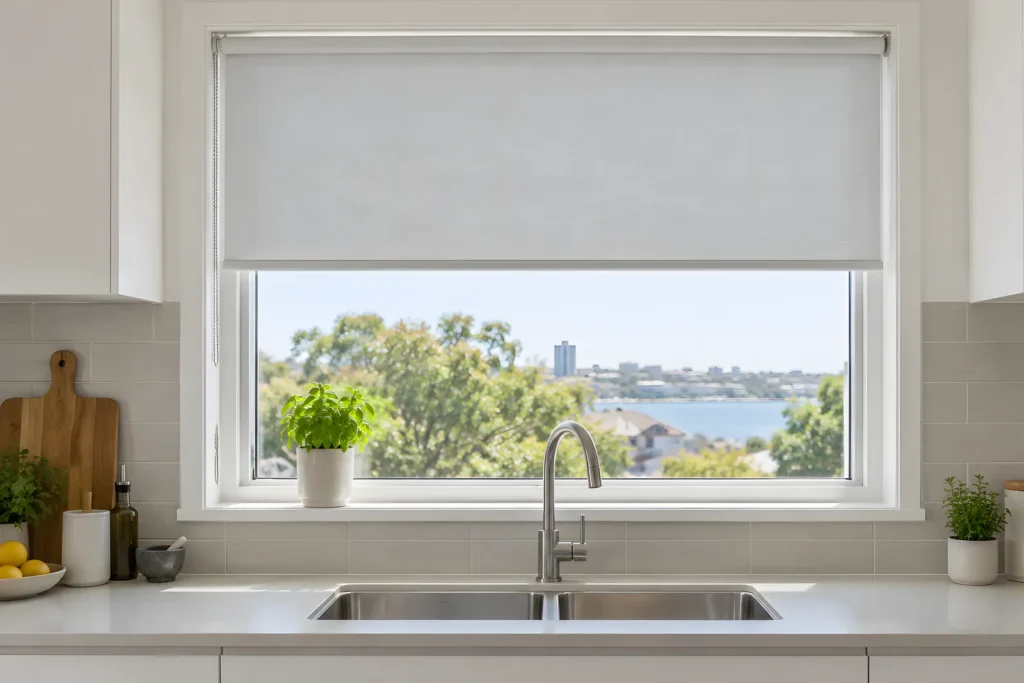
Tip: If a tap or handle gets in the way of a roller, ask for a front (over) roll. It moves the fabric away from the obstruction and hides the tube.
When curtains are the better choice
Curtains suit any window where softness, width or height matters more than a tailored line.
- Wide windows and doors. A curtain is made to the width of its track, so it copes with big openings. A single roller blind has a maximum width of 3000 mm, and wider windows need linked blinds.
- Living and dining rooms. Fabric adds texture and warmth that a hard-edged blind cannot. Our sheers, Cassis, Cassis Volume and Bali, are the more popular choice, and they come in warm neutrals, whites and greys.
- Sliding and French doors. A curtain that stacks back clear of the door lets you walk through freely. Plan the stack-back space first.
- Adding height. A track fitted higher than the frame, running wider than the glass, with curtains falling to just off the floor, makes a window look taller and wider than it is.
- Awkward shapes. Bay and corner windows can take curved and box and bay tracks, which a single blind cannot match.
Our curtains come in five headings. S Fold is the most popular, with regular waves and a deep heading profile. Pencil pleat, double pinch pleat, triple pinch pleat and inverted pleat suit more traditional rooms.
Choosing room by room
This is where most people should start. Match the room's job to the product.
| Room | Usually the best fit | Why |
|---|---|---|
| Kitchen | PVC plantation shutters, fauxwood or aluminium venetians, or a roller blind | Waterproof or easy to wipe; no curtains or cassette systems |
| Bathroom | Light Filter or Blockout roller, PVC shutters, fauxwood venetians | Privacy with light; PVC and fauxwood cope with moisture |
| Laundry | Light Filter or Blockout roller, PVC shutters | Practical, easy to keep clean |
| Bedroom | Blockout roller (face fit or cassette), double roller, or lined or double curtains | Darkening and night privacy |
| Nursery | Cordless (ZeroGravity) blockout roller, cassette | No chain to reach; darkening for naps |
| Living room | Light Filter or SunScreen roller, double roller, S Fold curtains | Daylight, view and softness |
| Dining room | SunScreen, double roller, lined curtains | Glare control that still looks good |
| Home office | SunScreen, Light Filter, aluminium venetians | Cuts glare, keeps the view |
| Home theatre | Blockout, full cassette, motorised | Darkest result available |
| Sliding doors | Vertical or panel glide blinds, linked rollers, curtains | Coverage for large glass |
| French doors | Front-roll rollers, vertical blinds, S Fold curtains | Clear of handles |
For a deeper look at your own room, see our room-by-room ideas.
Roller blinds vs curtains
Here are the real differences.
Light. A blockout roller stops light passing through the cloth, but a recess-fitted blind leaves small light gaps at each side. Fitting it on the face of the frame covers more and cuts those gaps. Curtains hung wider than the glass and finishing near the floor cover the edges better, but light can still show over the top and where two panels meet.
View and glare. A SunScreen roller cuts glare and keeps the view, so it suits a living room with a garden outlook. Sheer curtains soften the light and blur the view without blocking it.
Space. A roller needs recess depth: 70 mm for an over-roll or 45 mm for an under-roll. Curtains need clear wall space beside the window. For wall-to-wall windows a one-way curtain stack-back takes about 30 per cent of the track width, and a centre-opening pair about 15 per cent on either side.
Cleaning. Roller fabric is dusted or wiped with a damp sponge and dried. Curtains are heavier to clean: sheers are hand washed, and coated blockout curtains are professionally wet cleaned or hand washed at 40C at most.
Safety. Chains and cords need care around children. Our roller blinds come with a chain safety device, and cordless (ZeroGravity) and motorised controls remove the chain entirely. Keep chains out of reach whatever you choose.
Using both: four ways to layer
Many windows work best with two layers, one for daylight and one for night.
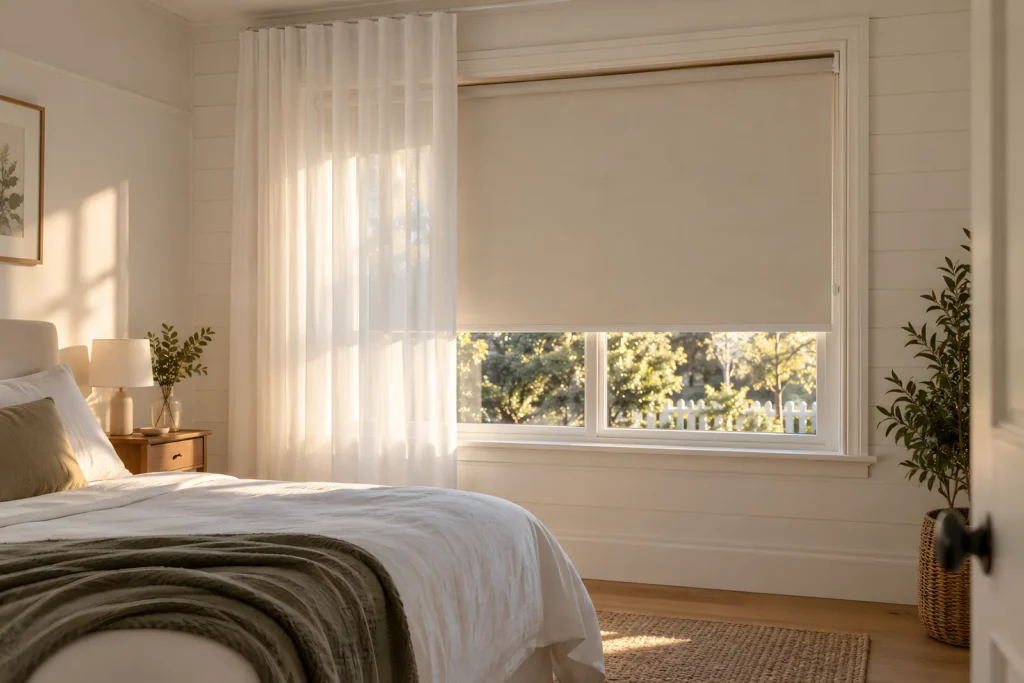
- Roller blind behind sheer curtains. The roller does the light control and the sheers finish the look. A standard (under) roll sits closer to the glass, leaving more space in front for the curtain.
- Double roller blind. Two independently operated fabrics on one set of brackets: a daylight layer (SunScreen or Light Filter) plus a blockout layer. Read more in our double roller blinds range.
- Double curtains. A sheer on the front track and a blockout on the rear track, drawn separately. Allow for the projection of both tracks.
- Lined curtains. A blockout lining sewn behind a sheer, so both move together on one track.
For a step-by-step on the curtain options, see how to layer sheer and blockout curtains. For choosing colours across the two layers, read how to match curtain colours with your blinds.
A quick way to decide
Work through these in order and stop when one answer is clear.
- Is it a kitchen, bathroom or laundry window? Choose a blind or shutter.
- Is there furniture, a sink or a bench right in front of it? Choose a blind.
- Is it wider than about 3 metres, or a sliding or French door? Choose curtains, vertical blinds, panel glide or linked rollers.
- Do you want softness and texture in a living space? Choose curtains, ideally with sheers.
- Do you need night privacy or a darker room? Choose blockout: a blockout roller, blockout curtains, lined curtains or a double system.
- Can you not decide? Layer them, or order samples of each and compare them in your own light.
Note: Blockout is the Australian word for what many people search as blackout. It means the same thing: a fabric that stops light passing through the cloth.
Once you know the type, order free samples and hold them against your walls, floors and window frames in morning and evening light. Colour and texture look different at 7am and at 7pm.
Questions
Are blinds or curtains better for privacy?
Both can give good privacy at night if you choose the right fabric. Blockout blinds, blockout curtains, lined curtains and double curtains do; sheers alone do not when the lights are on.
Are blinds or curtains better for a living room?
Curtains suit most living rooms because they add softness and handle wide windows well. Light filter or SunScreen roller blinds are a good choice for a smaller window or a glare problem.
Can you have blinds and curtains on the same window?
Yes. A roller blind in or on the window with curtains on a track outside is a common pairing, and a double roller blind or double curtains give you two layers in one system.
Are curtains cheaper than blinds?
It depends on the size, fabric and options you choose. Each configurator shows the price before you order, so you can compare like for like.
Do blinds or curtains block more light?
Neither gives complete darkness. Blockout fabric stops light passing through the cloth, and how much leaks in depends on the gaps at the edges, top and bottom.
See the fabrics in your own light
Order free samples of blinds and curtains and compare them against your walls and floor.
Keep reading
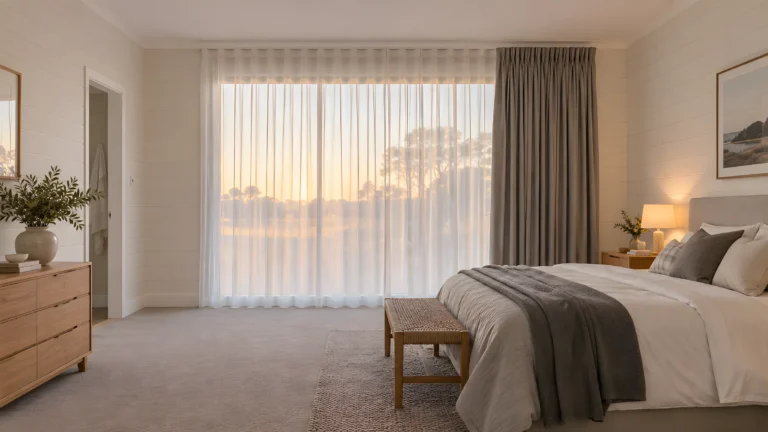 CurtainsHow to layer sheer and blockout curtainsHang the sheer at the front and the blockout behind on a double track, or choose a lining. Here is how to pick fabrics, headings, colours and depth.
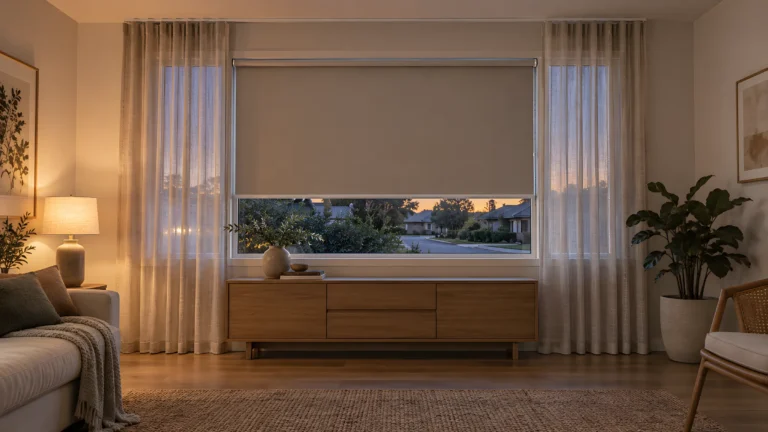 BlindsThe best window coverings for privacy, day and nightMost window coverings give privacy by day, but only some do at night with the lights on. Here is what each option really hides, and how to fit it.
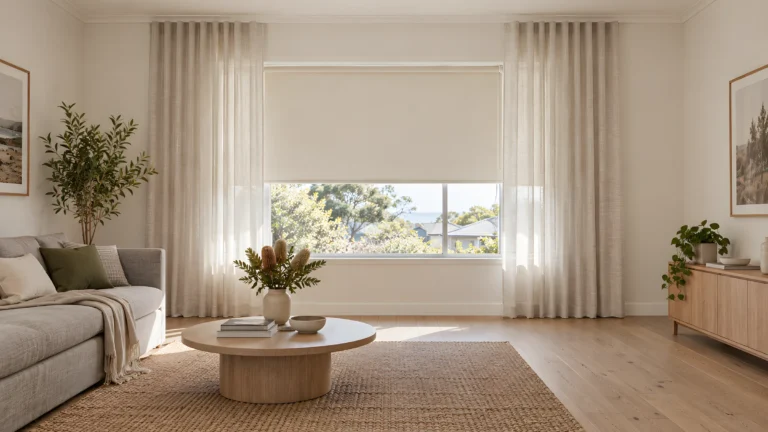 Room ideasHow to match curtain colours with your blindsChoose the blind first, match undertones rather than exact colours, and keep one layer quiet. Here are real fabric pairings and the fitting details that make them work.