
Why a darker bedroom can help you sleep (and how to get one)
A darker room can make it easier to fall and stay asleep. Here is where bedroom light really comes from and how blockout, fit and layering keep most of it out.
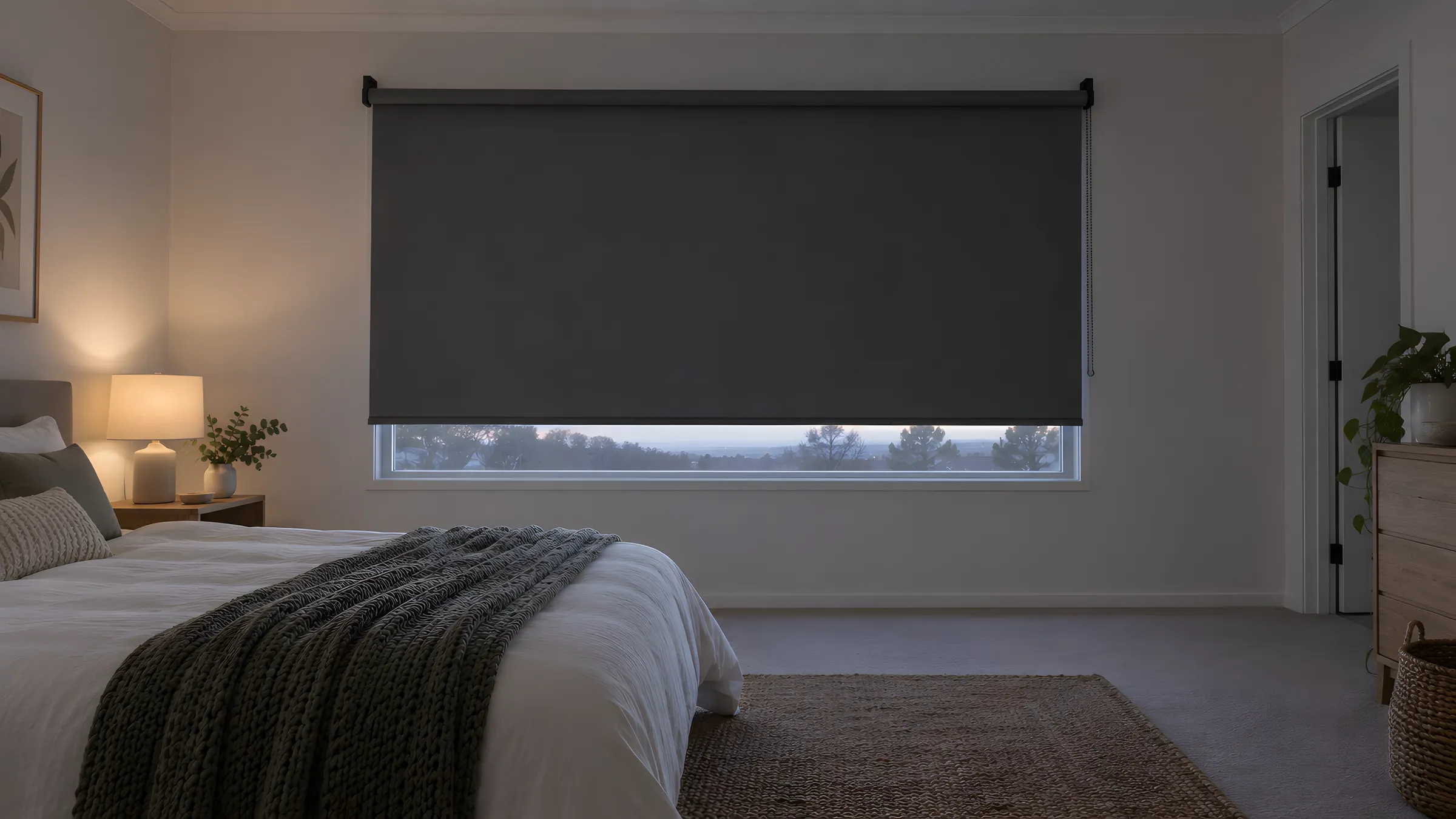
A darker bedroom can make it easier to fall asleep and to stay asleep, and blockout blinds for sleep are the most direct way to get one. Blockout fabric stops light passing through the cloth. Most of the light that wakes people up, though, comes in around the edges, so fit and layering matter as much as the fabric. The right setup gets close to fully dark.
In short
- A darker room can make sleep easier for many people, though it varies from person to person.
- Blockout fabric stops light passing through the cloth. The edges, top and bottom are where light gets in.
- Face fit, a cassette, a fascia or pelmet, and curtains layered over a blind all reduce the gaps.
- Check the light sources inside the room too, such as standby lights and gaps under the door.
- Test your setup at night and again at dawn to see where light still leaks.
Why a darker bedroom can help
Many people find it easier to fall asleep in a dark room, and easier to stay asleep when early sun or a streetlight is not pushing through. Some sleep better with a little light. There is no single rule, so it comes down to what suits you.
Darkening is especially useful in a few situations:
- Bedrooms facing east, where early sun arrives before you want to be up.
- Homes near streetlights or with bright neighbouring windows.
- Shift workers and anyone who sleeps in the day.
- Young children who nap or settle more easily in a dim room.
- Long summer evenings, when it is still light at bedtime.
Where the light in your bedroom really comes from
Before you buy anything, it helps to know where the light comes from. There are five routes.
- Through the fabric. Light Filter, SunScreen and sheer fabrics are designed to let light through. Blockout is not.
- The sides. A recess-fitted blind leaves small gaps between the fabric and the frame, roughly 20 mm at the chain side and 10 to 20 mm at the pin end.
- The top and bottom. Light sneaks in above the roll, between the headrail and the wall, and under the base rail.
- Around curtains. Light shows over the top of the track and down the edges, and at the centre where two panels meet.
- Inside the room. Standby lights, a hallway light under the door and phone chargers are easy to miss.
Blockout blinds for sleep: what they do
Blockout fabric is coated so that light does not pass through the cloth. It also gives night privacy. (Many people search "blackout blinds"; blockout is the Australian word for the same thing.) Our blockout roller blinds come in nine ranges, from matte Shade to Lakeside, with its texture inspired by exposed bedrock.
A few points are worth knowing:
- Colour does not change the blocking. A pale blockout stops light passing through the cloth just as a dark one does. Choose colour for style.
- Roll direction matters. A standard (under) roll drops from the back of the tube, closer to the glass, and blocks more light than a front (over) roll.
- The edges are the weak spot. A conventional blind leaves gaps at the sides, and a blind alone will not remove them.
Our guide to blockout vs blackout blinds explains the terminology in more detail.
Ways to make a bedroom darker
This table compares the options, from simplest to most complete.
| Option | What it does | Notes |
|---|---|---|
| Blockout roller, recess fit | Neat look; blocks light through the cloth | Small light gaps at each side |
| Blockout roller, face fit, standard roll | Overlaps the frame, so fewer gaps | Covers more of the wall around the window |
| Full Blockout Cassette | Headbox, side channels and bottom channel close the edges | Needs 50 mm clear depth; ordered with a compatible under-roll blockout blind; cannot be retrofitted; front roll not possible |
| Double roller blind | Daylight layer plus blockout layer | Needs 90 mm recess depth (both over-rolled) or 70 mm (both under-rolled) |
| Blockout curtains over a blind | Overlap the edges and the top | Track should run wider than the window |
| Lined curtains | Blockout lining sewn behind a sheer, on one track | Best with a track that runs wider than the window |
| Double curtains | Sheer on the front track, blockout on the rear | Projects 220 to 250 mm from the wall |
| Fascia or pelmet | Hides hardware and helps close the top | A fascia is not a cassette and does not remove every light gap |
| Plantation shutters | Adjustable blades and D-mould panels | Add a blockout layer for real darkness |
Choosing between blinds and curtains for a bedroom? Read blinds or curtains, or our guide to the best blinds for bedrooms.
A step-by-step checklist for a darker bedroom
Follow these steps in order.
- Do a light audit. On a bright morning or a night with streetlights, sit on the bed with the room lights off and note every light source: window edges, top, bottom, door gap, electronics.
- Choose blockout. Light Filter, SunScreen and sheers will not darken a room.
- Choose face fit and a standard roll if darkness matters more than a neat recess look.
- Consider a cassette to close the sides and top with channels. Check you have 50 mm of clear depth first.
- Add curtains over the top if light still leaks. Let the track run wider than the window and choose lined or blockout curtains that finish just touching the floor.
- Close the top. A pelmet or fascia helps hide the hardware and reduces the gap above.
- Sort out the room. Cover or turn off standby lights, close the door, and use a low, warm night light in the hallway.
- Test with a sample. Order free samples and hold one over a phone torch in a dark room to see how much light passes through.
- Measure carefully. A blind that is too narrow leaves bigger gaps. Follow the roller blind measuring guide, or the cassette measuring guide if you are choosing a cassette.
Tip: Put a small mark on the wall where you see the brightest leak at dawn. It tells you which of the fixes above matters most.
Special cases: nurseries, day sleepers and waking with the light
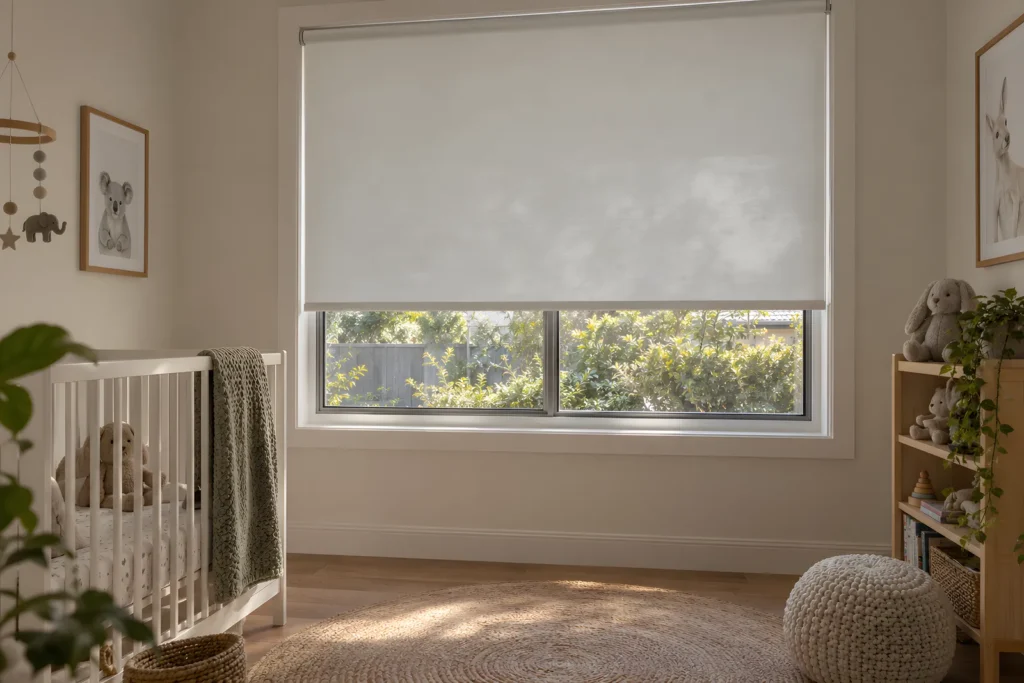
Nurseries and kids' rooms
Our nursery suggestions are ZeroGravity cordless blinds, blockout fabric and cassettes. A cordless blind has no chain, and it lifts by the base rail and holds at any height. For children's rooms, choose cordless or motorised controls. If you do fit a chain blind, use the safety device supplied and keep the chain out of reach.
Day sleepers
The same principles apply to anyone who sleeps in the day, such as shift workers. Aim for face fit or a cassette, with lined or blockout curtains over the top, and sort out the light sources inside the room.
Waking with the light
Some people prefer to wake with daylight rather than an alarm. Motorised blinds with a compatible smart hub can open on a timer or a sunrise trigger, and battery motors need no mains wiring. See motorised roller blinds for the details.
What blockout will not fix
A darker room is one part of a comfortable bedroom. Blockout does not solve everything.
- Noise. Curtains and blinds help a little with echo but not with traffic. See do curtains and blinds reduce noise.
- Heat. A closed blockout on a sun-facing window helps keep a room cooler, but it is not the whole answer. See how to keep your home cool in summer.
- Total darkness. If you need a room to be as dark as possible, layer a blockout blind with lined or blockout curtains and deal with the light inside the room.
Questions
Do blockout blinds make a room completely dark?
No. Blockout fabric stops light passing through the cloth, but some light still enters around the edges. Face fit, a cassette and curtains over the top get you closer.
Is blockout the same as blackout?
Yes. Blockout is the Australian word many people search as blackout. Both describe a fabric that stops light passing through the cloth.
Are cassette blinds completely dark?
No, but a full blockout cassette closes the sides and top with a headbox and channels, so it lets in less light than an ordinary roller blind.
Do I need curtains as well as a blockout blind?
Not always. A face-fit blockout blind or a cassette may be enough. Curtains layered over the top add an extra seal at the edges and can help if light still leaks in.
Does the colour of a blockout blind change how dark the room is?
Blockout fabric stops light passing through the cloth whatever its colour, so colour is mainly a style choice. Gaps at the edges make the bigger difference.
Build a blockout roller blind
Choose a blockout fabric, pick face fit or recess fit, and see the price before you order.
Keep reading
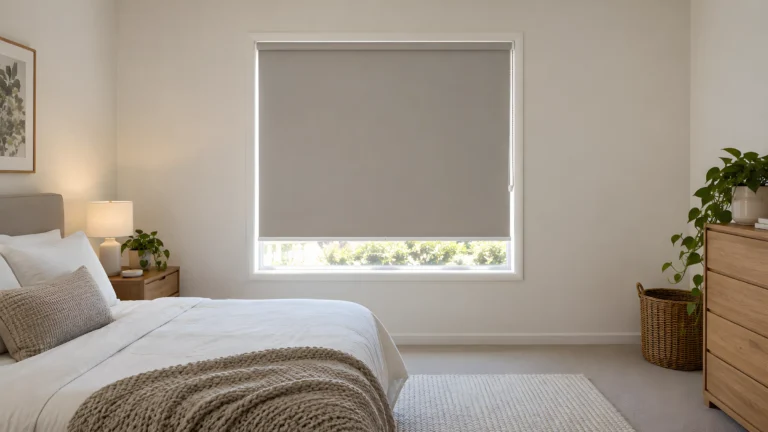 ComparisonsBlockout vs blackout blinds: is there a difference?Blockout and blackout are two names for the same fabric type. Here is what it does, where light still leaks in and how to fit it for a darker room.
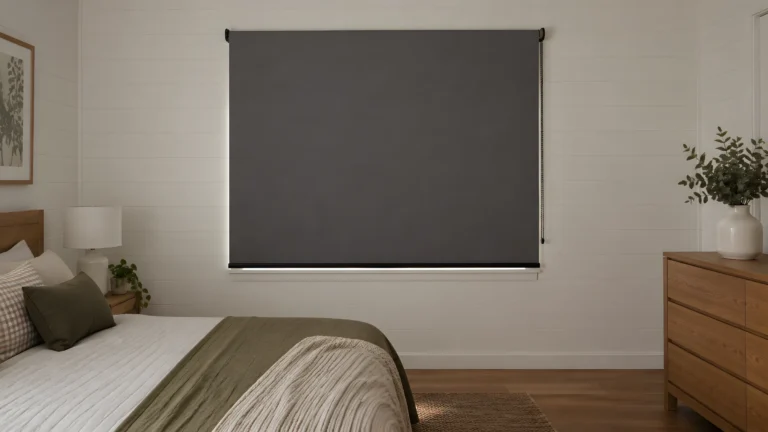 BlindsHow to reduce light gaps around roller blindsLight gaps come from fit, not just fabric. Compare face fit, under-roll, side channels, linked blinds and layering to get the darkest room a roller blind allows.
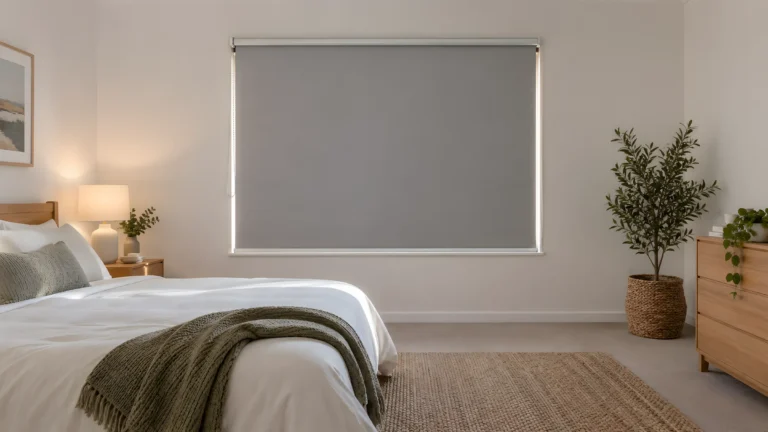 Room ideasThe best blinds for bedrooms (for sleep and privacy)Blockout, cassette or double roller? How each works in a bedroom, how to cut light gaps and how to choose a control you can reach from bed.