
How to reduce light gaps around roller blinds
Light gaps come from fit, not just fabric. Compare face fit, under-roll, side channels, linked blinds and layering to get the darkest room a roller blind allows.
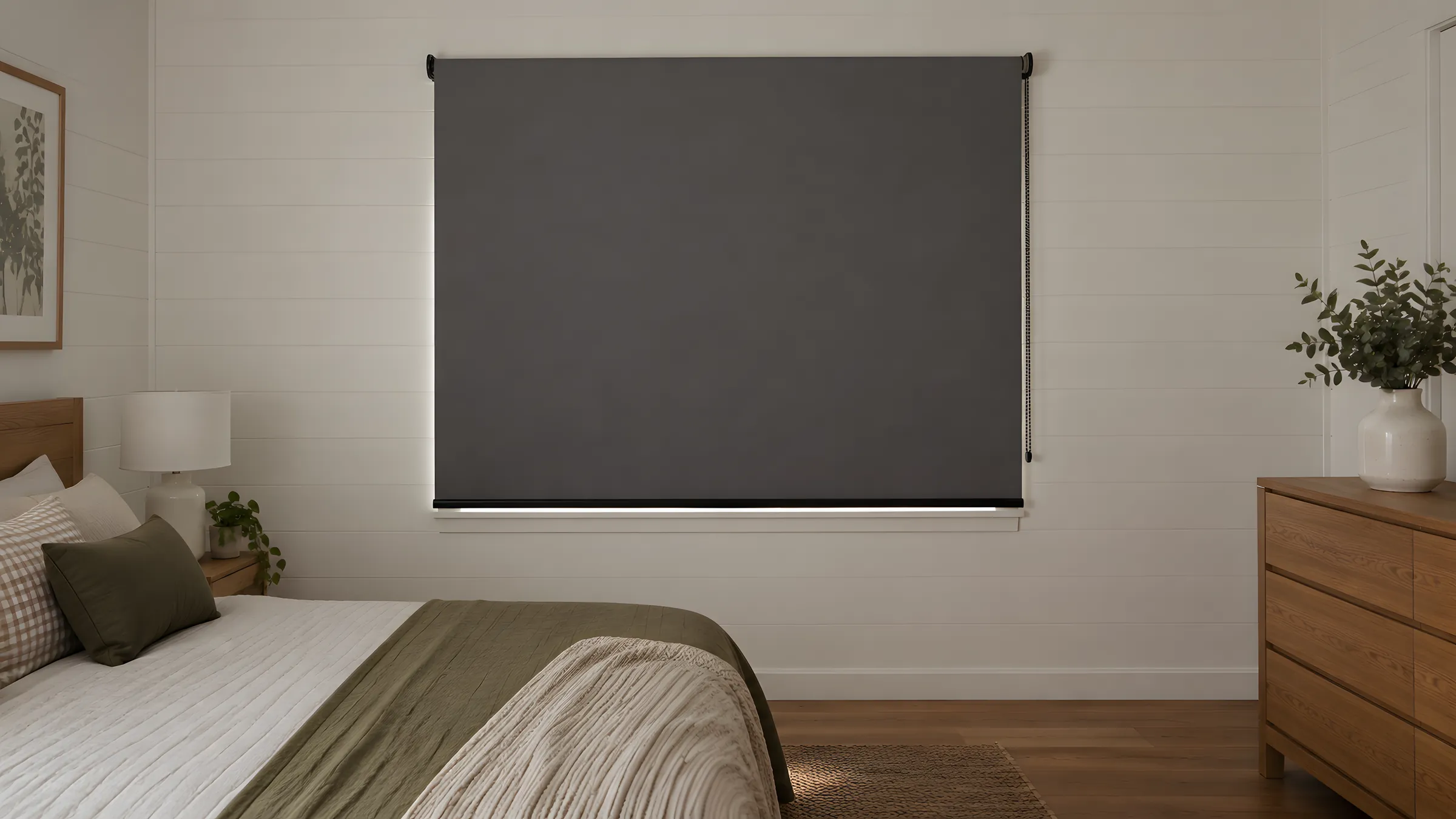
The light gaps roller blinds leave at the sides, top and bottom are mostly a fit problem, not a fabric problem, and the most effective way to reduce them is to change how the blind is fitted. Fit it on the face of the wall or frame so it overlaps the window, choose an under-roll so the fabric hangs closer to the glass, and add a Full Blockout Cassette when you want the sides enclosed. The aim is to make the gaps as small as they can be; a little light around the edges is normal even with the best fit.
In short
- Light gaps come from the sides, top and bottom of a blind and from the join between blinds on wide windows, so a darker fabric alone does not fix them.
- Face fit with an under-roll is the first upgrade: the blind overlaps the opening and hangs closer to the glass.
- A Full Blockout Cassette adds side channels (what people often call side tracks), a headbox and a bottom channel.
- Linked blinds cut the join gap to about 17 mm, compared with 30 mm or more for blinds butted side by side.
- Blockout curtains over the top add a second layer.
Where light gaps around roller blinds come from
A roller blind has to clear the window frame, the brackets and the wall, so it cannot touch every surface. Light finds the space that is left.
| Where | What causes it |
|---|---|
| Sides of a recess-fit blind | About 20 mm on the chain side and 10 to 20 mm at the pin end |
| Between fabric and glass | The blind hangs at a distance from the glass, especially with a front roll |
| Between two blinds on a wide window | About 30 mm or more if butted, about 17 mm if linked |
| Around the hardware | A fascia conceals it but does not remove every light gap |
| Through the fabric | Light Filter and SunScreen let light through the cloth |
To see what you are dealing with, lower the blind fully on a bright day and look at the edges from inside the room. The pattern of light tells you which fix you need.
Fixes at a glance
| Fix | What it reduces | What to know |
|---|---|---|
| Blockout fabric | Light through the cloth | The starting point for any dark room |
| Face fit | Side and top gaps | Covers more than a recess fit and clears obstructions |
| Under-roll (standard roll) | Gap between fabric and glass | Drops from the back of the tube, closer to the glass |
| Full Blockout Cassette | Sides, top and bottom | Needs 50 mm clear depth in a recess; ordered with the blind |
| Linked blinds | Join gap on wide windows | About 17 mm compared with 30 mm or more for butted blinds |
| Curtains over the blind | Second layer | Work best alongside the blind, not instead of it |
Start with blockout fabric
Light Filter and SunScreen let light through the cloth, so no fitting change will make them dark. Blockout stops light passing through the cloth, and the fixes below deal with the edges. If you search "blackout blinds", this is the same fabric. Our blockout roller blinds page shows the ranges, and blockout vs blackout blinds explains the terms. Once the fabric is settled, fit does the rest.
Face fit and an under-roll: the first upgrade
A recess fit sits inside the reveal and looks neat, but leaves those small gaps at each side. A face fit mounts on the wall or frame around the window. It covers more, cuts the gaps and clears obstructions. (Some sites call these inside mount and outside mount.)
Face fit is measured differently from recess fit, with or without architraves, so take the figures from our roller blinds measuring guide rather than a general rule.
Under-roll or front roll
With a standard (under) roll, the fabric drops from the back of the tube, closer to the glass, and blocks more light. A front (over) roll sits farther from the glass, hides the tube and clears handles and winders, but it leaves a bigger gap between fabric and glass. If a handle or winder forces you to a front roll, plan for a little more light.
Under-roll is the roll direction the guide recommends for a face fit. If you are unsure which fit suits your window, recess fit or face fit helps you decide, and standard roll vs reverse roll sets out the trade-offs.
Side channels: the Full Blockout Cassette
If you have seen "roller blinds with side tracks" or "blockout blinds with side tracks", this is the product to look at. The cassette roller blinds have a headbox, side channels and a bottom channel, and they are available as a full four-sided or a three-sided system.
A few rules matter before you order:
- A cassette is ordered together with a compatible under-roll blockout blind, matched by dimensions and window name.
- It cannot be retrofitted to an existing blind.
- A front roll is not possible.
- In a recess, allow 50 mm of clear depth. Measure with the cassette blind measuring guide, which also covers face fit.
- Cassette systems are not used in kitchens.
A cassette is the strongest answer to edge light. It is not the same thing as a fascia, which is a decorative cover that conceals the hardware and does not remove every light gap.
Wide windows and layered curtains
Link blinds instead of butting them
Two or three blinds side by side leave a gap at each join. On linked roller blinds, the blinds share brackets and the join gap is about 17 mm. Butted blinds leave 30 mm or more. Put the join over a mullion centre, so the mullion sits behind the gap.
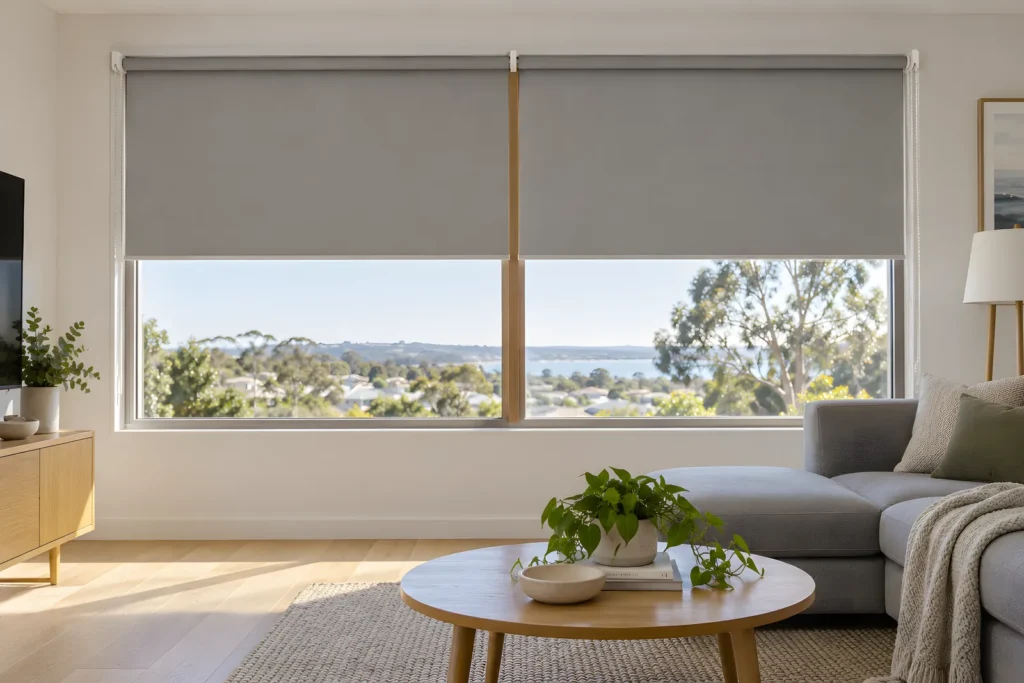
Layer curtains over the blind
Blockout curtains are coated and opaque, and they work best as a second layer rather than a cure on their own. For more on the layered option, see blockout curtains. A box pelmet above curtains can help close the gap at the top.
Tip: Curtains hung over a blind need room to clear it. Decide on the blind first, then choose the curtain track and its projection to suit.
How to black out a room
To black out a room, work through four layers in order: blockout fabric, a fit that overlaps the window, closed edges, and a second layer on top. Each step removes a different source of light, so the more of them you use, the darker the room gets. If you search for "how to blackout windows", this is the same job.
- Choose blockout fabric. It stops light passing through the cloth. Light Filter and SunScreen will never black out a room.
- Fit it on the face of the frame with an under-roll. The blind overlaps the opening and hangs close to the glass.
- Close the edges. A Full Blockout Cassette adds side channels, a headbox and a bottom channel.
- Add curtains over the top. Blockout curtains on a track that runs wider than the window, with a pelmet above, cover what the blind leaves at the edges.
Which blinds block the most light
In rough order, from most to least light blocked:
- A Full Blockout Cassette with an under-roll blockout blind, because the fabric runs in side channels and a headbox encloses the roll.
- A face-fit blockout roller with an under-roll, with blockout curtains over the top.
- A face-fit blockout roller with an under-roll on its own.
- A recess-fit blockout roller, which is neat but leaves small gaps at each side.
Our blockout roller range runs from Shade to Opulence, with plenty of colours to sample. For bedrooms, blockout for better sleep goes into the light side in more detail.
How to stop light coming through the side of blinds
Side light comes from the gap between the blind and the frame. To reduce it:
- Switch from recess fit to face fit, so the blind covers the frame rather than sitting inside it.
- Choose a cassette when you want the sides enclosed.
- Link blinds on wide windows, so the join is about 17 mm rather than 30 mm or more.
- Extend the curtain track past the window so the curtains overlap the blind's edges when closed.
Temporary ways to black out a room
If you rent, or need something while a made-to-measure blind is on its way, a few stop-gaps are common: a blockout-lined curtain on an existing rod, a removable blackout liner or a piece of dark fabric held up at the frame. They tend to leave their own gaps and can mark paint or glass, so test a small area and check with your landlord before using adhesive.
Check your window depth first
Each solution needs a different amount of clear depth in a recess. If your reveal is shallow, that may decide the question for you, and window depth for blinds goes through it in more detail.
| Setup | Recess depth needed |
|---|---|
| Single blind, under-roll | 45 mm |
| Single blind, over-roll | 70 mm |
| Full Blockout Cassette | 50 mm clear |
| Double roller, both under-rolled | 70 mm |
| Double roller, both over-rolled | 90 mm |
A face fit mounts on the wall or frame rather than inside the reveal, so it does not need recess depth, which is one more reason it is a common answer to light gaps.
How dark do you need the room?
Match the fix to the job, rather than buying the most you can.
- A darker room, some edge light acceptable (a spare room, a study): blockout in a recess fit with an under-roll.
- A dark bedroom: blockout, face fit, under-roll. See bedroom blinds. Add a cassette if edge light still bothers you.
- A nursery: blockout with ZeroGravity cordless controls, or a cassette. Keep chains out of reach of children.
- A home theatre: blockout in a full cassette, with motorised controls. See home theatre blinds.
- A wide window: linked blinds with the join over a mullion.
- A living area where you want some daylight too: a double roller lets you control a daylight layer and a blockout layer separately.
For the full set of fabrics, controls and fit choices, see the roller blinds buyer's guide.
Questions
Do roller blinds come with side tracks?
Our Full Blockout Cassette has side channels and a bottom channel as well as a headbox. It is available as a full four-sided or three-sided system, ordered with a compatible under-roll blockout blind.
How big are the light gaps on a recess-fit roller blind?
Expect about 20 mm on the chain side and 10 to 20 mm at the pin end, and an uneven opening can make a gap look larger. Face fit covers more and cuts those gaps.
Can I order a recess blind wider to close the gap?
No. Enter your measurements as the measuring guide says, because the factory makes the allowances. If you want smaller gaps, choose face fit, where the blind overlaps the opening, or a cassette.
Will a cassette make my room completely dark?
No. A Full Blockout Cassette is the strongest answer to edge light, but it is still not completely dark.
Does a fascia stop light gaps?
A fascia conceals the hardware, but it is not a cassette and does not remove every light gap.
Build your blockout roller blind
Choose face fit, an under-roll or a cassette, enter your measurements and see the price before you order.
Keep reading
 ComparisonsBlockout vs blackout blinds: is there a difference?Blockout and blackout are two names for the same fabric type. Here is what it does, where light still leaks in and how to fit it for a darker room.
 BlindsRoller blinds: the complete buyer's guideFabric, colour, controls, fit, roll direction and special formats: every decision in ordering a made-to-measure roller blind, in the order you make it.
 ComparisonsStandard roll or reverse roll: which way should your blind roll?Standard (under) roll blocks more light and needs less depth. Reverse (front or over) roll hides the tube and clears handles. Here is how to choose.