
Blockout, light filter or SunScreen? Choosing roller blind fabric
What each roller blind fabric does with light, view and privacy by day and night, and which one suits each room in your home.
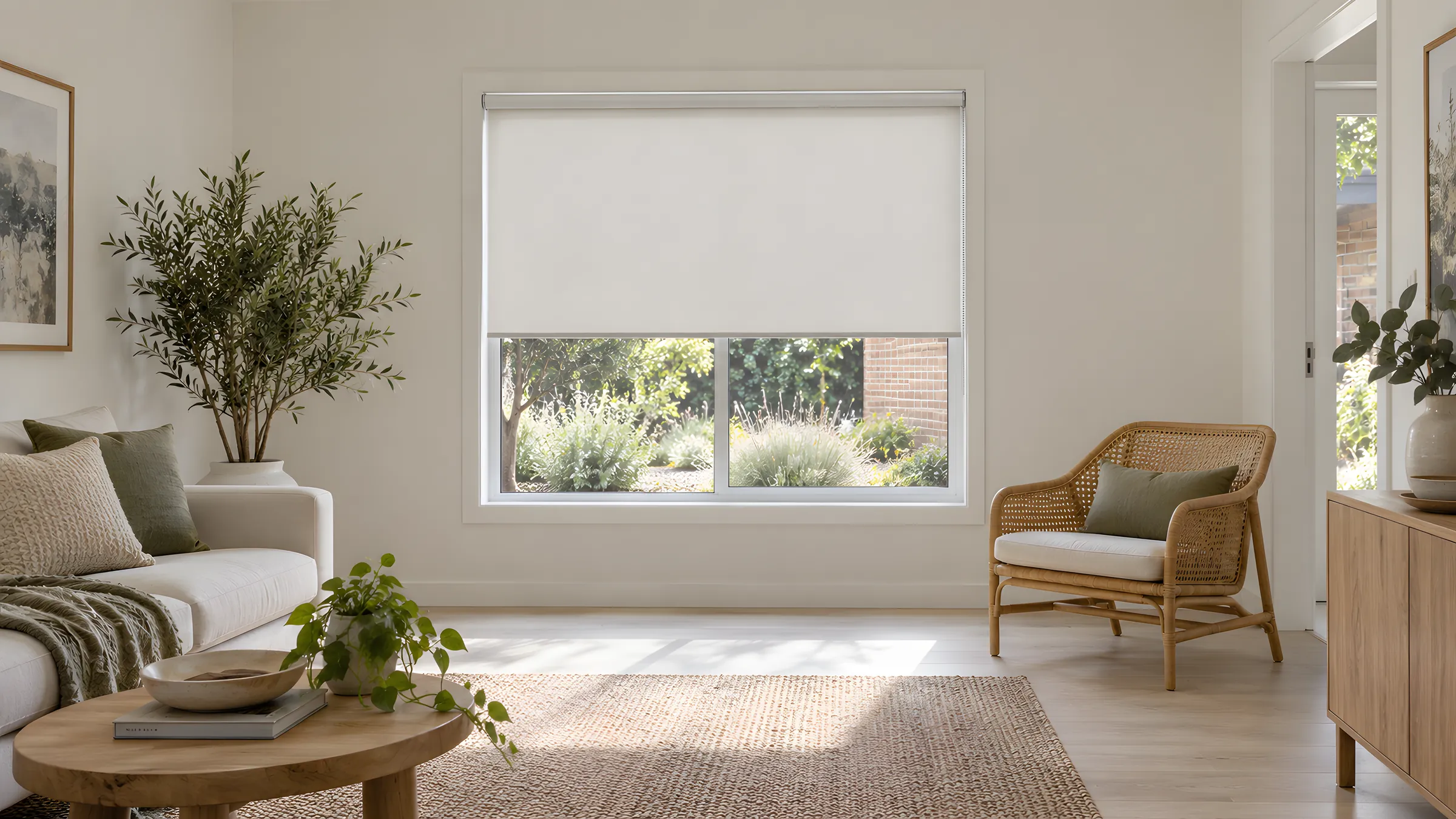
Blockout vs light filter vs SunScreen comes down to what you want from the window. Choose blockout to stop light passing through the cloth and to get privacy at night, light filter to keep a room bright while obscuring the view, and SunScreen to cut glare while keeping the view outside. Each fabric type does one of those jobs well, and most mistakes come from asking one fabric to do two.
In short
- Blockout stops light passing through the cloth and gives night privacy, though a little light can show around the edges of a conventional blind.
- Light Filter diffuses daylight and obscures the view; silhouettes may show at night when the room is lit.
- SunScreen (about 5% openness) cuts glare and keeps the view, gives daytime privacy only when it is brighter outside, and is not a night-privacy fabric.
- Match the fabric to the room, or pair two fabrics on one window with a double roller.
- Order samples and check them in your own light before you commit.
Blockout vs light filter vs SunScreen: the quick comparison
| Blockout | Light Filter | SunScreen | |
|---|---|---|---|
| Light through the cloth | Stopped | Diffused, so the room stays bright | Some passes through the woven fabric |
| View out | None | Obscured | Kept |
| Privacy by day | Yes | Yes, the view is obscured | Only when it is brighter outside than inside |
| Privacy at night | Yes | Silhouettes may show when lit | Not a night-privacy fabric |
| Ranges | Nine | Four (the LF ranges) | Screen, in seven colours |
| Usually chosen for | Bedrooms, nurseries, media rooms | Living areas, bathrooms, laundries | Kitchens, offices, dining rooms |
Two points explain most of the table. First, the fabric decides what happens to light and view, but the fit decides how much light sneaks around the edges. Second, night is the deciding test: only blockout is a night-privacy fabric, so if a room is lit after dark and faces a street or neighbour, that one fact often settles the choice. The broader picture of ranges, controls and fit is in our roller blinds buyer's guide.
Blockout roller blinds: stopping light and gaining night privacy
Blockout stops light passing through the cloth and gives you privacy at night. Many people search for "blackout blinds"; it is the same thing, and blockout is the usual Australian term. Our blockout vs blackout blinds article covers the wording and what to expect from the darkness.
The edges are the one weak spot. A little light can still enter around a conventional blind, so blockout gives a much darker room rather than a pitch-black one. Face fit with an under-roll, or a Full Blockout Cassette, reduces the gaps, and the blockout roller blinds page shows every range and colour.
Choosing a blockout range
There are nine blockout ranges: Shade, Serene, Serene II, Ultra, Array, Allure, Elegance, Lakeside and Opulence. They differ in texture, colour palette and backing:
- Shade is matte and comes in ten colours, and it is the same colour on both sides.
- Lakeside has a texture inspired by exposed bedrock and comes in twelve colours, with a colour-coordinated backing.
- Serene II also has a colour-coordinated backing.
- Serene, Ultra, Array, Allure, Elegance and Opulence have a white backing.
The backing matters because it faces the window, so it is what people see from outside, and with a standard roll it shows at the top of the roll. A white backing tends to give a uniform look from the street. If you would rather the back matched the front, choose Shade, Serene II or Lakeside.
Light filter roller blinds: bright, soft and private by day
Light filtering blinds are made from a fabric that lets daylight through the cloth in a soft, diffused way while obscuring the view. The room stays bright and the view through the fabric is obscured. That makes light filter roller blinds a good fit for living areas, bathrooms and laundries, and a sensible alternative in kitchens.
There are four LF ranges: Serene LF, Ultra LF, Array LF and Opulence LF. Serene LF comes in soft neutrals such as Chalk and Cream. Ultra LF and Array LF share the colours of their blockout counterparts, and Opulence LF comes in Arctic, Vanilla, Griege and Misty.
The night-time limit
At night with the lights on, silhouettes may show from outside. That is normal for any fabric that lets light through the cloth. If the room is used after dark and faces the street, either choose blockout, or use a double roller so a blockout layer is available when you need it. The quick test is to stand outside at dusk with the room lit, which shows you what a neighbour sees.
SunScreen roller blinds: cutting glare and keeping the view
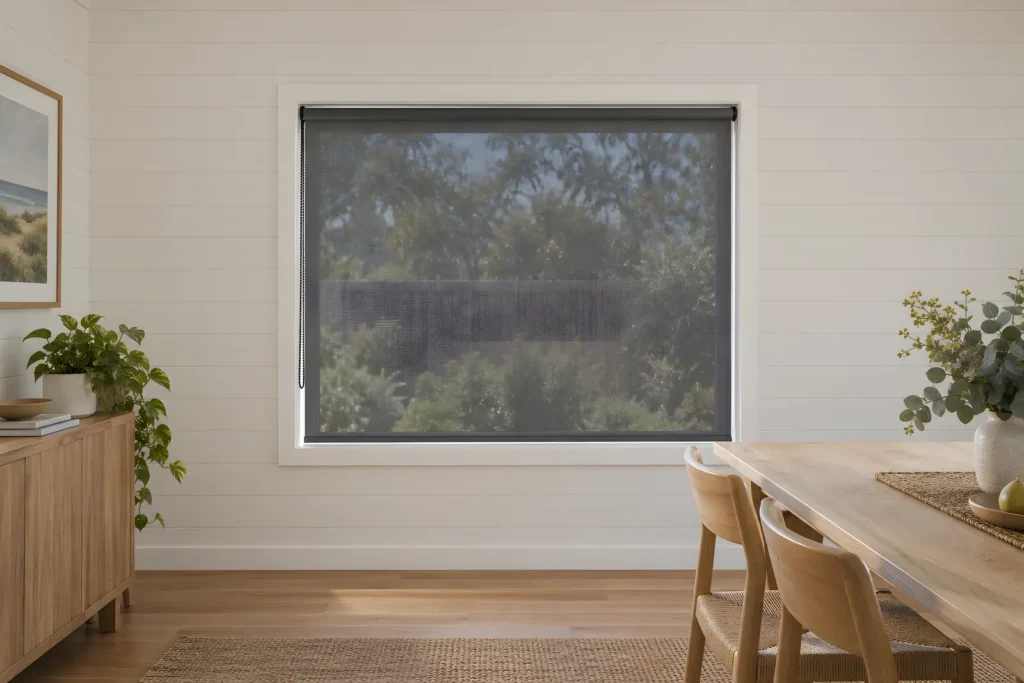
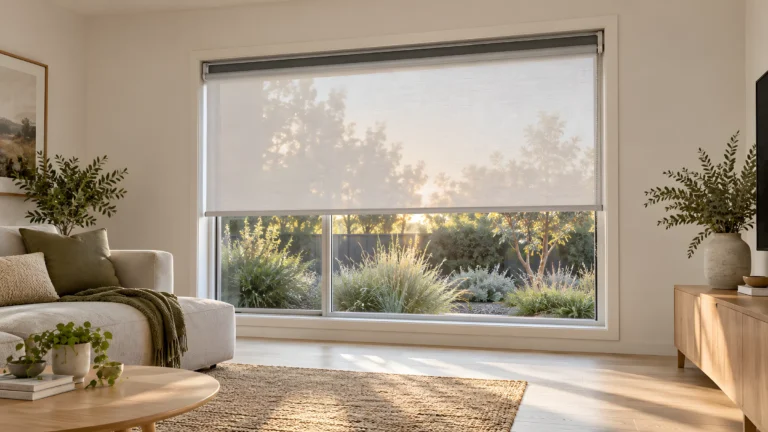
SunScreen is the Screen range: a woven fabric of 30% polyester and 70% vinyl on polyester with about 5% openness. The weave cuts glare and keeps your view of the garden, the street or the water. It comes in seven colours: Ice, White Linen, White Grey, Mist, Dolphin, Charcoal Grey and Charcoal. (White Linen is a colour name only.)
Because it lets the view through, SunScreen gives daytime privacy only when it is brighter outside than inside. It is not a night-privacy fabric. See the SunScreen roller blinds page for the full range.
SunScreen vs blockout
When people search "screen vs blockout", the real question is usually whether they want to keep the view. A simple rule:
- Choose SunScreen if you want to look outside and reduce glare, and you have a separate answer for privacy after dark.
- Choose blockout if the room is used at night, if you want it dark, or if you would rather the blind gave nothing away.
As a general rule, darker Screen colours tend to give a clearer view out, while lighter ones look softer from inside. Test the colours you like against your view with a sample before you decide.
Which fabric suits which room
Start with these fabrics for each room.
| Room | Fabric to look at first | Notes |
|---|---|---|
| Bedroom | Blockout | Face fit, a cassette or a double roller for more darkness. See bedroom blinds |
| Nursery | Blockout | Pair with cordless or a cassette |
| Home theatre | Blockout | Full cassette and motorised controls suit it |
| Home office | SunScreen or Light Filter | Cuts glare; see home office blinds |
| Living room | Light Filter or SunScreen | A double roller adds night privacy |
| Dining room | SunScreen | A double roller works here too |
| Kitchen | SunScreen or Light Filter | Fine as long as it does not get drenched; not a cassette. See kitchen blinds |
| Bathroom and laundry | Light Filter or Blockout | Keep clear of direct splashing |
Privacy by day and by night
By day, light filter obscures the view and blockout blocks it. SunScreen keeps the view, and gives privacy only when it is brighter outside than inside. That helps on a bright afternoon, and it stops working as the light drops or the lights come on.
At night, only blockout is a night-privacy fabric. For a street-facing living room, the answer is a second layer, not a different colour.
If one room needs both, you have two good options.
- A double roller. It puts two fabrics, each operated separately, on one set of brackets: a daylight layer (Screen or Light Filter) plus a blockout layer. The pairings are Blockout with Screen, or Blockout with Light Filter. Read double roller blinds explained for depth and controls, or see the double roller blinds page.
- Two products. A daylight blind with curtains over it, for example, gives you privacy on demand. Our guide to the best window coverings for privacy compares the options.
Tip: If the same window has to be bright in the afternoon and dark in the evening, a double roller is usually a neater answer than two separate blinds.
Choosing samples and avoiding common mistakes
Once the fabric type is decided, order free samples. Look at them in your own light, morning and evening, against your walls, floor and window frames. A fabric used across several products counts as one sample and is sent once. For a double roller, order both fabrics and hold them together. The free samples page explains how to order.
Light-filtering fabrics change with the daylight passing through them, so compare each sample against the light in that particular room before you decide.
These are the mistakes worth avoiding when you choose a roller blind fabric:
- Choosing SunScreen for a bedroom. It keeps the view and is not a night-privacy fabric, so it works against the usual reasons for a bedroom blind, which are darkness and privacy.
- Choosing the fabric and forgetting the fit. Decide on fit and, if needed, a cassette at the same time as the fabric.
- Ignoring the backing. With a standard roll the backing shows at the top of the roll, and it faces the window. Check the reverse of the sample.
- Picking a colour from a screen. Colour on a phone or monitor shifts. The sample in your own light is the reliable check.
- Using one fabric for every room. Different windows have different jobs. It is fine, and often better, to use blockout in the bedroom and SunScreen or light filter in the living areas.
Questions
What are light filtering blinds?
Light filtering blinds are made from a fabric that lets soft, diffused daylight through the cloth while obscuring the view. At night with lights on, silhouettes may show from outside.
Is SunScreen better than blockout?
Neither is better, because they do different jobs. SunScreen cuts glare and keeps the view but is not a night-privacy fabric, while blockout stops light passing through the cloth and gives night privacy.
Can people see in through light filter blinds at night?
Silhouettes may show at night when the room is lit. If you need night privacy in that room, add a blockout layer with a double roller or use a blockout blind.
Can I use two fabrics on one window?
Yes. A double roller pairs a blockout layer with a Screen or Light Filter layer, each operated separately, so you can have daylight by day and darkness at night.
Build your roller blind
Choose blockout, light filter or SunScreen, enter your measurements and see the price before you order.
Keep reading
 BlindsRoller blinds: the complete buyer's guideFabric, colour, controls, fit, roll direction and special formats: every decision in ordering a made-to-measure roller blind, in the order you make it.
 ComparisonsBlockout vs blackout blinds: is there a difference?Blockout and blackout are two names for the same fabric type. Here is what it does, where light still leaks in and how to fit it for a darker room.
 BlindsDouble roller blinds: day and night in one windowA double roller puts a daylight layer and a blockout layer on one set of brackets. Here is how the pairings, depth, controls and fascias work.