
How to stop sun fading floors and furniture
No blind stops fading completely, but the right covering, fitted well and closed at the right time, keeps strong sun off floors, rugs and furniture.
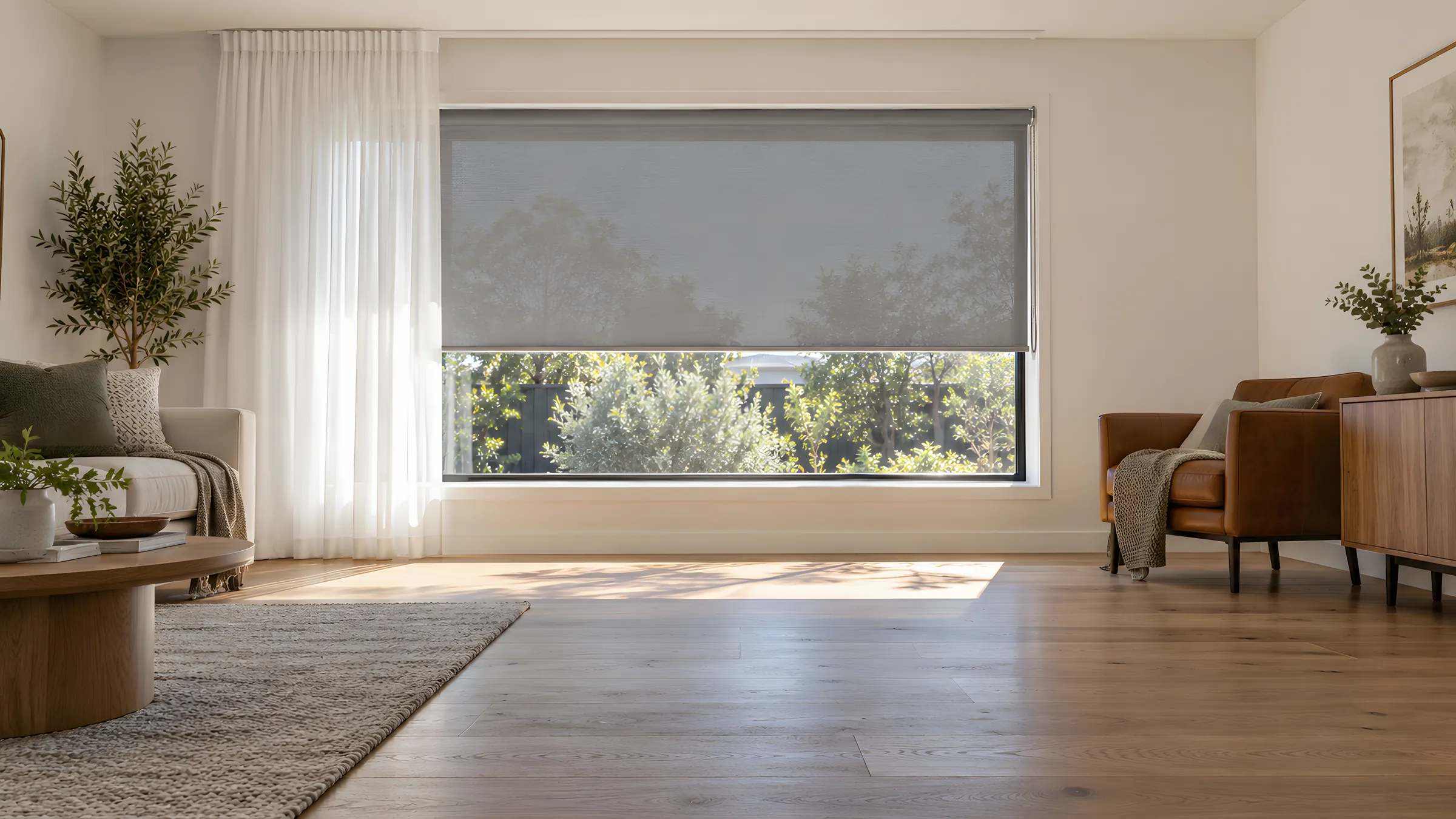
No blind stops sun fading completely, but UV blinds that keep direct sun off floors, rugs and furniture during the strongest part of the day make a real difference. Closed blockout blinds, lined curtains and plantation shutters do the most, while SunScreen and Light Filter fabrics reduce the sun and keep daylight in the room. The way you fit and use them matters as much as the product.
In short
- Fading is cumulative and comes from sunlight over time, so the aim is to reduce how much direct sun reaches the surface, not to find a "UV" label.
- Closed blockout blinds, lined curtains and shutters do the most. SunScreen and Light Filter reduce the sun while keeping daylight. Sheers soften it but protect little on their own.
- Cover the whole glass: face fit, cassette side channels and wide curtains stop strips of sun getting through.
- Close coverings before the sun reaches the window, and close them when you are away.
What causes fading
Sunlight fades colour over time. Ultraviolet light is a well-known part of that, but visible light and heat also contribute. Fading is slow and cumulative, which is why a rug looks fine for years and then suddenly shows a paler patch where the sun has landed.
The surfaces that suffer most are:
- Timber floors, which lighten or darken depending on the wood and finish
- Rugs and carpets
- Fabric sofas, cushions and leather
- Timber furniture and picture frames
- Artwork, prints and photographs
- Books, whose spines pale in strong sun
Ordinary window glass reduces some ultraviolet light, but not all of it. That is why a north- or west-facing room can still show sun damage with the windows shut.
What people mean by UV blinds
"UV blinds" is a search term used in different ways. Some people mean a blind that reduces ultraviolet light. Others mean any blind that keeps the sun off furniture. Either way, how well a blind protects depends on three things you can control:
- How much light passes through the fabric. Blockout stops light passing through the cloth. SunScreen has an open woven structure that cuts glare and lets some light through. Light Filter diffuses daylight.
- How much of the window it covers. Gaps at the edges let strips of sun onto the floor.
- When it is closed. A blind that is up at 2pm protects nothing at 2pm.
Coverage and timing usually matter more than any label on the fabric.
Which sun blocking blinds and coverings protect most
| Option | What it does | Best for |
|---|---|---|
| Blockout roller | Stops light passing through the cloth when closed | Bedrooms, and any room where you do not need the view or daylight |
| Cassette roller | Adds side and bottom channels that reduce edge gaps | Rooms with strong sun and valuable flooring |
| SunScreen roller | Cuts glare and reduces sun while keeping the view | Living areas, dining rooms and home offices |
| Light Filter roller | Diffuses daylight and obscures the view | Bathrooms, laundries and rooms where softer daylight will do |
| Lined and blockout curtains | Cover the glass and the wall around it | Living rooms and bedrooms |
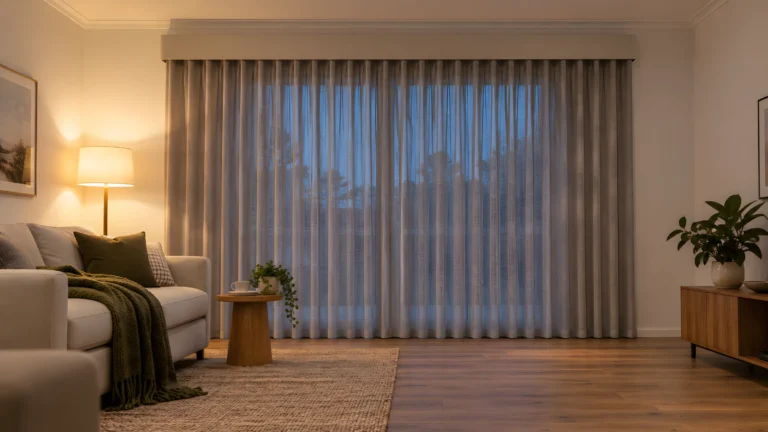
| Sheer curtains | Soften and diffuse light | Layering over a blockout blind |
| Plantation shutters | Tilt blades to control direct sun; close for more | Sun-facing rooms where you want adjustable control |
| Venetian blinds | Tilt slats away from the sun; lift for the view | Home offices and kitchens |
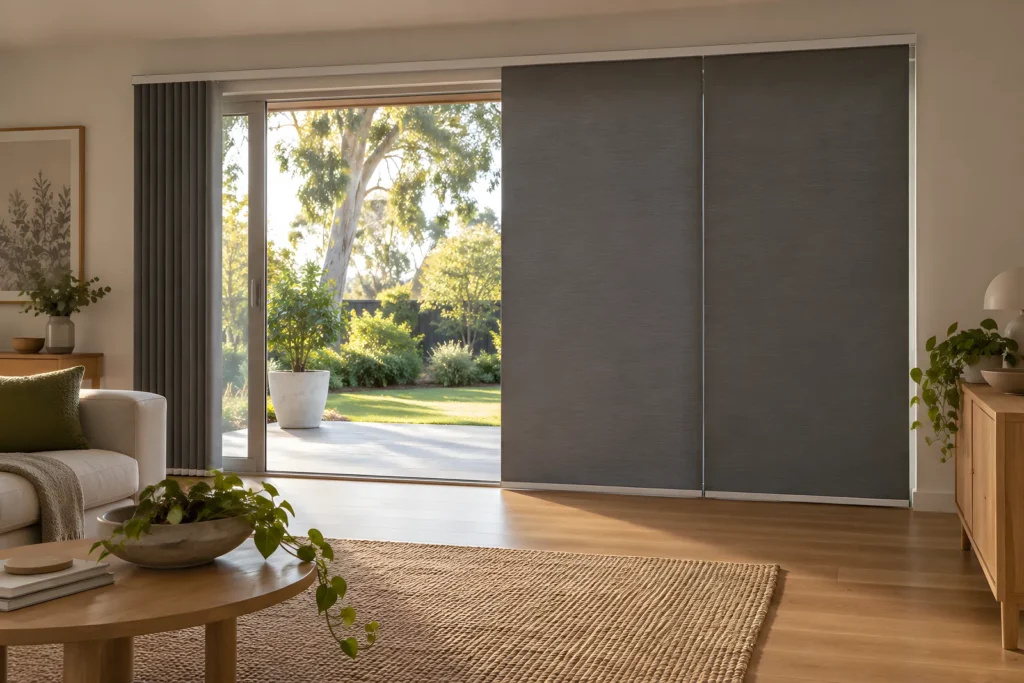
| Panel glide and vertical blinds | Cover large glass and sliding doors | Doors and wide windows |
Two points from that table are worth repeating. Sheer curtains soften sun but do not stop it, so they need a blockout layer behind or in front if the aim is protection. And SunScreen is a good compromise for rooms where you would otherwise leave the blind up all day.
Three example setups
These show how the pieces fit together. Colours are suggestions to try as samples, not requirements.
| Situation | A setup to consider |
|---|---|
| West-facing living room with a timber floor and leather sofa | Face-fit double roller blind with Screen "Dolphin" as the daylight layer and Serene II "Pebble" as the blockout layer |
| Bedroom with a north window and a good rug | Face-fit blockout roller in Lakeside "Sandstone", with sheer curtains in Cassis "Sand" over it |
| North-facing sliding door onto a hard floor | Panel glide blind in Screen "Mist" for daytime, with the panels stacked to one side when you want the view |
Combining day and night layers
If you do not want to live in a dim room, use two layers. A double roller blind has a daylight layer (SunScreen or Light Filter) and a blockout layer on one set of brackets, each operated independently. You leave the SunScreen down most of the day and close the blockout for the strongest sun or when you are out.
Curtains work the same way. Sheers on the front track soften the light, and a blockout on the rear track closes when you need real protection. For more on this, see how to keep your home cool in summer, where the same habits apply.
Fit the blind to cover the sun
A high-quality fabric with a gap around it still lets sun through. Three choices reduce the gaps.
- Face fit. A blind fitted to the frame or wall overlaps the opening. A recess fit leaves small gaps at each side.
- Cassette. A full blockout cassette adds side and bottom channels. It is ordered together with a compatible under-roll blockout blind, needs 50 mm of clear depth and cannot be retrofitted.
- Roll direction. A standard (under) roll drops from the back of the tube, closer to the glass, so it blocks more than a front (over) roll.
For curtains, the track should run wider than the window with the fabric overlapping the frame when closed. Our roller blind measuring guide and product-specific guides show how to measure for each fit.
A practical plan
- Find where the sun lands. Note where sun hits the floor, rug and furniture at about 10am, 1pm and 4pm. The patch moves, and it moves further with the seasons.
- Pick your priority windows. Usually these are west- and north-facing windows and any sliding doors.
- Choose a covering for each room's job. Blockout for bedrooms. SunScreen or a double roller for living areas. Shutters or venetians where you want to tilt the light.
- Fit to cover the frame. Choose face fit or a cassette where it counts.
- Close early. Lower or draw the covering before the sun reaches the glass, not after the room has been in sun for an hour.
- Automate if that suits you. Motorised blinds with a compatible smart hub can run on timers or sunrise and sunset triggers. See motorised roller blinds.
- Close everything when you are away. An empty house in summer sun is when rugs and floors take the most exposure.
- Rotate rugs and rearrange furniture now and then so any remaining exposure is even.
Protecting specific things
- Timber floors. Cover the windows first. A rug in the strongest sun patch helps as well, but the rug itself will fade, so treat it as a stopgap.
- Leather and fabric furniture. Move them out of the direct sun patch if you can, or protect the window they sit in front of.
- Artwork and photographs. Hang them on walls that never get direct sun, whatever the window covering.
- Rugs. Rotate them now and then so any fading is even.
- Curtains and blinds themselves. Any fabric in strong direct sun for years will age. Check the care label and clean as advised.
Common mistakes
- Relying on sheers alone. They diffuse the light but let most of it through.
- Leaving the blind up because you like the view. A SunScreen blind lets you keep the view and reduces the sun.
- Ignoring the gaps. Side strips of sun on a floor add up over months.
- Covering only the largest window. A small side window can leave a bright patch on the same rug.
Questions
Do blinds block UV rays?
Blinds reduce the sunlight that reaches a surface. Blockout fabric stops light passing through the cloth and does the most; SunScreen and Light Filter reduce it.
What is the best blind for protecting floors from the sun?
A closed blockout blind, ideally face fit or a cassette, does the most. For windows where you want daylight and a view, SunScreen reduces the sun without shutting the room off.
Do sheer curtains stop furniture fading?
Sheers soften and diffuse the light, but they let a lot through, so they do little on their own. Pair them with a blockout blind or curtain.
Should I close my blinds when I am away?
Yes. Closing coverings on sun-facing windows while you are out or on holiday is one of the easiest ways to protect floors and furniture.
Build a SunScreen roller blind
Cut the glare and keep the view, then see the price before you order.
Keep reading
 BlindsHow to keep your home cooler in summer with blinds and curtainsKeep the sun off the glass and your rooms stay cooler. Here is which blinds, curtains and shutters work best, how to fit them and when to close them.
 ComparisonsBlockout, light filter or SunScreen? Choosing roller blind fabricWhat each roller blind fabric does with light, view and privacy by day and night, and which one suits each room in your home.
 CurtainsThermal curtains and insulating blinds: keeping heat inThermal curtains are a search term, not a fabric standard. Here is what really helps a window hold heat in, and which of our curtains and blinds do it best.