
Motorised curtains: how they work and what to plan
How motorised curtains work, battery or hardwired power, remotes and smart hubs, the limits to know about and what to plan before you order.
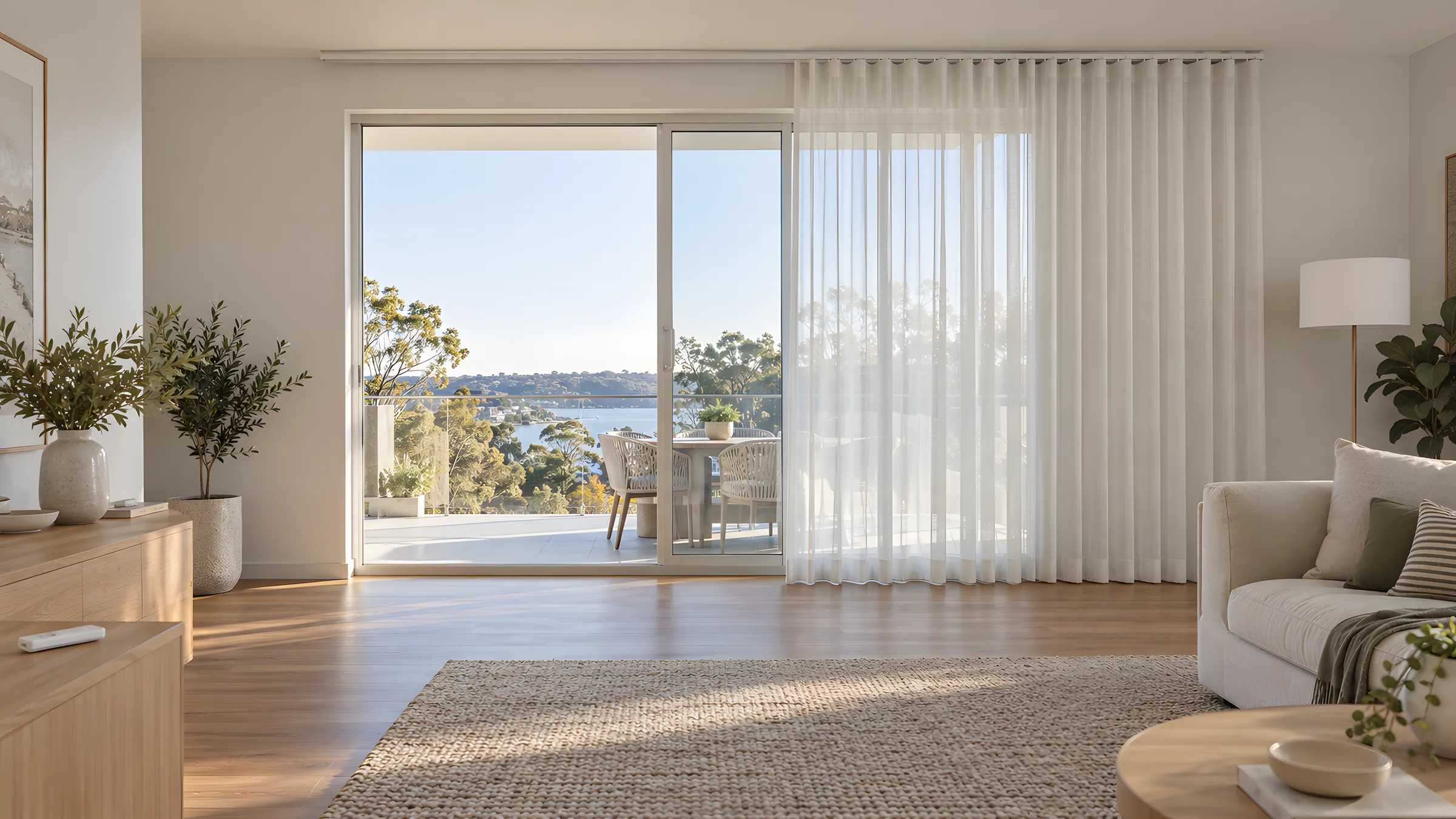
Motorised curtains use a Motorised track with a built-in motor that opens and closes the curtain from a remote, so there is no wand to reach for and no fabric to pull. You will also see them called electric curtains, automatic curtains and remote control curtains. You choose battery or hardwired power, a 2-channel or 16-channel remote, and optionally a smart hub for app control. The three things to plan before you order are power, track flow and the opening.
In short
- A Motorised track replaces the Designer track. The fabric, heading and fit are chosen the same way as any other curtain.
- Battery motors are rechargeable, need no mains wiring and need a charger. Hardwired motors need a licensed electrician.
- Remotes come in 2-channel and 16-channel versions, and a smart hub adds app control.
- Motorisation is not available with free flow tracks or with curtains that have multiple openings.
- Plan power access before the track is finalised.
How motorised curtains work
A motorised curtain is an ordinary made-to-measure curtain hung on a Motorised track instead of a Designer track. The track carries the motor, with a gear drive on each side that moves the curtain along the rail. Silent Glide is the motor brand.
You operate it with a remote, and the curtain opens or closes with a press of a button. Several motors can share a channel, so a whole group of curtains can move together.
Are they the same as automatic curtains?
The names are used loosely. Automatic curtains usually means curtains that move without you touching them, which comes from the remote and, if you choose one, a smart hub. Check which features a hub offers before you plan around a schedule or a voice command.
Battery or hardwired motors?
You pick the motor type when you configure the curtain, and it decides what else you need.
| Battery motor | Hardwired motor | |
|---|---|---|
| Power | Rechargeable battery | Mains power |
| Wiring | None: installed without mains wiring | Connected by a licensed electrician |
| Needs | A compatible charger | No battery charger |
| Suits | Homes where power is not easy to reach | New builds and renovations, where power can be planned in advance |
A simple test helps you decide. Ask whether power can reach the top corner of the track without opening up a wall or ceiling. If it can, or if you are building or renovating and the walls are already open, hardwired avoids any charging routine. If it cannot, a battery motor keeps the installation simple, and you plan where the charger will reach.
If you choose a battery motor, check that the charger matches the motor before you reuse an old one. If you choose hardwired, ask your electrician to plan the wiring before the track is fixed, because it is easiest to conceal at that stage. On a double motorised curtain the wiring can be hidden between the two tracks.
Note: Hardwired motors must be connected by a licensed electrician. Do not attempt to wire one yourself.
Remotes, channels and smart hubs
Every motorised curtain is controlled by a remote, and you choose the number of channels.
- 2-channel remote. A compact remote for a small number of motors, such as a single track or the two tracks of a double curtain.
- 16-channel remote. More scope to organise several curtains, for example by room. A channel can run one motor or several together, so you can group tracks onto one channel and move them at once.
- Smart hub (optional). Adds app control on top of the remote, and often voice control too. Choose none if you do not need the extra connection.
Tip: Think about how you will use the curtains before you pick the remote. If you want the living room curtains to open together, put them on the same channel. If you want them to move separately, give them their own.
A worked example of channel planning
Suppose you are motorising curtains in three rooms. A 16-channel remote gives you room to organise them the way you use them:
| Channel | Runs | Why |
|---|---|---|
| 1 | Living room sheers | Open for daylight without touching the blockout |
| 2 | Living room blockouts | Draw at night or for the TV |
| 3 | Main bedroom double curtain | Both layers together, or one channel each if you want them apart |
| 4 | Every curtain in the house | Several motors on one channel move together, so one press closes them all |
The simplest households only need a 2-channel remote, for example for one double curtain.
What motorised curtains cannot do
Three limits are worth knowing before you settle on a design.
- No free flow. Motorisation is not available with free flow tracks, where you position the curtain anywhere along the rail. Choose a fixed flow track, where the curtain stacks to the side or sides you set.
- No multiple openings. Curtains divided into split sections cannot be motorised.
- A charger, for battery motors. A battery motor needs charging, so plan where the charger can reach.
Within those limits there is plenty of choice. S Fold curtains can be ordered with a Motorised track, curved tracks come in the Motorised profile for corner, box and bay windows, and a double curtain can include a motorised option.
Where motorised curtains earn their place
- Wide sliding door openings. Long spans are awkward to draw by hand. Check in the configurator that the motorised option suits your opening and track flow, and see blinds for sliding doors to compare alternatives.
- Out-of-reach tracks. A ceiling-fixed track above a high window or a two-storey void is hard to reach with a wand.
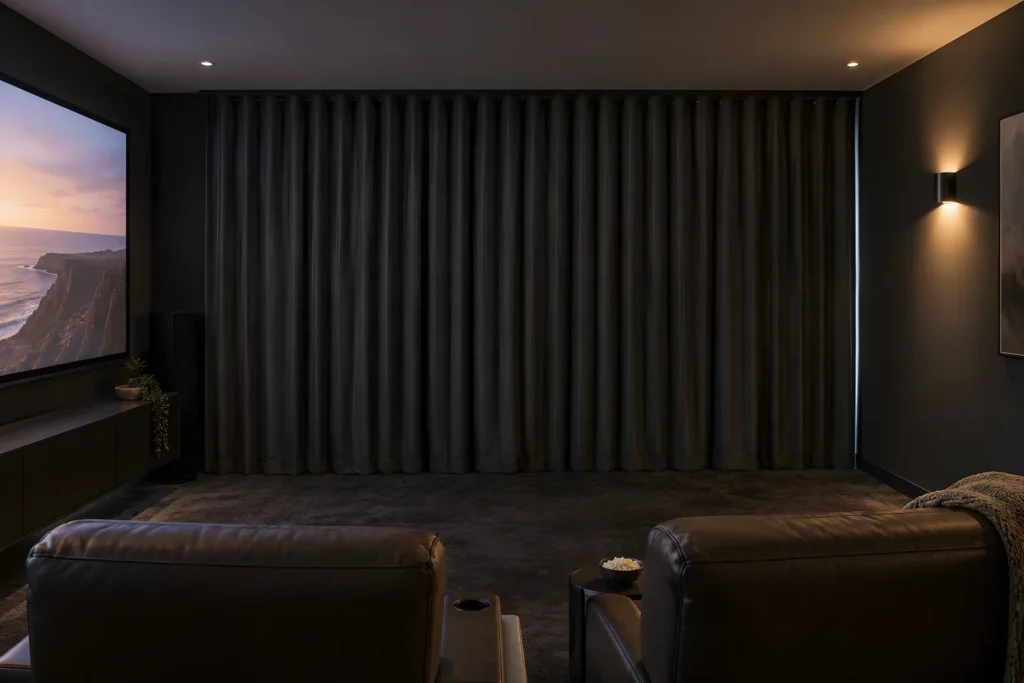
- Bedrooms and home theatres. A blockout curtain that closes on one press suits a room where you want darkness quickly. Blockout stops light passing through the cloth; a little light can still show at the edges, top and bottom.
- Double curtains. You can motorise the layer you use most and leave the other manual. Double curtains pair a sheer with a blockout on two tracks.
Motorised or manual: how to decide
| Manual (wand or by hand) | Motorised | |
|---|---|---|
| Operation | Wand or hand | Remote, and app with a smart hub |
| Track flow | Fixed or free | Fixed only |
| Openings | Any, including splits | Single opening only |
| Power | None | Battery (charger) or hardwired |
| Suits | Windows within easy reach | Wide, high or hard-to-reach openings |
The price of each option is shown in the configurator before you order, so you can compare a manual and a motorised version of the same curtain.
Motorised curtains or motorised blinds?
Both can be motorised, and the right choice depends on the window rather than the motor.
| Situation | Curtains | Blinds |
|---|---|---|
| Wide sliding doors or a wall of glass | A long track with a planned stack-back | Linked roller blinds or panel glide blinds |
| Soft daylight with a night layer | A sheer and a blockout on double or lined curtains | A double roller blind |
| Kitchen and other wet areas | Not used in kitchens | Roller blinds, venetians or PVC shutters |
| Compact window recess | Needs wall or ceiling space to stack | Sits inside the recess |
If blinds are the better fit, read our guide to motorised blinds for battery, hardwired and C-Bus options.
What to plan before you order
- Power. Decide battery or hardwired. For battery, plan where the charger can reach. For hardwired, plan the wiring with your electrician before the track goes up.
- Track flow and opening. Choose fixed flow and a single opening.
- Remote and channels. Count the motors and decide which should move together.
- Smart hub. Decide whether you want app control, and check compatibility.
- Fit. Ceiling or wall fit. See curtain tracks explained for the options.
- Fabric and heading. They are chosen exactly as for any other curtain, so use free samples to check colour in your own light.
- Measurements. Measure with our curtain measuring guide and give the exact measurements it asks for.
Installing motorised curtains
You measure and install, and we deliver the product, practical guidance and support. Our curtain installation guide covers fitting the track, and the installation guides page lists the rest. A hardwired motor needs a licensed electrician for the connection. If you are also layering a sheer and a blockout, read how to layer sheer and blockout curtains first, so you plan both tracks together.
Questions
Do motorised curtains come with a remote?
A remote is selected as part of the configuration, as either a 2-channel or a 16-channel remote. You can also choose whether to connect the motor to a smart hub.
Can I motorise a free flow track?
No. Motorisation is not available with free flow tracks or with curtains that have multiple openings, so choose a fixed flow track with a single opening.
Do I need an electrician for motorised curtains?
Only for hardwired motors, which a licensed electrician connects. Battery motors are installed without mains wiring and need a compatible charger.
Can I control motorised curtains from my phone?
A smart hub adds app control alongside the remote, and often voice control too, for supported motors. Check that the hub is compatible with the motor you choose.
Can double curtains be motorised?
Yes. A double curtain can pair a sheer and a blockout, each on its own track, including a motorised option.
Build your motorised curtains
Choose your fabric and heading, then add a Motorised track, remote and smart hub.
Keep reading
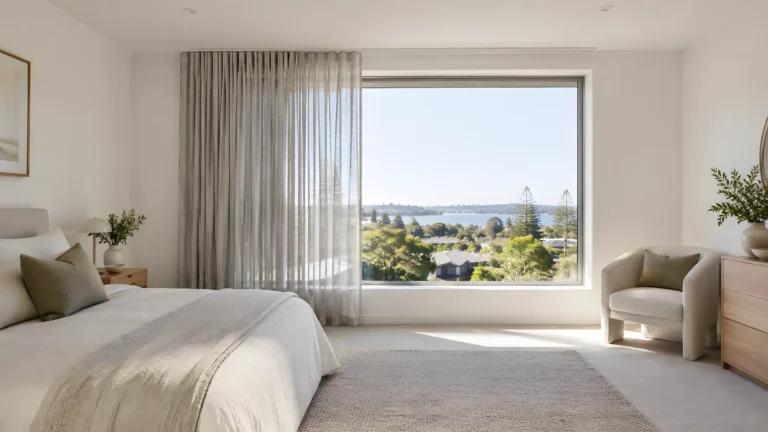 CurtainsCurtain tracks explained: wall, ceiling, curved and motorisedHow curtain tracks work and how to choose one: Designer, Half Moon, curved and motorised, ceiling or wall fit, fixed or free flow, brackets and wands.
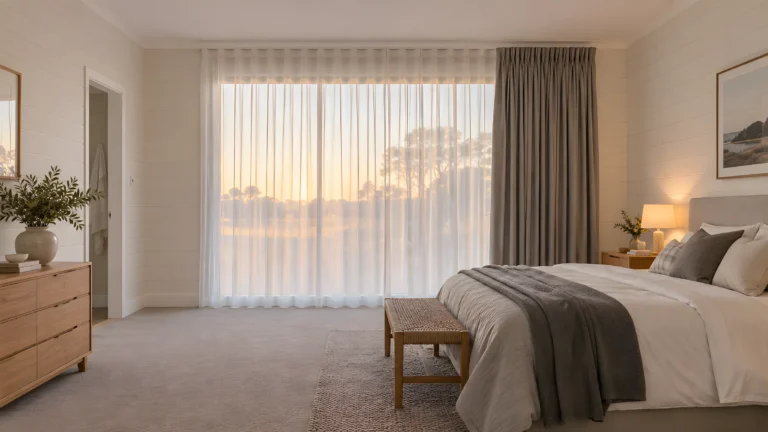 CurtainsHow to layer sheer and blockout curtainsHang the sheer at the front and the blockout behind on a double track, or choose a lining. Here is how to pick fabrics, headings, colours and depth.
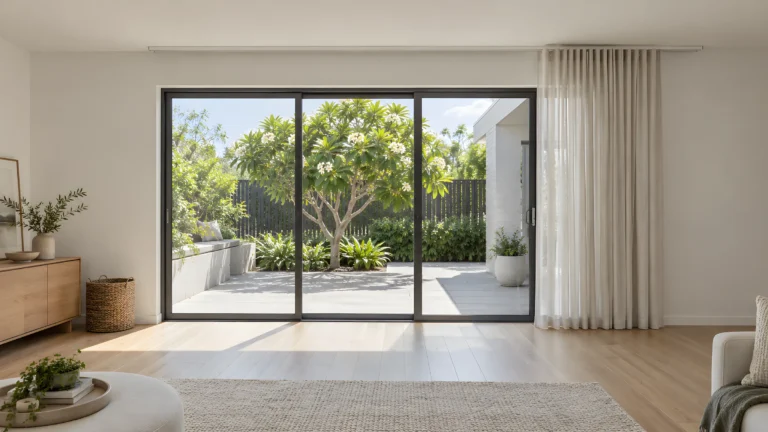 Room ideasCurtains for sliding and bifold doors: what to planCurtains suit sliding and bifold doors when the track is longer than the opening. Plan the stack-back, hem height and handle clearance before you order.