
How to clean roller blinds without damaging the fabric
The safe, simple way to clean roller blinds while they hang: dust, damp sponge, dry. Includes what to avoid and how to handle grease, chains and brackets.

Here is how to clean roller blinds safely: leave them hanging, dust the fabric with a soft cloth, wipe any marks with a damp sponge, and dry the fabric before you roll the blind up. Skip abrasive and solvent cleaners, and never roll a blind up while it is damp, because that is how water marks and mould start.
In short
- Dust first with a soft, dry cloth, then wipe marks with a damp (not wet) sponge and dry the fabric straight away.
- Do not use abrasive or solvent cleaners, and do not roll the blind up while the fabric is damp.
- Shade, Screen and the other roller fabrics take a soft cloth and a damp sponge. Lakeside is dusted, with any damp wipe tested first.
- Keep water away from the motor end, cassette headbox and fascia, and contact us if something looks like a fault rather than dirt.
Our care instructions for roller blind fabrics
These are the same care instructions shown in the fabric details on our product pages. The steps below build on them.
| Fabric | Care instructions |
|---|---|
| Blockout fabrics such as Shade | Dust with a soft cloth. Wipe with a damp sponge and dry with a clean cloth |
| Lakeside | Remove surface dust with a soft cloth |
| Screen (SunScreen) | Dust with a soft cloth, or wipe with a damp sponge and dry |
| Every roller fabric | Avoid abrasive products and solvent cleaners. Do not roll the fabric up while it is damp |
Light Filter fabrics follow the same soft cloth and damp sponge routine. The same fabrics are used for panel glide blinds, and Lakeside and Shade are the fabrics for vertical blinds, so how to clean vertical blinds follows these points too.
What you need before you start
You do not need specialist products. A few soft, clean items are enough:
- A dry microfibre cloth or soft duster
- A vacuum cleaner with a soft brush attachment (optional, useful for woven and textured fabrics)
- A clean sponge and a bowl of plain water
- A second dry cloth or towel for drying
- A step stool that is stable on the floor you are standing on
- A small amount of mild washing-up liquid, only for greasy marks and only after a hidden-spot test
Clean the blind in daylight if you can. Streaks and missed patches are much easier to spot when the sun is on the fabric.
How to clean roller blinds while hanging
Cleaning roller blinds in place is the safest option for most people. There is no lifting, no risk of dropping the tube, and no chance of rolling the fabric back up damp. It works for every fabric we make.
- Lower the blind fully. A fully lowered blind hangs flat and is supported by its own weight, so you can wipe it without stretching or creasing the cloth. Lay a dry towel along the sill to catch dust and drips.
- Dust from the top down. Use the dry cloth, a soft duster or the vacuum brush on low suction. Work in light strokes from the tube to the base rail so dust falls onto fabric you have not done yet.
- Test a hidden spot. Dampen the sponge, wring it out well, and try a small patch near the bottom edge. Check it once dry for any change in sheen or colour. On Lakeside, where our instructions cover dusting, stop here if anything changes.
- Wipe with a barely damp sponge. Use plain water and overlapping strokes from top to bottom, working across the full width so you do not leave one clean stripe. Rinse and wring the sponge often. On a standard (under) roll the back of the fabric faces the glass, so wipe that side too if you can reach it.
- Dry as you go. Pat or wipe with a clean, dry cloth, then open the window or run a fan. Leave the blind fully lowered until it is dry to the touch on both sides.
- Roll up only when dry. Raise the blind slowly and check it rolls up straight.
Tip: Wet the sponge, then squeeze it until it stops dripping. If water runs down the fabric you have used too much, and water that gets under the base rail or into the tube is hard to dry out.
Cleaning different roller blind fabrics
Our roller blind fabrics share the same basic care: a soft cloth for dust, a damp sponge for marks (Lakeside is dusted), and no abrasive or solvent cleaners. The differences are in how each fabric shows dirt.
Blockout roller blinds
Blockout fabrics are polyester with an acrylic coating, which is what lets them wipe clean. Many people search for "blackout" blinds, and it means the same thing as blockout. Dust shows most on darker colours such as Array "Jet" or Elegance "Obsidian", so a quick dry dust every couple of weeks keeps them looking fresh. See our blockout roller blinds for the full range.
Light filter roller blinds
Light Filter fabrics let daylight through, which means marks, streaks and dried water rings show up much more when the sun is behind the blind. Dry the fabric evenly and check it against the light before you roll it up. Our light filter roller blinds are the Serene LF, Ultra LF, Array LF and Opulence LF ranges.
SunScreen roller blinds
SunScreen (the Screen range) is a woven fabric. Dust settles into the weave, so a vacuum brush on low suction is often better than a cloth. For marks, blot gently with a damp sponge rather than scrubbing, which can pull or distort the weave. Colours such as "White Linen" are just names, not a linen fabric. Browse SunScreen roller blinds if you are choosing for a kitchen or home office.
Textured and matte fabrics
Lakeside has a texture inspired by exposed bedrock, and Shade has a matte finish. Textured surfaces hold dust in the grain, so dust with a soft cloth or vacuum brush first. On Lakeside in particular, go gently: test a barely damp cloth on a hidden spot before you wipe any mark, and stop if you see any change in the colour or surface.
Removing marks, grease and stains
Most marks are dust, fingerprints or kitchen splashes. This table covers what to try first and what to avoid.
| Mark | What to try | What to avoid |
|---|---|---|
| Dust and cobwebs | Dry microfibre cloth or vacuum brush on low suction | Wiping dry dust with a wet cloth, which smears it |
| Fingerprints and light marks | Barely damp sponge, top to bottom, then dry | Scrubbing in circles, which can leave patches |
| Kitchen grease and cooking splashes | Damp sponge with a drop of mild washing-up liquid (hidden-spot test first), then a clean damp cloth, then dry | Degreasing sprays and solvent-based cleaners |
| Water marks and rings | Re-wipe the full width evenly with a barely damp sponge, then dry | Wetting only the ring, which often makes it larger |
| Pen, crayon, paint or adhesive | Contact us with a photo before trying anything | Nail polish remover, methylated spirits and scourers |
| Mould or mildew spots | See our guide to removing mould from blinds and curtains | Soaking the fabric in bleach or harsh sprays |
Kitchen blinds pick up the most grease, and a blind close to the cooktop is worth wiping more often. Roller blinds work in kitchens as long as they do not get drenched, and our kitchen blinds page shows the fabrics and alternatives that suit best.
Cleaning the chain, base rail and brackets
The hardware collects dust and fingerprints faster than the fabric does.
- Chain: Wipe with a damp cloth and dry it. Near the coast, salt in the air can mark metal chain, which is why we recommend the stainless steel chain for coastal homes.
- Base rail: The deluxe oval rail (Anodised, White, Black or Cream) and the flat rail both wipe clean with a damp cloth. Avoid scourers, which can scratch the finish.
- Brackets, tube ends and side covers: Dust with a dry cloth. If they are painted over or sticky, a barely damp cloth is enough.
- Fascia: A fascia conceals the hardware, so wipe the outside with a dry or barely damp cloth. A fabric-wrapped fascia should be treated like the blind fabric.
- Cassette: Wipe the headbox and side channels with a dry cloth or a soft brush. Do not try to open a cassette, and contact us if something inside seems wrong.
- Motorised blinds: Keep water away from the motor end. Hardwired motors are wired by a licensed electrician, so leave anything electrical to them.
Should you take the blind down to clean it?
Usually not. A blind that is cleaned in place stays in its brackets, keeps its roll direction and does not get creased in handling. Taking it down makes sense when there is heavy build-up you cannot reach, or when you are painting the frame.
If you do take it down, our guide on how to remove a roller blind points you to the right installation guide for taking it down and refitting it. Lay the blind flat on a clean, dry towel, clean and dry it as above, and only roll it up once every part of the fabric is dry.
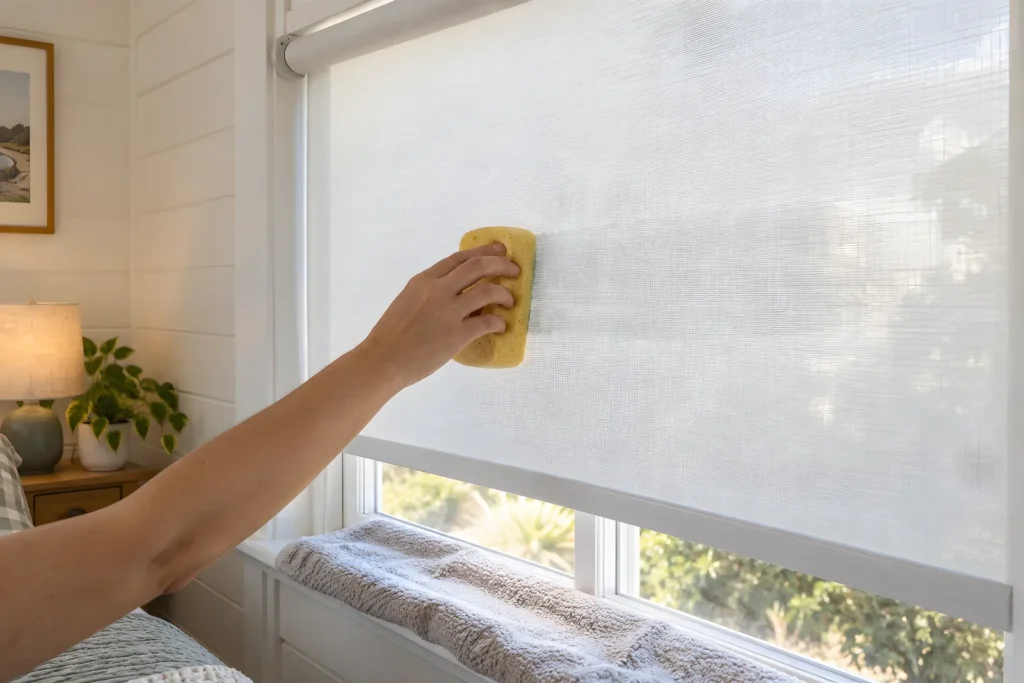
What to avoid when cleaning roller blinds
Most damage happens when someone reaches for a stronger product to shift one stubborn mark. Avoid these:
- Abrasive scourers, stiff brushes and cleaning powders
- Solvent-based cleaners, methylated spirits and nail polish remover
- Bleach and multipurpose sprays
- Soaking, machine washing or tumble drying the blind
- Steam cleaners and hair dryers, which add heat and moisture
- Rolling the blind up while it is damp
- Spraying cleaner directly onto the fabric, which lets liquid run into the tube and hardware
How often to clean, and how to keep blinds clean longer
As a guide, a quick dust every couple of weeks and a damp wipe when marks appear is plenty. Kitchens, dusty roads and homes with pets may need more frequent dusting.
A few habits keep roller blinds cleaner for longer:
- Raise the blind while you cook so steam and grease do not settle on the fabric.
- Ventilate bathrooms and laundries. Roller blind fabric should not get drenched, and Light Filter or Blockout are the usual choices for these rooms (see bathroom-friendly options).
- Wipe splashes as soon as you see them, before they dry on.
- Hold the base rail rather than the fabric when you raise and lower the blind, so hands do not leave marks.
For a wider view of how to look after every window covering, read our guide to how to clean blinds.
Questions
How do I clean holland blinds?
Holland blinds is an older name for roller blinds, so the method is the same: dust with a soft cloth, wipe marks with a damp sponge (Lakeside is dusted only), then dry the fabric before rolling it up.
Can I clean roller blinds while they are hanging?
Yes, and it is the method we recommend. Lower the blind fully, dust it, wipe it with a barely damp sponge, and leave it lowered until it is completely dry.
Can I put a roller blind in the washing machine?
No. Roller blind fabric is cleaned with a soft cloth and a damp sponge. Soaking, machine washing and tumble drying can damage the coating.
How do I avoid water marks when cleaning fabric roller blinds?
Use a barely damp sponge, wipe the whole width of the fabric in one pass rather than only the mark, and dry it straight away with a clean cloth.
What should I do if a stain will not come out?
Stop before trying anything stronger. Contact us with a photo of the mark and your order details, and we will suggest what to try next.
Build your roller blind
Choose your fabric, fit and controls, and see the price before you order.
Keep reading
 Care & cleaningHow to clean blinds: every type, step by stepFabric blinds, slatted blinds and shutters each need a different method. Here is how to clean blinds of every type, without damaging them.
 Measuring & fittingHow to remove roller blinds (and put them back)How to take down a roller blind safely, label it and put it back the right way round, with the installation guide to follow for your blind type.
 Care & cleaningRoller blind chain problems and how to fix themChain slipped off, blind won't stay up or rolling crooked? A quick diagnosis table and safe step-by-step fixes, plus when to stop and contact us.