
Double roller blinds: day and night in one window
A double roller puts a daylight layer and a blockout layer on one set of brackets. Here is how the pairings, depth, controls and fascias work.
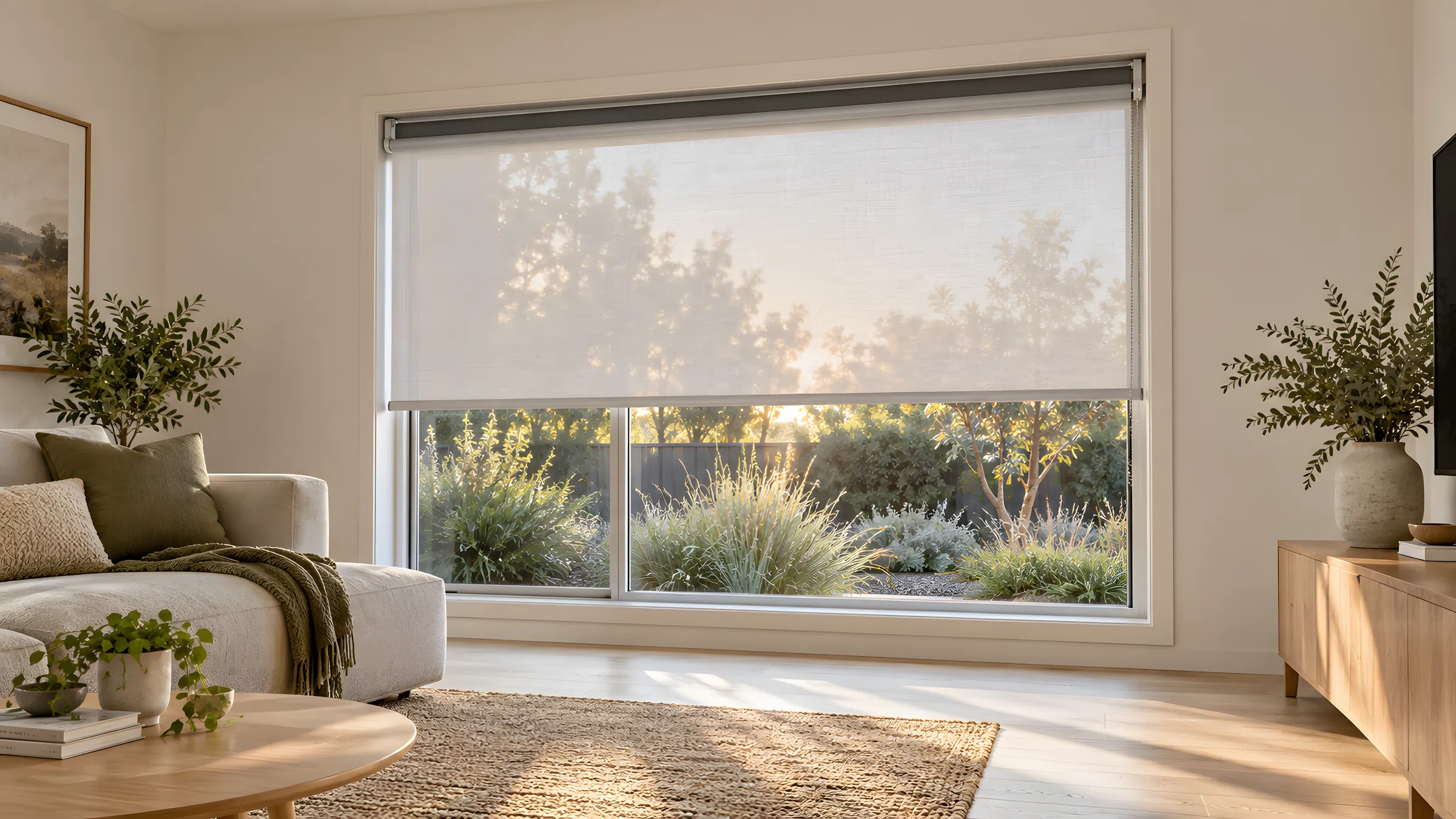
Double roller blinds put two independently operated fabrics on one set of dual brackets: a daylight layer in Screen or Light Filter, and a blockout layer. You lower the daylight layer for soft light or a filtered view by day, and the blockout layer for darkness and privacy at night, all in the same window and without swapping anything over.
In short
- A double roller has two blinds on one set of dual brackets, each operated independently.
- The pairings are Blockout with Screen, or Blockout with Light Filter.
- Slimline dual brackets need 90 mm of recess depth with both over-rolled (the recommended recess setup), or 70 mm with both under-rolled.
- Controls are chain, cordless or motorised, depending on the dimensions, and a 2-channel remote suits a double roller.
- Where the window is too shallow, two single blinds (recess plus face-fit under-roll) are the alternative.
What double roller blinds are, and how the pairings work
The phrase "day night blinds" is used for several products, so it helps to be exact about what this is. A double roller is two roller blinds, each with its own fabric, mounted on one set of dual brackets. Some people call them dual blinds. You can fit them inside the window (Inside Fit) or on the face of the wall or frame (Outside Fit).
One layer is a daylight fabric, and the other is blockout:
| Pairing | Daylight layer does | Blockout layer does | Suits |
|---|---|---|---|
| Blockout and Screen | Cuts glare and keeps the view; daytime privacy only when it is brighter outside | Darkness and night privacy | A window with a view you want to keep by day |
| Blockout and Light Filter | Diffuses daylight and obscures the view | Darkness and night privacy | A window that faces the street or a neighbour |
Screen is a woven SunScreen fabric with about 5% openness. It is not a night-privacy fabric, which is exactly why the blockout layer is there. Light Filter may show silhouettes at night when the room is lit, and the blockout layer solves that too. For a closer look at the three fabric types, blockout, light filter or SunScreen compares them.
Which layer to lower
The two layers give you four settings:
| What you want | What to do |
|---|---|
| Full daylight and an open window | Raise both layers |
| Less glare, and the view kept | Lower the Screen layer |
| Soft light and privacy by day | Lower the Light Filter layer |
| A dark room and night privacy | Lower the blockout layer |
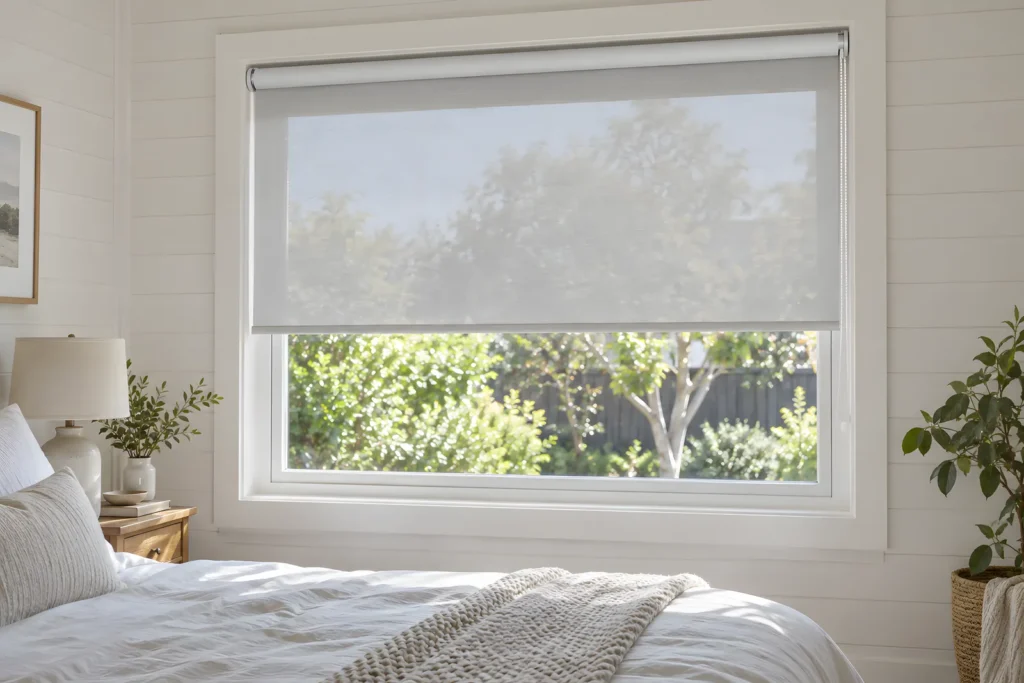
Depth, fit and fascias
A double roller needs more depth than a single blind because it carries two tubes. Slimline dual brackets need:
- 90 mm of recess depth with both blinds over-rolled. This is the recommended recess setup.
- 70 mm of recess depth with both blinds under-rolled.
Compare that with a single blind, which needs 70 mm over-rolled or 45 mm under-rolled. If your reveal is shallower than the double roller needs, window depth for blinds explains the options.
Double roller or two single blinds
Two single blinds can do a similar job: one recess fitted, plus a face-fit under-roll blind. This is the alternative when the reveal is too shallow for dual brackets.
| Double roller | Two single blinds | |
|---|---|---|
| Brackets | One set of dual brackets | Two separate sets |
| Recess depth | 90 mm both over-rolled, or 70 mm both under-rolled | Depends on the recess blind: 45 mm under-roll, 70 mm over-roll |
| Look | One neat unit, with an optional curved fascia | Two blinds at different depths |
| Best when | Depth allows and you want one tidy unit | The reveal is shallow, or the two blinds suit different fits |
Fascia
A curved double fascia hides the tops of both blinds. It comes in a matching aluminium finish or a fabric-wrapped front. The fabric wrap uses the blockout layer's fabric. A fabric-wrapped fascia cannot be made in Screen or Shade, so if your blockout layer is Shade, choose the matching aluminium finish. A fascia conceals the hardware, but it is not a cassette and does not remove every light gap.
Choosing controls for a double roller
Controls are chain, cordless or motorised, depending on the dimensions. The configurator shows what is available for your sizes. Our guide to roller blind controls explains each system.
- Chain. SunBoss chain drive comes with a chain safety device. Keep chains out of reach of children, and consider cordless or motorised controls in a child's room.
- Cordless. Cordless roller blinds have no chain, are spring-balanced and hold at any height, and you move them by the base rail.
- Motorised. With motorised roller blinds, a 2-channel remote suits a double roller, so each layer can sit on its own channel. A battery motor drives one blind, so plan for a motor on each layer, and remember that battery motors need a charger. Hardwired motors need a licensed electrician. A compatible smart hub adds scenes and sunrise and sunset timers, which suits a double roller well: you can set the blockout layer to lower at sunset while the daylight layer stays under your control.
Choosing fabrics and colours for the two layers
Start with the blockout layer, because it sets the tone of the room at night, and then pick a daylight fabric that sits well beside it. Three practical points help:
- Match ranges where you can. Ultra LF and Array LF share the colours of Ultra and Array, and the four Opulence LF colours (Arctic, Vanilla, Griege and Misty) all appear in Opulence, so a Light Filter and a blockout in the same colour family is easy to arrange.
- Consider the backing. With a standard roll, the backing shows at the top of the roll. Shade is the same colour on both sides, Serene II and Lakeside have a colour-coordinated backing, and the other blockout ranges have a white backing. If the top of the roll will be visible, that decides between a matching backing and a white one.
- Choose the daylight layer for the view. Screen keeps the outlook, and its colours run from Ice and White Grey through to Charcoal Grey and Charcoal. Light Filter obscures the view, which is the point when the window faces the street.
Because a double roller uses two fabrics, you cannot judge it from one sample. Order both and hold them together against your walls, floor and frames, in the morning and again in the evening.
Where a double roller works best
A double roller is at its best on windows that have to be two things at once.
- Bedrooms. Pair blockout with Screen if you have a view, or with Light Filter if the window faces the street. Face fit helps with edge light. See bedroom blinds.
- Living rooms. Light Filter by day and blockout on evenings when you want the room private. See living room blinds.
- Dining rooms. Screen keeps the view of the garden, and the blockout layer closes the room off for the evening. See dining room blinds, and dining room curtain and blind ideas for curtain options as well.
If you would rather get the same effect with fabric on a track, double curtains put a sheer and a blockout on two tracks, and how to layer sheer and blockout curtains explains the approach.
When a double roller is not the right choice
A double roller does two jobs, so it is worth checking whether you need two.
- The window has one job. In a nursery or a media room where the aim is darkness, one blockout blind, or a Full Blockout Cassette, is simpler. A cassette is the stronger answer to edge light.
- The reveal is shallow. Under 70 mm of recess depth, look at two single blinds with a recess-fit blind and a face-fit under-roll.
- It is a child's room. A double roller has two controls, so choose cordless or motorised where they are available, and keep any chains out of reach of children.
Measuring, ordering and installing
- Order both fabrics as samples and hold them together. A fabric used across several products is one sample. See the free samples page.
- Check your recess depth against the figures above, and decide between Inside Fit and Outside Fit.
- Measure with the official guide. Use the double roller measuring guide, not a single-blind method, because the two layers change what you need to check.
- Choose your controls in the configurator and see the price before you order.
- Install by following the double roller blinds installation guide, which covers the dual brackets and both blinds.
The roller blinds buyer's guide sets the double roller beside the other roller blind formats, and the double roller blinds page shows the product.
Questions
What is a double roller blind?
A double roller blind has two independently operated fabrics on one set of dual brackets: a daylight layer in Screen or Light Filter, and a blockout layer.
What is the difference between a single blind and a double blind?
A single blind does one job with one fabric. A double roller gives you two, so you can have daylight or a filtered view by day and blockout at night from the same window.
How much depth does a double roller blind need?
Slimline dual brackets need 90 mm of recess depth with both blinds over-rolled, which is the recommended recess setup, or 70 mm with both under-rolled.
Can double roller blinds be motorised?
Yes. Controls are chain, cordless or motorised depending on the dimensions, and a 2-channel remote suits a double roller.
Can I pair any two fabrics in a double roller?
No. The pairings are Blockout with Screen, or Blockout with Light Filter.
Build your double roller blind
Choose your two fabrics, enter your measurements and see the price before you order.
Keep reading
 BlindsRoller blinds: the complete buyer's guideFabric, colour, controls, fit, roll direction and special formats: every decision in ordering a made-to-measure roller blind, in the order you make it.
 ComparisonsBlockout, light filter or SunScreen? Choosing roller blind fabricWhat each roller blind fabric does with light, view and privacy by day and night, and which one suits each room in your home.
 BlindsChain, cordless or motorised: choosing roller blind controlsChain, cordless or motorised? How each roller blind control works, what limits apply and which suits a bedroom, nursery, home theatre or wide window.