
How to keep your home cooler in summer with blinds and curtains
Keep the sun off the glass and your rooms stay cooler. Here is which blinds, curtains and shutters work best, how to fit them and when to close them.
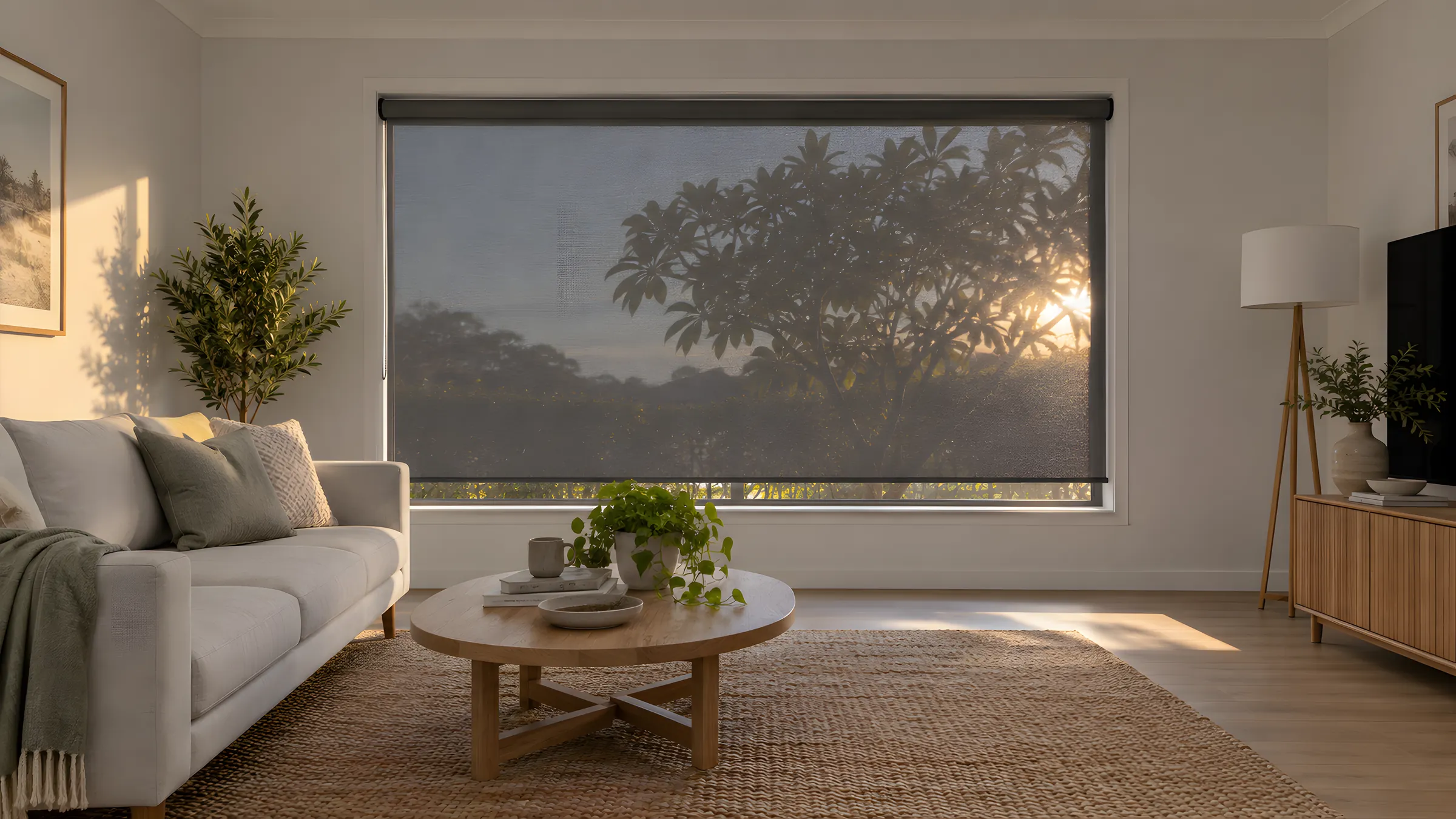
Knowing how to keep house cool in summer mostly comes down to one habit: stop the sun reaching the room by closing the right covering before it hits the glass. Blockout blinds, lined curtains and plantation shutters do the most on sun-facing windows, while SunScreen blinds cut glare and keep the view. Timing and fit matter as much as the product you choose.
In short
- Close coverings on sun-facing windows before the sun reaches the glass, then open them when it moves on.
- Blockout roller blinds, lined or blockout curtains and plantation shutters do the most; SunScreen is the choice when you want to keep the view.
- West windows are usually the hardest to manage in summer, so start with those.
- Fit to cover the frame: face-fit blinds, cassette side channels and wide curtains reduce the gaps where sun gets in.
How the sun heats a room
Most of the heat that makes a room uncomfortable arrives as sunlight through the glass. The sun warms the floor, rugs and furniture, and those surfaces release the heat into the air. Once that is happening, opening a window helps less than you would hope.
A window covering works by intercepting the sunlight after it has passed through the glass and before it reaches those surfaces. Shade outside the glass, such as eaves or a tree, works earlier and is more effective, but you cannot always change that. An inside covering is still worth using well.
Which windows matter depends on which way they face. In Australia, the pattern is fairly consistent.
| Window faces | What the sun does | What to do |
|---|---|---|
| East | Low sun in the morning, gone by midday | Close early, open later in the day |
| North | High sun in summer, which eaves often shade; lower in winter | Often manageable; use SunScreen for glare and open in winter |
| West | Low, strong sun in the afternoon and evening, when the house is already warm | Highest priority; close before midday |
| South | Little direct sun | Usually needs the least attention |
Sun blocking blinds and curtains compared
Here is what each of our options does for a hot window.
| Option | How it helps | Watch out for |
|---|---|---|
| SunScreen roller | Woven fabric cuts glare and keeps the view | Some sun still comes through; daytime privacy only |
| Blockout roller | Stops light passing through the cloth | Fit it to cover the frame (face fit or cassette) |
| Light Filter roller | Diffuses daylight and softens glare | Lets light through, so it does less against strong sun |
| Double roller blind | SunScreen or Light Filter by day, blockout layer for the worst of the sun | Needs 90 mm recess depth (both over-rolled) or 70 mm (both under-rolled) |
| Cassette roller | Side and bottom channels close the edge gaps | Needs 50 mm clear depth; cannot be retrofitted |
| Lined and blockout curtains | Cover the glass and the wall around it | Need stack-back space beside the window |
| Sheer curtains | Soften glare and add privacy | Do little to stop sun on their own |
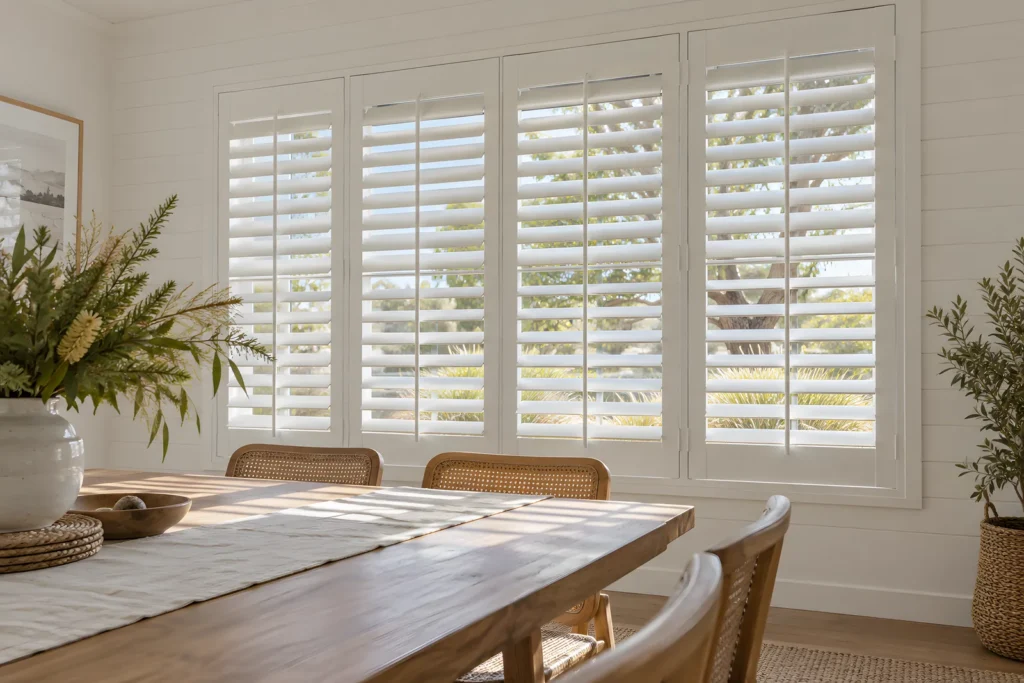
| Plantation shutters | Tilt blades to cut direct sun while letting light and air in | Adjust the blades as the sun moves |
| Venetian blinds | Tilt slats to control sun and lift for the view | Slats can leave small gaps even when closed |
| Vertical and panel glide blinds | Cover large glass and sliding doors | Panel glide takes any roller blind fabric, so you can choose blockout or SunScreen; vertical blinds use Lakeside and Shade |
Do blackout blinds keep a room cool?
Yes, they help, when they are closed over a window that the sun is shining on. Blockout fabric stops light passing through the cloth, so the sun does not warm the floor and furniture behind it. (Many people search for "blackout blinds"; blockout is the Australian word for the same thing.)
Two limits apply. First, light still gets in around the edges of a conventional blind. A recess-fitted blind leaves small gaps at each side, so a face-fit blind or a cassette will do better. Second, closing a blockout all day means living in a dimmer room. For living areas, a SunScreen blind is often the better trade-off.
For a full comparison of the fabrics, read blockout, light filter or SunScreen.
Do plantation shutters keep heat out?
They give you adjustable shade. Closed, the solid panels block direct sun. With the blades tilted, they cut the strongest light while letting some daylight and a view through, and you can open them fully in the evening to let the house breathe.
They are not blackout, so treat them as adjustable shading rather than a barrier. How much cooler a room gets depends on the house, the glass and the orientation. Plantation shutters come in PVC and timber, and PVC suits wet areas.
Fit and colour: small choices that matter
Cover the frame. Sunlight comes through any gap, so a face-fit blind that overlaps the window does better than a recess-fit one. A standard (under) roll drops from the back of the tube, closer to the glass, and leaves less room for light to slip past.
Close the sides. A cassette adds side and bottom channels. Curtains should run wider than the glass, with enough stack-back so they overlap the frame when closed.
Choose a lighter face if you can. In general, lighter colours reflect more sunlight than dark ones. White and pale options such as Shade "Ice", Ultra "Cool White" and Allure "Snow" are examples, but a blockout fabric stops light passing through the cloth whatever its colour, so pick the colour that suits the room.
Add a fascia or pelmet. A fascia hides the roller hardware and a pelmet closes the gap above curtains. Neither is a cassette, and neither removes every light gap.
Hot rooms, one at a time
Living room with west glass. A face-fit SunScreen roller keeps the view and takes the edge off the sun, and a second layer can take over in the worst of the afternoon. A double roller blind or S Fold curtains with a blockout layer both do this.
Bedroom. A room that is sunny in the afternoon is still warm at bedtime. A blockout roller closed through the day, ideally face fit or a cassette, helps it start the evening cooler and darker. Our bedroom blinds page covers the options.
Kitchen. PVC plantation shutters, fauxwood venetians and aluminium venetians all suit a kitchen, and roller blinds are fine as long as they do not get drenched. Curtains and cassette systems are not used in kitchens.
Home office. SunScreen or Light Filter rollers cut screen glare without blocking the daylight. Aluminium venetians let you tilt the slats as the sun moves across the desk.
Sliding and stacker doors. Big glass lets in a lot of sun. Panel glide blinds, vertical blinds, linked rollers or curtains with planned stack-back cover it. Panel glide takes any roller blind fabric, so you can match the fabric to the sun on that door.
How to keep a house cool in summer: a daily routine
- Morning. Close east-facing coverings while the low sun is on them. Open windows to let cooler air in.
- Before midday. Close west- and north-facing blinds, curtains or shutters before the sun reaches the glass, and keep them closed through the afternoon.
- Late afternoon. Leave the west side closed. Use SunScreen or tilted shutters if you want daylight and a view.
- Evening. Once the sun has gone and the air outside is cooler, open everything and let the house breathe.
- On hot days when you are out. Close everything that faces the sun before you leave.
Automate it if you can. Motorised blinds with a compatible smart hub can run on timers or sunrise and sunset triggers, and the hub adds voice control through Alexa and Google Home. Battery motors need no mains wiring, so they are DIY-friendly. See motorised roller blinds for the options.
Common mistakes
- Closing sheers only. They soften the light but do little to stop the sun.
- Closing coverings after the room is already hot. Stopping the sun early is far more effective than fixing a hot room.
- Forgetting sliding doors. Large glass takes in the most sun. Blinds for sliding doors include vertical, panel glide and linked rollers.
- Leaving a recess gap unaddressed. Side gaps on a blind let strips of sun onto the floor.
- Picking on looks alone. Order free samples and check the colour in your own light, at the time of day the sun is on that window.
Tip: Sun on a timber floor or rug also fades it over time. The same habits protect both. See how to stop sun fading floors and furniture.
Questions
Do blackout blinds keep a room cool?
Closed over a sun-facing window they stop sunlight coming through the cloth, which helps a room stay cooler. A face fit or cassette covers the frame best.
Do plantation shutters keep heat out?
Tilted or closed, they block direct sun while letting light and air in. Treat them as adjustable shade rather than a barrier.
Which window coverings are best for keeping heat out?
Closed blockout blinds, lined or blockout curtains and plantation shutters do the most on sun-facing windows. SunScreen suits windows where you want to keep the view.
Should I close curtains or blinds during the day in summer?
On windows the sun is shining on, yes. Close them before the sun reaches the glass and open them again when it moves away.
Build a SunScreen roller blind
Choose a fabric that cuts glare and keeps the view, and see the price before you order.
Keep reading
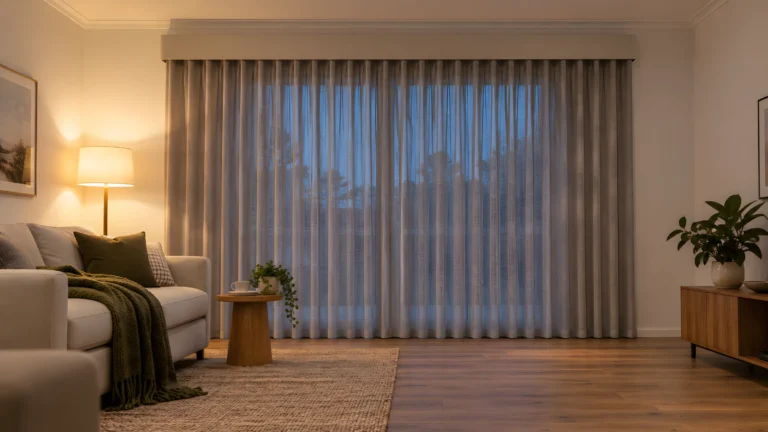 CurtainsThermal curtains and insulating blinds: keeping heat inThermal curtains are a search term, not a fabric standard. Here is what really helps a window hold heat in, and which of our curtains and blinds do it best.
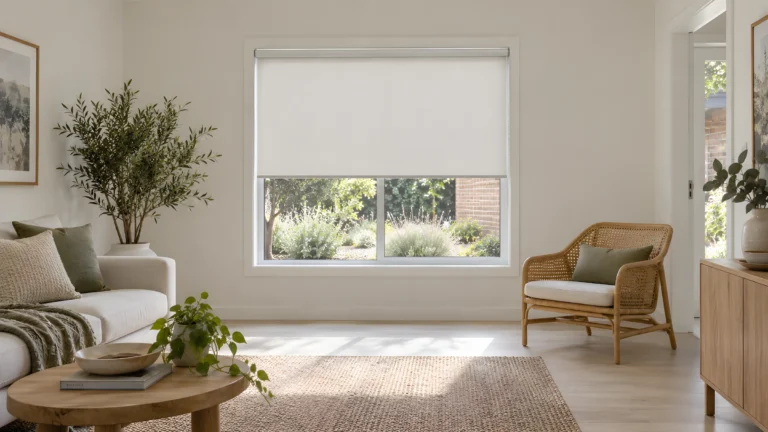 ComparisonsBlockout, light filter or SunScreen? Choosing roller blind fabricWhat each roller blind fabric does with light, view and privacy by day and night, and which one suits each room in your home.
 BlindsHow to stop sun fading floors and furnitureNo blind stops fading completely, but the right covering, fitted well and closed at the right time, keeps strong sun off floors, rugs and furniture.