
How to clean blinds: every type, step by step
Fabric blinds, slatted blinds and shutters each need a different method. Here is how to clean blinds of every type, without damaging them.

This guide explains how to clean blinds of every type, and the method depends on what they are made of. Fabric blinds such as roller, double roller, vertical and panel glide blinds are dusted with a soft cloth and spot cleaned with a damp sponge. Slatted blinds are dusted and then wiped slat by slat. Plantation shutters are dusted blade by blade. For every type, avoid soaking, abrasive pads and solvent cleaners.
In short
- Dust first, every time. Dust turns to grime as soon as it gets damp.
- Fabric blinds: soft cloth, then a barely damp sponge for marks, then dry. Never roll a blind up while it is damp.
- Slatted blinds and shutters: tilt, dust, then wipe each face. Keep water away from hinges, headrails and mechanisms.
- Avoid abrasive products, solvent cleaners and soaking on every type.
- Most blinds can be cleaned at home while they hang. Take them down only for a deeper clean.
Our care instructions for roller blind fabrics, curtains and shutters
These are the same care instructions shown in the fabric details on our product pages. Every method below builds on them, and where a general tip could differ, follow these.
Roller blind fabrics
| Fabric | Care instructions |
|---|---|
| Blockout fabrics such as Shade | Dust with a soft cloth. Wipe with a damp sponge and dry with a clean cloth |
| Lakeside | Remove surface dust with a soft cloth |
| Screen (SunScreen) | Dust with a soft cloth, or wipe with a damp sponge and dry |
| All roller fabrics | Avoid abrasive products and solvent cleaners. Do not roll the fabric up while it is damp |
All roller fabrics can also be used on panel glide blinds, and Lakeside and Shade are the fabrics for vertical blinds, so the same care covers those three blind types.
Plantation shutters
Dust regularly with a soft cloth and treat marks using the care instructions for the material. Avoid abrasive cleaning, and do not soak hinges or other metal components. PVC shutters are for interior use only and should not be continually soaked.
Curtains
Curtains are cared for by fabric. Our sheers (Cassis, Cassis Volume and Bali) are hand wash only in warm water, and our blockouts (Galaxy and Epic) and lined curtains never go in a washing machine. The full lists are in how to clean curtains the right way.
Slatted blinds such as venetians are hard-surface products, so the methods below follow the same habits: dust first, avoid abrasives and solvents, keep metal parts and mechanisms from soaking, and test a hidden spot before using any cleaner.
Before you start cleaning blinds at home
What you need
You do not need specialist products. Most jobs need only:
- two microfibre cloths, one for dusting and one for drying
- a soft brush, or a vacuum with a soft brush attachment
- a soft sponge and a bowl of cool to warm water
- a few drops of mild detergent for wipe-clean materials (not for fabric blinds unless tested)
- a clean towel to put on the sill
- a stable step stool, so you are not stretching from a chair
Clean in place or take the blind down?
Most blinds can be cleaned while they hang, which is quicker and avoids the risk of refitting them wrongly. Take one down only when there is a good reason.
| Situation | Best approach |
|---|---|
| Ordinary dust and light marks | Clean in place |
| Sticky kitchen film on venetian slats or a shutter | Clean in place, slat by slat, drying as you go |
| A fabric blind with a stubborn mark | Clean in place on a flat, fully lowered blind, testing first |
| Heavy dust in a cassette headbox or motor end | Brush and vacuum in place. Do not immerse |
| Mould, or a smell that returns | See how to remove mould from blinds and curtains |
| You are repainting, moving or replacing the window | Take it down carefully, using the fitting instructions in reverse |
If you need to remove a blind, our guide to how to remove a roller blind shows how, and it is worth photographing the brackets first.
Ground rules
A few habits protect any blind and save you from repeating the job.
- Follow the care instructions above. They come first, whatever the blind.
- Test a hidden area first. The bottom edge of the fabric, or the back of a slat, will show any colour change.
- Dust before you wipe. Wiping dust with a wet cloth turns it into a smear that is harder to remove.
- Use the right tools. A microfibre cloth, a soft brush or the soft brush attachment of a vacuum on low suction, and a barely damp sponge cover almost everything.
- Keep water away from mechanisms. Do not spray the blind directly. Dampen the cloth, then wipe.
- Leave chain safety devices fitted. Keep chains tidy and out of reach of children while you work.
- Let the blind dry before you use it. Open or lower the blind fully and give it time. For fabric blinds, do not roll it up while it is damp.
Quick guide: how to clean blinds by type
| Blind | Everyday clean | For marks | Avoid | Full guide |
|---|---|---|---|---|
| Roller blinds and double roller blinds | Soft cloth, or vacuum soft brush on low | Damp sponge, then dry with a clean cloth | Abrasives, solvents, rolling up damp | How to clean roller blinds |
| Screen (SunScreen) | Light dusting so the weave stays clear | Damp sponge, then let it dry fully | Abrasives, solvents, rolling up damp | As for roller blinds |
| Vertical blinds | Duster or soft brush along each vane | Barely damp cloth, tested first | Soaking, bending vanes | How to clean vertical blinds |
| Panel glide blinds | Soft cloth or soft brush on panels and track | Damp sponge, dry | Soaking, abrasives | Sections below |
| Venetian blinds (aluminium, fauxwood, timber) | Microfibre cloth or soft brush | Damp cloth with mild detergent (timber only barely damp) | Soaking timber, bending slats | How to clean venetian blinds |
| Plantation shutters (PVC, timber) | Soft duster, microfibre or soft brush | Lightly damp cloth, dry afterwards | Abrasive pads, solvents, wet hinges | How to clean plantation shutters |
How to clean fabric blinds
The methods for roller, double roller, cassette, vertical and panel glide blinds are close to each other, because all of them use roller blind fabrics.
The easy way to clean blinds: little and often
The easy way to clean blinds is a routine, not a product. A quick pass with a soft cloth or the soft brush attachment every week or two stops dust becoming a film, and it means a damp wipe a few times a year is all the deep cleaning you need.
How to clean roller blinds while hanging
- Lower the blind fully so the whole fabric is flat and accessible.
- Dust the fabric from the top down with a soft, dry cloth. A vacuum's soft brush attachment on low suction also works.
- For marks, wring a soft sponge in cool water until it is barely damp (on Lakeside, read the fabric notes below first). Wipe gently from the top to the bottom in overlapping strokes.
- Dry the fabric with a clean, soft cloth so there is no water left on it.
- Leave the blind lowered until the fabric is completely dry.
- Wipe the base rail, brackets and chain with the damp cloth, then dry them.
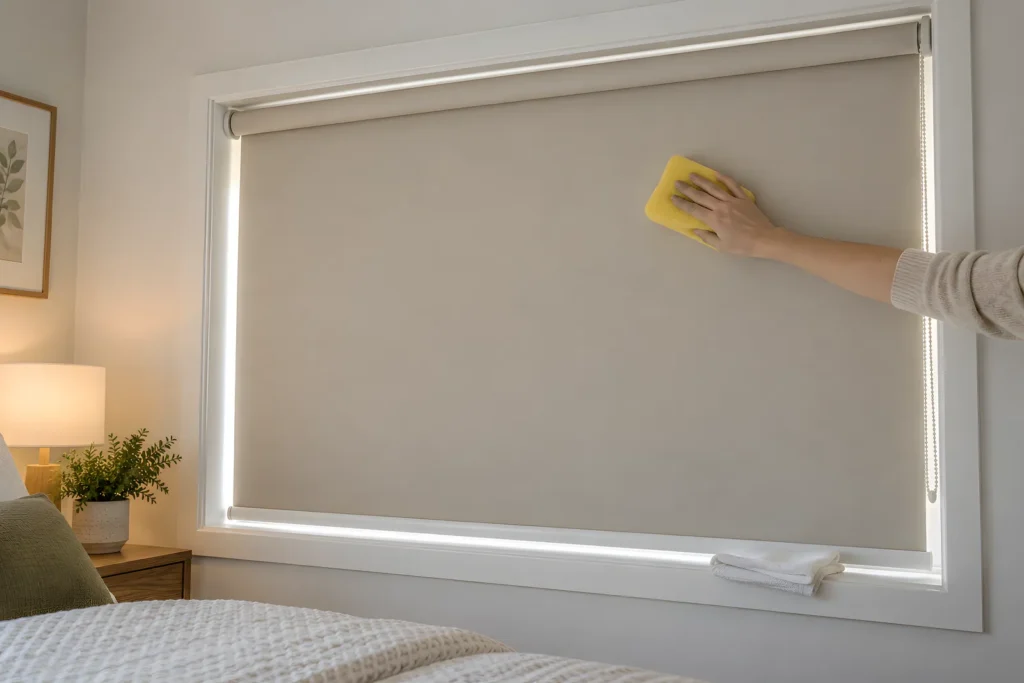
Do not roll the fabric up while it is damp. Moisture trapped in the roll can leave marks or musty smells, especially in a room with poor airflow.
Differences between roller blind fabrics
- Shade and other blockout fabrics: follow the table above. Shade has a matte finish, so wipe gently to keep it even.
- Lakeside: our instructions cover dusting. If a mark will not dust off, test a barely damp cloth on the bottom edge before you wipe it.
- Light Filter fabrics: the same soft cloth and damp sponge routine applies. Marks show more against daylight, so dry the fabric evenly and leave the blind lowered until it is completely dry.
- Screen (SunScreen): the weave is open, with about 5 per cent openness, and dust lodges in it. Light dusting keeps it clear. For marks, use a damp sponge and let the fabric dry before you roll it up.
Double roller blinds
A double roller has two fabrics on one set of dual brackets: a daylight layer (Screen or Light Filter) and a blockout layer, each operated independently. Clean them one at a time. Lower one fully and clean it, raise it, then lower the other and clean that. Use a flat, soft cloth and avoid pressing either fabric against the glass.
Cassettes, fascias and hardware
- Cassette headboxes and side channels: dust with a soft brush or the vacuum's brush attachment. Do not push water into the channels.
- Fascias: wipe with a soft cloth. A fabric-wrapped fascia should be dusted, not wetted.
- Chains: wipe with a barely damp cloth and dry straight away. Stainless steel chains resist rust and corrosion better, which is why we recommend them for coastal homes.
- Motors: keep liquid away from the motor end and the charging port. Wipe the body of the blind only.
Vertical and panel glide blinds
Vertical blinds and panel glide blinds are the same fabrics in a different format, so the care is the same as for roller fabrics. Vertical blinds are only available in Lakeside and Shade.
- Close the vanes or panels so the whole surface faces you.
- Dust each vane or panel with a soft cloth or brush, working from the top down.
- Rotate the vanes the opposite way and repeat on the other side.
- Spot clean marks on Shade or a panel glide fabric with a barely damp sponge, then dry. On Lakeside, dust first and test a barely damp cloth on a hidden spot before wiping.
- Dust the track with a soft brush so grit does not build up in the glide.
- Let everything dry before you slide the panels back and forth.
Marks tend to collect on the lower part of vanes that hang close to floors, doors and pets. Taking vanes off the track for a deeper clean is covered in the dedicated vertical blinds guide above.
How to clean venetian blinds: aluminium, fauxwood and timber
Slatted blinds take longer, but the method is simple: dust, then wipe. Aluminium and fauxwood venetians are waterproof, so they tolerate a damp cloth. Timber venetians need a lighter touch.
- Close the slats by tilting them so they overlap, with the faces pointing downwards.
- Dust with a microfibre cloth, feather duster or a vacuum's soft brush attachment on low suction. Work from the top down along each slat, supporting it with your other hand because aluminium bends easily.
- Tilt the slats the other way and repeat on the opposite face.
- Wipe marks. For aluminium and fauxwood, use a soft cloth dampened in warm water and a drop of mild detergent. Wipe each slat, then dry it straight away. For timber, use a barely damp cloth, never a wet one, and dry it immediately.
- Clean the headrail, cord or wand and brackets with a dry or barely damp cloth.
Tip: Slide a clean microfibre cloth over a pair of kitchen tongs, or wear a clean cotton glove, so you can wipe both faces of a slat in one pass. Test a hidden area first if you use a cleaning product.
How to clean plastic blinds: fauxwood and PVC
The closest products in our range to plastic blinds are fauxwood venetians, which give the timber look in a faux wood slat, and PVC plantation shutters. Both suit kitchens and bathrooms, and both can be wiped with a damp cloth and a drop of mild detergent. Dry them straight away and avoid abrasive pads and solvents.
How to clean plantation shutters
Shutters have hard surfaces that dust easily, and the job is quick once you get the rhythm.
- Close the louvres so the flat faces are exposed.
- Dust with a soft duster, a microfibre cloth or a vacuum's soft brush attachment. Work gently along the blades.
- Rotate the louvres so you can reach the other face without putting pressure on a single louvre.
- For marks, use a lightly damp cloth where the material allows, then dry the area and hardware afterwards.
- Avoid abrasive pads, strong solvents and harsh cleaning agents, and do not soak hinges or other metal parts.
- Check that the hinges are secure and the panels move freely.
For PVC shutters, wipe off splashes promptly and keep hinges and metal parts dry, even though the PVC panels are waterproof. For timber shutters, use the cleaning method approved for timber and be careful in humid rooms.
How to clean blinds in kitchens, bathrooms and laundries
Wet areas are the hardest to keep fresh, because steam and splashes leave a film that traps dust.
- Kitchens: PVC plantation shutters, fauxwood venetians and aluminium venetians are all waterproof and wipe clean. Roller fabric is fine too if it does not get drenched. Wipe grease and splashes promptly with a damp cloth, and avoid abrasive products near the stove. Our kitchen blinds page covers the fabrics and materials we suggest.
- Bathrooms: PVC shutters are a practical choice for the humidity. If you use a roller blind, dry splashes promptly and let the room ventilate. See bathroom blinds.
- Laundries: steam from a dryer or detergent splashes build up gradually. Wipe surfaces dry after use.
If you find black or green speckles in a damp room, treat them as mould rather than dirt and read the mould guide linked above before you wipe.
How often to clean blinds
| Task | How often |
|---|---|
| Dust with a soft cloth or brush | Every week or two |
| Wipe marks and fingerprints | As soon as you see them |
| Wipe the whole blind with a damp sponge or cloth | Every few months |
| Wipe kitchen and laundry blinds | Monthly, or after heavy cooking or washing |
| Clean chains, rails, headrails and tracks | With each full clean |
Choosing blinds that stay clean longer
If you are still choosing, cleaning is worth factoring in.
- Hard, wipe-clean materials such as PVC plantation shutters, fauxwood venetians and aluminium venetians suit kitchens, laundries and bathrooms, where steam and splashes are part of daily life.
- Open-weave fabric such as Screen catches dust in the weave, so it needs a little more regular dusting. Denser blockout fabrics wipe more easily.
- Very pale or very dark colours show marks or dust more readily. Order free samples and look at them against your window in morning and evening light before you decide.
- Mid-tone textures hide day-to-day dust and fingerprints better than plain white or black.
Mistakes to avoid
- Soaking any blind, or spraying cleaner directly onto it.
- Using abrasive pads, bleach or solvent cleaners.
- Rolling a fabric blind up while it is damp.
- Pressing hard on one slat, louvre or vane.
- Getting water into headboxes, cassette channels, motors or chargers.
- Taking a blind down to wash it in a tub. Fabric blinds and slats are not made for immersion. If you do need to remove a blind, follow the fitting instructions.
Questions
How often should I clean my blinds?
Dust them every week or two, and wipe them down every few months. Blinds in kitchens, laundries and bathrooms usually need a quick wipe more often.
How do I clean blinds without taking them down?
Most blinds can be cleaned while hanging. Lower a roller blind fully, dust it with a soft cloth, and wipe marks with a barely damp sponge. Tilt venetian slats and vertical vanes, dust each side, and wipe slat by slat.
How do I clean plastic or faux wood blinds?
Dust first, then wipe each slat with a soft cloth dampened in warm water and a drop of mild detergent, and dry straight away. Fauxwood venetians and PVC plantation shutters suit wet areas, but keep abrasive pads and solvents away.
Can I put blinds in the washing machine or dishwasher?
No. Our care instructions for roller fabrics allow only dusting and a damp sponge, and slats, tracks and mechanisms should not be soaked or machine washed.
What is the best way to clean roller blinds?
Lower the blind fully, dust it with a soft cloth, wipe marks with a damp sponge, and dry it with a clean cloth. Do not roll it up while it is damp, and avoid abrasive or solvent cleaners.
Choose blinds that are easy to keep clean
Order free samples and compare fabrics and finishes in your own light.
Keep reading
 Care & cleaningHow to clean curtains the right waySheers, coated blockouts and lined curtains each need a different method. Here is how to clean curtains at home, from vacuuming to a full wash.
 Care & cleaningHow to remove mould from blinds and curtainsMould on blinds and curtains usually starts with condensation. Here is how to clean it safely, when to replace instead, and how to stop it returning.
 Care & cleaningHow to clean roller blinds without damaging the fabricThe safe, simple way to clean roller blinds while they hang: dust, damp sponge, dry. Includes what to avoid and how to handle grease, chains and brackets.