
What are window treatments? A plain-English guide
A window treatment is anything fitted to a window to control light, privacy and style. This guide explains blinds, curtains, shutters and pelmets, and how to choose.
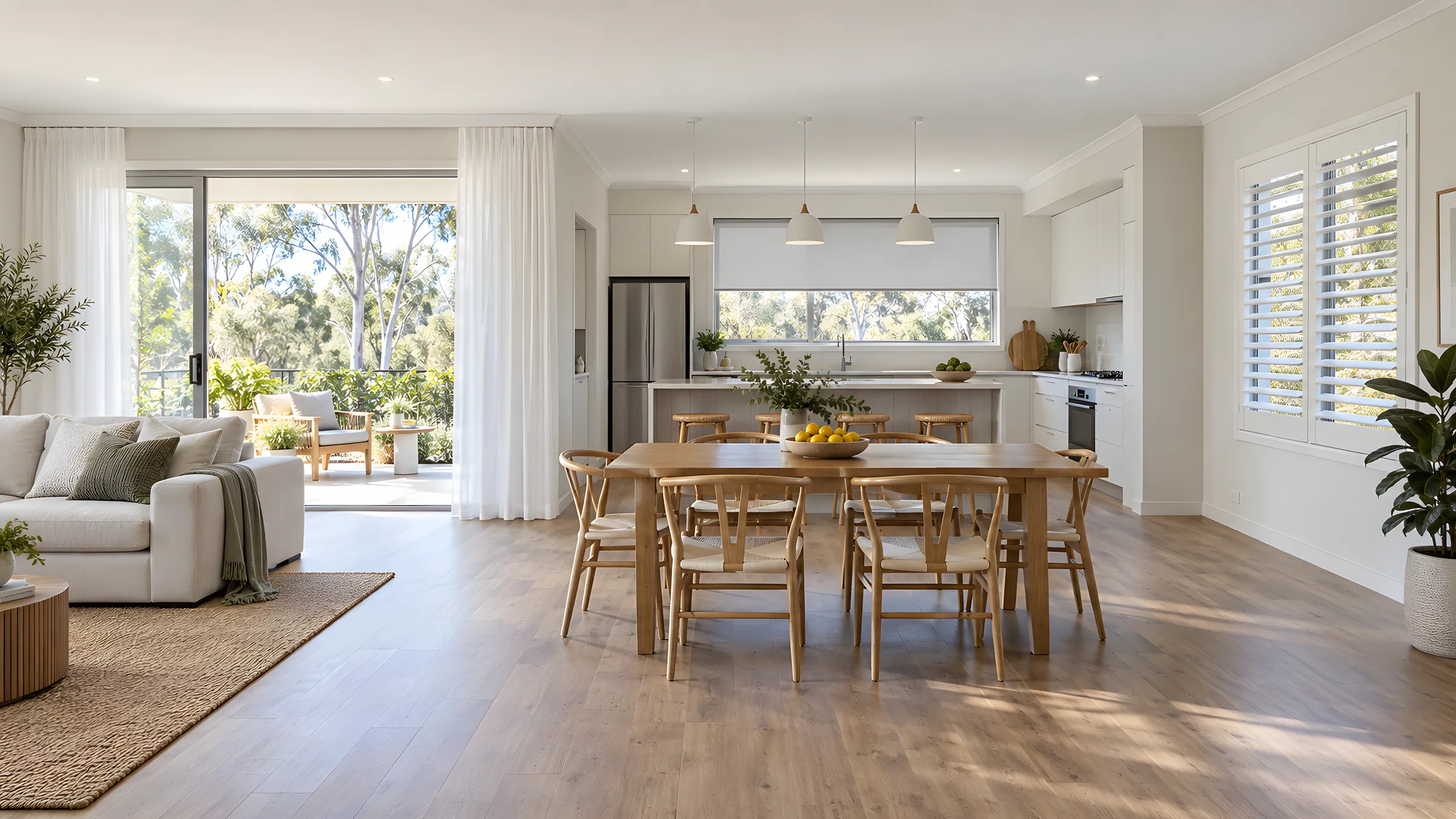
What is a window treatment? It is anything you fit at a window to control light, privacy, glare and the look of a room. Blinds, curtains and shutters are the three main families, and you will also hear them called window coverings or window dressings. Which one suits a window depends on the room, the size and shape of the glass, and the job you need it to do.
In short
- A window treatment (also window covering or window dressing) is any product fitted to a window to manage light, privacy, heat, glare and style.
- The main families are blinds (roller, double roller, vertical, panel glide, venetian), curtains (sheer, blockout, lined, double) and plantation shutters, plus pelmets and fascias.
- Choose by the job first (light, privacy, view), then by room and window, then by style and colour.
- Made-to-measure products are cut to your measurements, ordered online and fitted by you.
- Order free samples before you commit, and check them in your own light.
What is a window treatment?
A window treatment is a product that covers or dresses a window. The term covers everything from a simple roller blind in a laundry to lined curtains on a ceiling track in a living room.
Different people use different names for the same idea:
- Window treatment is the most general term.
- Window covering is the everyday Australian term and the one most people search.
- Window dressing usually refers to the styled, finished look, including curtains, pelmets and accessories.
- Window furnishings is another term you will see.
Treatments fall into two groups. Hard treatments are blinds and shutters, made from fabric on a roller, slats or panels. Soft treatments are curtains and sheers, which hang in folds from a track.
Every window treatment does some mix of six jobs: control light, protect privacy, cut glare, manage heat, keep or block the view, and set the style of the room. No single product does all six perfectly, which is why many windows use two layers.
What "custom made" means
"Custom made window coverings" and "made to measure" describe the same thing. Each blind, curtain or shutter is made to the measurements you give, rather than cut from a standard size. That is why measuring matters. Our made-to-measure vs off-the-shelf guide explains the difference in detail.
The main types of window coverings at a glance
This table lists every family we make. Each row links to the product page.
| Type | What it is | Good for |
|---|---|---|
| Roller blinds | Fabric on a roller, lifted by chain, cordless spring or motor | Almost any room; clean, tailored look |
| Double roller blinds | Two fabrics on one set of brackets, operated separately | Day and night control in one window |
| Vertical blinds | Hanging vanes that rotate and stack to the side | Sliding doors and wide windows |
| Panel glide blinds | Broad fabric panels sliding on a track | Large windows and doors |
| Venetian blinds | Horizontal slats that tilt and lift | Kitchens, offices and light control |
| Curtains | Fabric hung in folds from a track | Living rooms, bedrooms and wide windows |
| Plantation shutters | Framed panels with adjustable blades | Permanent, fitted look; wet areas in PVC |
| Pelmets and fascias | Covers over the top of a blind or curtain | Hiding hardware and finishing the window |
Blinds
Roller blinds
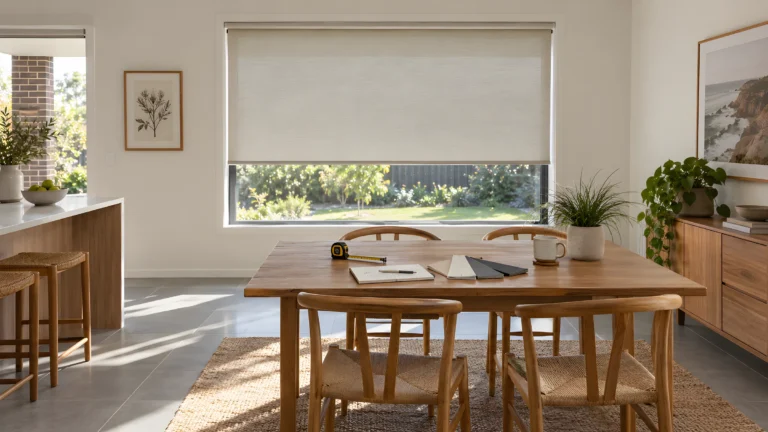
A roller blind is a length of fabric wound onto a tube. You lower it to any height. Ours come in three kinds of fabric:
- Blockout stops light passing through the cloth and gives night privacy, though a little light can still show at the edges of a conventional blind. Many people search "blackout" and it means the same thing. See blockout roller blinds.
- Light Filter diffuses daylight and obscures the view. Silhouettes may show at night when lit. See light filter roller blinds.
- SunScreen (our Screen range) is woven to cut glare and keep the view. It gives daytime privacy only when it is brighter outside, and it is not a night-privacy fabric. See SunScreen roller blinds.
We offer nine blockout ranges, four Light Filter ranges and a Screen range in seven colours. Shade, Lakeside, Ultra and Opulence are examples of ranges, and each has its own colours.
Controls. A SunBoss chain drive can go on the left or right, with a child-safety device supplied. ZeroGravity cordless blinds have no chain and lift by the base rail. Silent Glide motorisation comes as battery, hardwired or C-Bus, with remotes and an optional smart hub. See cordless roller blinds and motorised roller blinds.
Fit. A recess fit sits inside the window opening, while a face fit goes on the frame or wall and covers more. (Some sites say inside mount and outside mount.) Sizes run from 250 to 3000 mm wide and 300 to 3000 mm drop. Wider windows use linked roller blinds, which share brackets so the join gap stays small.
Extras. A decorative fascia hides the hardware. A Full Blockout Cassette adds a headbox and side channels to close the light gaps. A cassette roller blind is ordered with a compatible under-roll blockout blind and cannot be retrofitted.
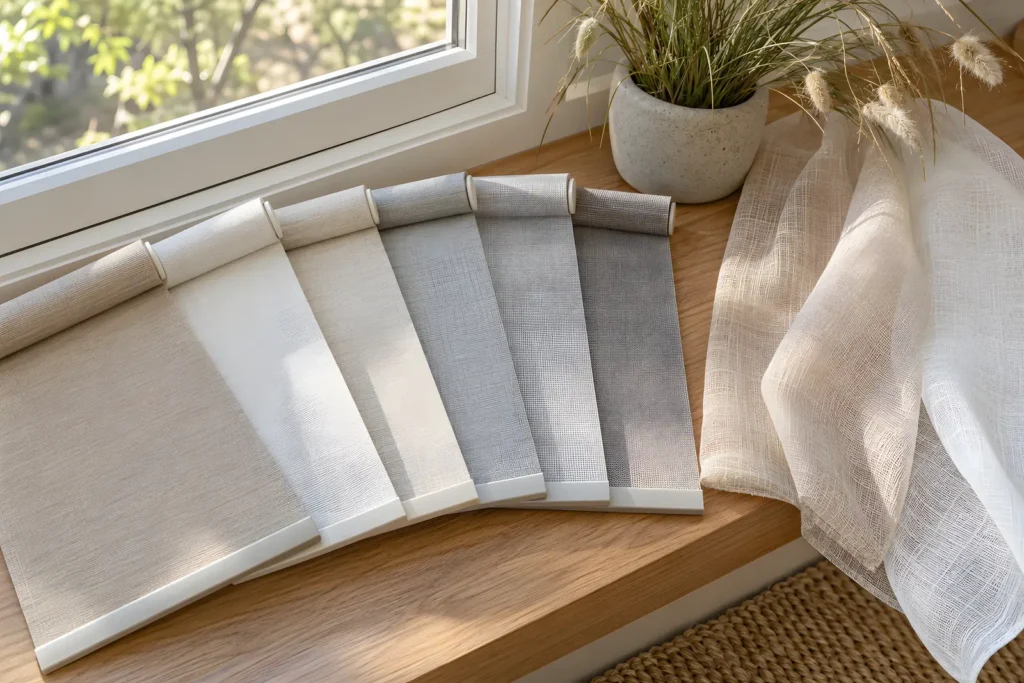
Double roller blinds
A double roller has two fabrics on one set of dual brackets. The daylight layer is Screen or Light Filter, and the second layer is blockout. You use them independently: SunScreen down by day, blockout down at night. Slimline dual brackets need 90 mm of recess depth with both blinds over-rolled, or 70 mm with both under-rolled. They can be chain, cordless or motorised, depending on the size.
Vertical blinds
Vertical blinds are hanging vanes that rotate for light and privacy and stack to the left, right or split in the middle. Vane widths are 89 mm and 127 mm, and only Lakeside and Shade fabrics are available. Face fit is common, and recess fit needs room for the vanes to rotate. They suit sliding doors and wide windows.
Panel glide blinds
Panel glide blinds are broad fabric panels, typically 500 to 1000 mm wide, sliding on a track. They suit large windows and sliding doors. Any roller blind fabric can be used, and the base rail can be flat in White, Black or Silver at no extra charge. A centre opening always has an odd number of panels.
Venetian blinds
Venetians have horizontal slats that tilt for light and lift for the view. We make Timber Venetians with 50 mm slats, Aluminium Venetians with 25 mm slats, and Fauxwood Venetians, which give the timber look in a faux wood slat. Aluminium and fauxwood venetians suit kitchens, and fauxwood suits bathrooms too. See our fauxwood venetians page for the timber look in a faux wood slat.
Curtains
Sheer, blockout, lined and double
Our sheers are Cassis (a soft linen-look polyester), Cassis Volume (the same sheer in whites and greys) and Bali (the lightest linen-look sheer). They are linen-look polyester, not linen. Sheers soften daylight and give some privacy by day, but people outside can see in at night when the lights are on.
Our blockout curtains are Galaxy (the heaviest coated fabric) and Epic (a three-pass coated fabric). Blockout stops light passing through the cloth.
To combine them you have two options:
- Lined curtains: a blockout lining sewn behind a sheer, so both move together on one track. See lined curtains.
- Double curtains: a sheer on the front track and a blockout on the rear track, drawn separately. See double curtains.
Headings
The heading is how the curtain gathers at the top. We make five:
| Heading | Look |
|---|---|
| S Fold | Regular, even waves; the most popular and the deepest heading profile |
| Pencil pleat | Gathered, softly ruched top |
| Double pinch pleat | Two fabric fingers per pinch |
| Triple pinch pleat | Three fabric fingers per pinch, a more tailored look |
| Inverted pleat | Flat front, with the fullness folded behind |
Some sites call S Fold curtains ripplefold or wave fold. See curtain headings explained for a closer look.
Tracks and controls
Curtains hang from a track. Designer is the plain straight profile, Half Moon has a curved front edge, and Motorised tracks are available with battery or hardwired power. Tracks can be ceiling or wall fitted, in silver, black or white. Curved and box and bay tracks suit bay and corner windows. Curtains can open to the left, right, centre or with up to two splits, and finish just off the floor, touching, or puddled.
Plantation shutters, pelmets and fascias
Plantation shutters
Plantation shutters are framed panels with adjustable blades. We make them in two materials:
- PVC plantation shutters use an aluminium-reinforced polymer with a VOC-free painted finish. The material is waterproof, so they suit wet areas. They are for interior use only. Colours are Glacial White, Shell and Antique.
- Timber plantation shutters are made from paulownia, with visible grain and a stained or painted finish. Check the care needs in humid rooms.
Frames are inside Z-frame, inside L-frame or outside L-frame. D-mould, the overlap lip that blocks the view between panels, is standard on every panel at no extra charge. Ordering runs through a quote and an Expert Review, where the team checks your photos and measurements before production. Our plantation shutters guide goes into detail.
Pelmets and fascias
A pelmet or fascia covers the top of a window treatment. For roller blinds, a decorative fascia hides the hardware. It is not a cassette and does not remove every light gap. For curtains, we make box pelmets, and our Bonded Pelmets are fabric-covered pelmets that hide the roll or track and frame the window. See what a pelmet is for how to choose.
How to choose a window treatment
Start with the job, not the product. This table links each need to the article that covers it.
| If you want... | Look at | Read |
|---|---|---|
| A darker bedroom | Blockout roller, cassette, double roller, lined curtains | Blockout for better sleep |
| Privacy day and night | Blockout layer plus a daylight layer | Best window coverings for privacy |
| A cooler house in summer | Closed blockout, SunScreen, shutters | How to keep your home cool in summer |
| Warmth in winter | Lined or double curtains, face-fit blinds | Thermal curtains and insulating blinds |
| A quieter room | Heavy, full, layered curtains (a small effect) | Do curtains and blinds reduce noise? |
| Protection from fading | Closed blockout, SunScreen, shutters | How to stop sun fading |
Then work through these steps:
- List the jobs for each window. Light, privacy, view, heat or glare.
- Note the window's size, shape and depth. Depth decides whether a recess fit works. Wide windows need linked blinds, panel glide or curtains.
- Check what is around it. Taps, handles, furniture and winders can rule out some fits or need a front roll.
- Decide on controls. Chain, cordless or motorised. In children's rooms, choose cordless or motorised.
- Pick a style and colour. Blinds give a tailored look, curtains add softness, shutters a permanent fitted look.
- Order samples. Compare them against your walls, floor and frame in morning and evening light.
If you cannot decide between blinds and curtains, read blinds or curtains for a room-by-room comparison.
Mistakes to avoid
- Choosing a fabric from a screen. Colours look different in your own light. Order samples first.
- Ignoring depth. A recess fit needs enough clear depth for the blind or shutter frame. Check it before you pick a product.
- Forgetting what is beside the window. Stack-back space for curtains, or a tap or handle in front of a blind, changes what works.
- Expecting one layer to do every job. A sheer gives daytime softness and no night privacy. A blockout gives darkness and no view. Two layers solve both.
- Measuring to the wrong point. Blinds, curtains and shutters each have their own measuring rules. Follow the official guide for your product, and do not carry a measurement from one product to another.
Tip: Treat each window as its own decision, but keep a common thread across a room, such as one colour family or one type of treatment on adjacent windows.
Window treatments room by room
| Room | Options that suit it |
|---|---|
| Kitchen | PVC plantation shutters, fauxwood venetians, aluminium venetians, SunScreen or Light Filter rollers. Not cassettes, curtains, vertical blinds or panel glide. |
| Bathroom | Light Filter or Blockout rollers, PVC shutters |
| Laundry | Light Filter, Blockout, PVC shutters |
| Bedroom | Blockout, cassette, double roller, face fit |
| Nursery | ZeroGravity cordless, blockout, cassette |
| Living room | Light Filter, SunScreen, double roller, S Fold curtains |
| Dining room | SunScreen, double roller, lined curtains |
| Home office | SunScreen, Light Filter, aluminium venetians |
| Home theatre | Blockout, full cassette, motorised |
| Sliding doors | Vertical, panel glide, linked rollers, curtains |
For more ideas, see curtain and blind ideas by room and, for a longer overview of the blind range, our types of blinds guide and types of curtains.
Ordering, controls and safety
How ordering works. Our process is Decide, Sample, Measure, Order and Install. Every product has its own configurator: enter your measurements, choose fabric and controls, and see the price before you order. You measure and install, and we deliver the product with practical guidance. Follow the product-specific guides in measure guides and installation guides, and read how to buy blinds online for the full walkthrough.
Samples. Free samples let you compare colour and texture in your own light. For a double roller or double curtains, order both fabrics and hold them together.
Protection. SureFit measurement protection covers a defined remake pathway if a covered measuring error occurs, under the conditions in our warranty and SureFit page. It is separate from the product-defect warranty.
Delivery and offers. We deliver Australia-wide direct, and Spend & Save discounts apply automatically on eligible orders. Details are on our delivery and Spend & Save pages.
Child safety. Never leave chains within reach of children. Our chain blinds come with a safety device, but for children's rooms choose cordless or motorised controls.
Cost. Price depends on size, fabric, controls and options, and the configurator shows it before you order. Our price guide explains what drives cost.
Questions
What is a window treatment?
A window treatment is anything fitted to a window to control light, privacy, glare and the look of a room. Blinds, curtains and shutters are the main types.
Are window treatments and window coverings the same thing?
In everyday use, yes. Window coverings, window treatments and window dressings all describe the products that go on or around a window. Some people use window dressing for the styled, finished look.
What are the main types of window treatments?
Blinds (roller, double roller, vertical, panel glide and venetian), curtains (sheer, blockout, lined and double), plantation shutters, and finishing pieces such as pelmets and fascias.
What does made to measure mean for window coverings?
Each blind, curtain or shutter is made to the exact measurements you supply, rather than cut from a standard size. You measure the window, order online and fit it yourself.
Which window treatment suits a kitchen?
PVC plantation shutters, fauxwood venetians and aluminium venetians all suit a kitchen because they are waterproof. Roller blinds work too, as long as they do not get drenched.
Start with free samples
Compare fabrics and colours in your own light before you measure or order.
Keep reading
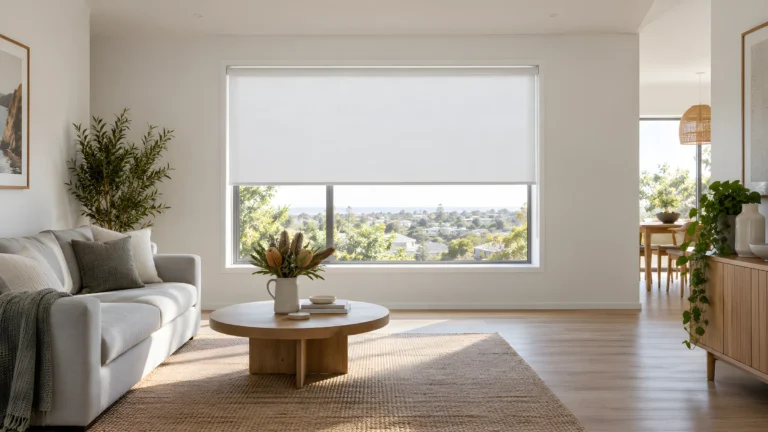 BlindsTypes of blinds explained: a complete buyer's guideThe main types of blinds are roller, double roller, vertical, panel glide and venetian. Here is how each works, what suits which room, and how to choose.
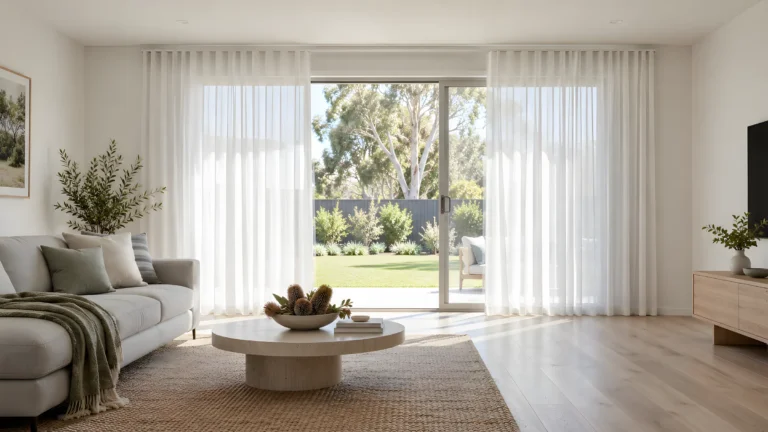 CurtainsTypes of curtains: fabrics, headings and linings explainedEvery type of curtain we make, from sheer and blockout fabrics to lined and double layers, headings and tracks, with a room-by-room guide to choosing.
 Measuring & fittingHow to buy blinds online: a step-by-step guideBuying made-to-measure blinds online takes five steps: decide, sample, measure, order and install. Here is what to do at each step and what to check.